Every morning, Diane Charles walks along Tatlows Beach in Stanley, a quiet town on Tasmania's far north-west coast. She says hello to the regulars. She watches the waves. It is a modest, unhurried ritual — the kind that rarely produces anything remarkable.
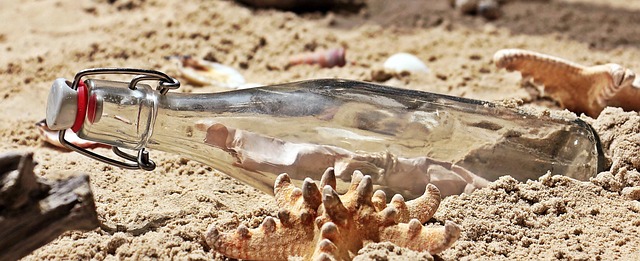
But on a Saturday morning in January 2001, something caught her eye in the surf: a glass bottle, opaque with age and crusted in barnacles, rolling in on the tide.
"To my surprise, it seemed to have a note inside," Ms Charles told ABC News.
The message was written in Spanish. Ms Charles doesn't speak Spanish. Undeterred, she rallied a small team of locals. Her brother, freshly returned from Chile, produced a dictionary. They picked through it word by word. When that wasn't enough, they called on a scholar, who landed on a rough translation: "Life has taught me all is possible, receive love and success second to this."
But the real treasure was in the top left corner of the note — a name, a Colombian address, and a fax number.
From Norway to Tasmania, by way of boredom
The name belonged to Erika Boyero. In 1997, Ms Boyero was a young Colombian woman bartending on a cruise ship travelling through the Nordic countries. One quiet evening off the coast of Norway, she filled some empty bottles with handwritten notes and tossed them overboard. Then she forgot about them entirely.
"I completely forgot about … that day," she said.
Years passed. Then her father mentioned, casually, that she'd received a fax — from Australia.
"I said, 'What? I don't know anyone in Australia.'"
It took a moment for the memory to surface. The bottles. The bored evening at sea. The impossible odds. Someone, on the other side of the planet, had actually found one.
"You don't really think that can happen," Ms Boyero said. "There are so many millions of people in the world … and when destiny, in this way, shows a person you have to meet in this life … it is beautiful."
Twenty-five years of letters, life, and waiting
What began with a fax grew into something enduring. Over the next quarter-century, Ms Charles and Ms Boyero stayed in touch — sharing the milestones that mark a life. The birth of children. Ms Boyero's move from Colombia to Germany. The small, steady accumulation of years and trust between two people who had never been in the same room.
Ms Boyero always planned to visit. "I was thinking every year, 'it could be the year', but the time goes so fast," she said.
Then, three weeks ago, while travelling in Kuala Lumpur, she picked up the phone. She told Ms Charles she wanted to fly to Tasmania — "to have a coffee and a chat."
"I thought, 'I'm close now, I see on the map that it looks not so far,'" she said.
Long-lost friends
Ms Charles waited at Burnie Airport, a bundle of nerves and excitement. When Ms Boyero walked through the terminal doors, the two women embraced like "long-lost friends."
"It was amazing and we've just talked ever since," Ms Charles said.
The next morning, they walked together along Tatlows Beach — the same stretch of sand where a barnacle-covered bottle had rolled in on the waves all those years ago. They visited the Stanley Discovery Museum, where the bottle and its message are now on display.
Ms Boyero offered a correction to the early translation. Her original words, she said, were closer to: "Life has taught me all is possible. I wish you good fortune wherever you are."
It seems the bottle delivered on its promise.