
In a narrow lane in Mumbai's Colaba district, bright murals cover the walls of a washermen's settlement. Alphabets bloom in bold colours. Multiplication tables stretch across bricks. Seven-year-old Khushi sits inside a small learning centre tucked within the maze of shanties, dreaming of becoming a teacher herself one day.
The centre is one of more than 800 that Rouble Nagi has built across India — a staggering achievement that earned the artist and educator the 2026 GEMS Education Global Teacher Prize and its $1 million award.
A boy who couldn't afford school
Nagi's journey began with a single encounter. A young boy walked into one of her art workshops in Mumbai. She learned he lived in a slum and couldn't afford school.
Curious, she visited his community and offered to brighten up the walls with murals. Children gathered to watch. "I asked them if they'd like to hear a story. They all said 'yes,'" Nagi told the BBC.
That moment changed her life's direction. She realised children in poor communities were hungry to learn — and that art could be the spark.
From brushstrokes to a nationwide movement
What started as painting walls in Dharavi grew into the Rouble Nagi Art Foundation (RNAF), which has now established more than 800 learning centres across India, reaching over 100 underserved communities and villages. According to the Global Teacher Prize organisers, her work has helped bring more than one million children into the formal education system.
Not all of the centres are brick-and-mortar classrooms. Some are simply open spaces in slums where students sit on mats and carpets. "Learning can happen anywhere," Nagi says. "You just have to make it interesting."
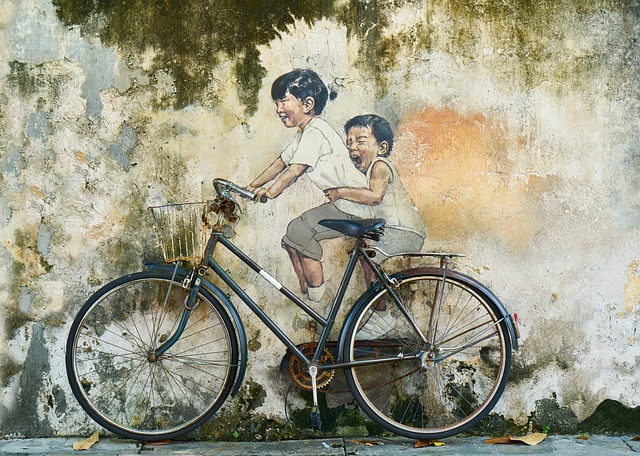
Her foundation's flagship 'Misaal' project — meaning 'an example' in Hindi — transforms slum walls into open-air classrooms, painting educational murals on topics from science and hygiene to environmental awareness. The murals spark curiosity among residents and, Nagi believes, can help shift attitudes over time.
Beyond education, the foundation has repaired and restored more than 150,000 homes across slums and villages — because, as Nagi sees it, a child cannot dream freely if their roof leaks.
The human cost
The work is not without its struggles. Many of the children come from dysfunctional families, and Nagi's teachers often double as counsellors and protectors.
"If a child doesn't show up at one of our centres for a week, a volunteer visits their home to check on them," she explains. She holds regular sessions with parents to keep them invested in their children's education — a delicate, ongoing process of trust-building.
"When you work in areas like these, you have to build relationships not just with the students but the entire community," Nagi told the BBC. "Whether that's through monetary help, supplying provisions in difficult times, or offering a listening ear."
Lives transformed
The results speak through people like Mayur, a former student who now runs his own art classes and a small printing business. At weekends, he volunteers with RNAF, giving other children from his community the same chances he received.
At the other end of the journey, Khushi — whose mother is a domestic worker and sole earner — represents the next generation of dreamers these centres nurture.
Global recognition, local roots
In February, Nagi was selected from 5,000 nominations across 139 countries to receive the GEMS Education Global Teacher Prize at the World Government Summit in Dubai. The award, now in its tenth year, is an initiative of the Varkey Foundation organised in collaboration with UNESCO.
Her response on stage was characteristically grounded: "This is not my honour, this is the honour of my country, India."
What comes next
With the prize money, Nagi plans to build a Skilling Institute offering free vocational and digital literacy training — and to expand into Jammu and Kashmir, the region where she grew up, with a new skill-and-learning centre.
Two decades in, Rouble Nagi shows no signs of slowing down. She didn't wait for perfect infrastructure or policy changes. She picked up a brush and began. And in doing so, she proved that a teacher doesn't need four walls to change the world — sometimes, the walls themselves become the lesson.