
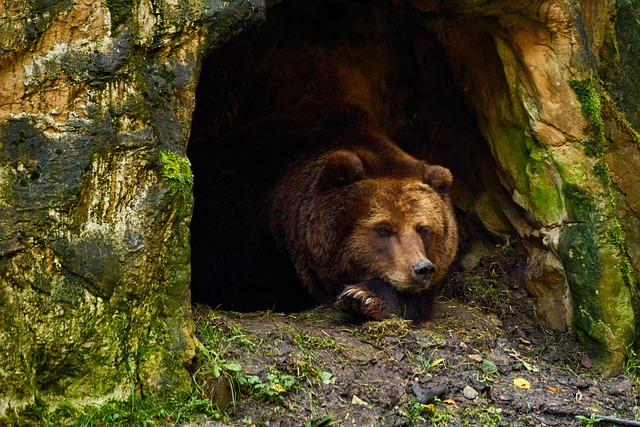
Somewhere in the hills of Urtsadzor, Armenia, a little bear called Lola is stretching her legs for the first time since autumn. Beside her, her parents Aram and Nairi are doing the same. It's an ordinary moment for a wild bear — but for this family, it's anything but ordinary. This spring, all three woke from their very first natural hibernation.
Their rescuers at the Foundation for the Preservation of Wildlife and Cultural Assets (FPWC) and International Animal Rescue (IAR) call it a powerful sign the bears have truly recovered — not just physically, but emotionally.
From backyard cages to open sky
A year ago, the picture looked very different. Aram and Nairi were discovered confined to filthy cages in a backyard in Yerevan, Armenia's capital. They had endured years of appalling abuse, denied even the most basic care. Nairi had been repeatedly bred by the owner, who sold her cubs for profit. Their daughter Lola was born into that captivity and had never known anything else.
What followed was what IAR called their "most difficult rescue to date." Armed with a court order, teams from FPWC and IAR arrived at the property at 9am — but the owner refused them entry despite the legal order.
A tense standoff dragged on for hours. It was only as night fell, with police intervention, that rescuers finally gained access. Working in darkness and heavy rain, they carefully sedated and transported the three bears to safety at FPWC's wildlife rescue centre.
"The worst conditions I have ever seen"
Alan Knight OBE, President of International Animal Rescue, was on the ground that night and witnessed the conditions first-hand.
"These bears had clearly suffered for many years, and these were some of the worst conditions I have ever seen," he said. "The stench, the filth, the sheer cruelty of locking these animals up in tiny cages."
A winter's sleep that means everything
Over the following months, specialist veterinary teams provided dedicated care. Slowly, Aram, Nairi and Lola regained their strength, their confidence, and — crucially — their natural instincts.
Then came winter. For the first time in their lives, all three bears settled into a natural hibernation — the seasonal rest period that wild bears enter instinctively but that captive bears, kept in unnatural conditions, are often unable to achieve.
For bears who had never experienced normal seasonal cycles, the ability to enter hibernation is a sign of deep recovery. It shows their bodies have healed enough to build the fat reserves needed for winter sleep, and that they feel safe enough in their environment to let their guard down for months at a time.
"To see them happy and healthy, knowing they have a future now, makes everything we went through worth it," Knight said. "Completing their first hibernation and exhibiting these natural behaviours is an incredible sight. We are so grateful to the FPWC team and all our donors and supporters for making this a reality."
A family, finally free
Today, Aram, Nairi and Lola are thriving at the FPWC rescue centre, where they can live safely and peacefully together as a family — something that was never possible in those backyard cages.
For the dedicated teams who spent that long, rain-soaked night fighting to free them, this spring awakening is the reward. Three bears, blinking in the sunlight, doing something beautifully, wonderfully normal.