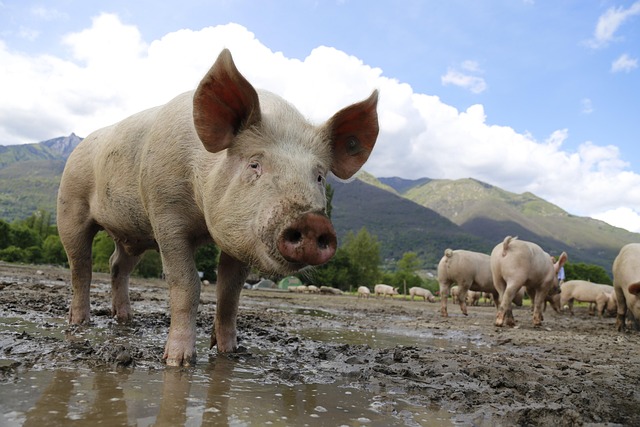
Somewhere in the Colorado high country, a 700-pound potbelly pig named Hammie is charging up a rocky trail, a black Labrador called Gus trotting at her side. They hike five miles together every day — an unlikely duo that has inspired a local hiking club for owners of "offbeat" pets.
It is one of several cross-species friendships currently lighting up social media, each one more improbable than the last. And while the videos are undeniably adorable, scientists say the bonds they capture reveal something genuinely profound about the emotional lives of animals.
A Rottweiler's Maternal Instinct
In a story that defies every stereotype about her breed, a Rottweiler named Ziva has adopted a clutch of ducklings as her own. She brooded over the eggs until they hatched, herds the chicks across the yard, and even attempts to answer their cheeps. The ducklings have imprinted fully, trailing Ziva everywhere — including naptime.
Researchers point to surges of oxytocin — the same "bonding hormone" that drives mammalian parenting — as the likely mechanism. Ziva's background as a rescue dog may play a role too: studies suggest that animals who have experienced early trauma sometimes channel their recovery into intense nurturing behaviour.
Cheetahs and Their Canine Therapists
The practice of pairing captive cheetahs with companion dogs dates back nearly fifty years. In 1976, conservation biologist Laurie Marker hand-reared a lonely cheetah cub named Khayam alongside a Labrador mix called Shesho in Oregon — and a conservation technique was born.
"Companion dogs act as a surrogate for cheetah siblings," Marker has explained. "It is the friendship between the two individuals that creates a strong bond."
Today, zoos from San Diego to Columbus routinely pair orphaned or anxious cheetah cubs with calm, friendly dogs. At the Columbus Zoo, cheetah Emmett and Labrador Cullen have been inseparable since kittenhood. Suzi Rapp, vice president of animal programmes at Columbus, puts it simply: "The cheetah would rather flee than fight. Dogs are everyone's best friend. Cheetahs soak that in."
The approach has proved a genuine conservation tool, helping the notoriously nervous cats breed more successfully in captivity — critical when an estimated 6,500 mature cheetahs remain in the wild.
Why It Happens
Behind every viral clip lies genuine ethology. Cross-species bonds typically form through one of several mechanisms: imprinting, where a young animal latches onto the first available caregiver regardless of species; oxytocin-driven nurturing instincts that override predator-prey boundaries; or simple social need, particularly in animals deprived of companions from their own kind.
Primatologist Barbara Smuts of the University of Michigan has documented how social animals overcome instinctual fear of another species when the benefits of companionship outweigh the risks. Broader research has confirmed elevated markers of wellbeing in animals involved in such bonds.
"It's a very beautiful relationship," says Rapp. "Our cheetahs are so secure, because they have their dog."
For the rest of us, scrolling past these stories on a Tuesday morning, the message is simpler still: trust, it seems, can trump biology every time.