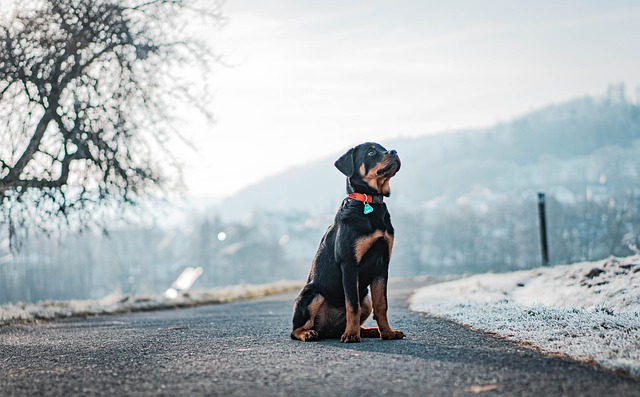
She quacks back at them. That's the detail that gets you. Ziva, a rescue Rottweiler with a troubled past, has appointed herself mother to a clutch of ducklings — and she takes the job extremely seriously. She herds them across the yard. She brooded over their eggs until hatch day. And when they chatter at her, she quacks right back, apparently fluent in duckling.
The images have been lighting up social media feeds worldwide, flipping every assumption about what a Rottweiler is supposed to be. But animal behaviourists aren't remotely surprised. Psychologists point to surges of oxytocin — the same "bonding hormone" that floods a human mother's brain — kicking in across species lines. Ziva's rescue background may even be part of the explanation: research suggests that animals who have recovered from trauma often redirect their healing energy outward, becoming fiercely nurturing caregivers.
She is far from alone.
The cheetah who learned calm from a Labrador
At Busch Gardens in Tampa, Florida, an orphaned cheetah cub named Kasi was paired with Mtani, a female Labrador, when both were around three months old. The two became inseparable — standing shoulder to shoulder, rubbing heads, racing each other across their enclosure. Keepers said their bond mirrored the "coalitions" that male cheetahs form in the wild.
It's more than heartwarming. Conservation programmes that pair big cat cubs with companion dogs report success rates above 80 per cent in reducing stress and improving wild-release outcomes. The steady temperament of a Labrador, it turns out, can literally teach a predator how to be calm.
The giant rabbit standing guard over a miniature horse
On an English family farm, a 50-pound Continental Giant rabbit named Dylan has taken it upon himself to protect Peanut, a miniature horse, from foxes. Dylan hops alongside Peanut's trot, nuzzles him at dusk, and has been standing sentry since the day Peanut arrived. Their shared calm has reportedly slashed vet visits — and the farm has become a local attraction for visitors who can't quite believe their eyes.
Why it happens: the science of unlikely bonds
A landmark 2015 study by Nagasawa and colleagues, published in Science, demonstrated that when dogs and humans gaze at each other, both experience a surge in oxytocin — the same hormonal loop that bonds mothers to their infants. Subsequent research suggests that similar mechanisms can operate across species boundaries, reducing cortisol and elevating mood in both parties.
Zoos and sanctuaries worldwide are now harnessing these bonds deliberately. Companion animals are introduced to soothe rescued elephants, orphaned big cats, and even solitary reptiles. The results are measurable — and the viral videos that follow have funnelled serious money to conservation, with one sanctuary reportedly raising over £200,000 in a single year from social media exposure alone.
Closer to home
Scotland has no shortage of places where cross-species friendships quietly take root. Tribe Animal Sanctuary in the Clyde Valley rescues farm animals from abuse and neglect, giving pigs, goats, chickens, and horses the chance to form bonds on their own terms — exactly the conditions under which these unlikely friendships tend to blossom. Edinburgh Zoo and Highland Wildlife Park, too, house animals in mixed social environments where surprising companionships can develop.
If you've spotted an unlikely animal friendship at a Scottish farm, sanctuary, or even in your own back garden, we want to hear about it.
Got an unlikely animal friendship? Send us your photos and stories — the best submissions will be featured in a future edition.