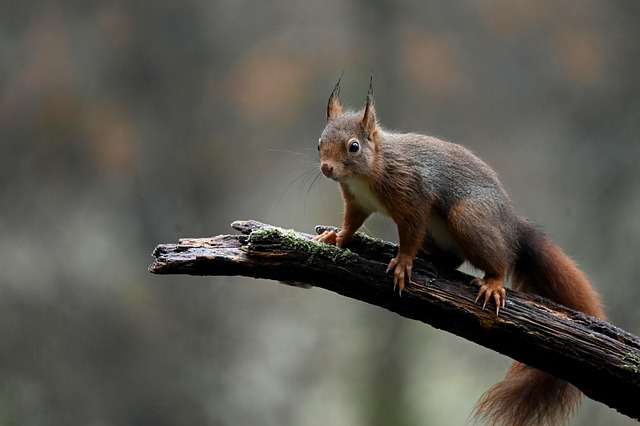

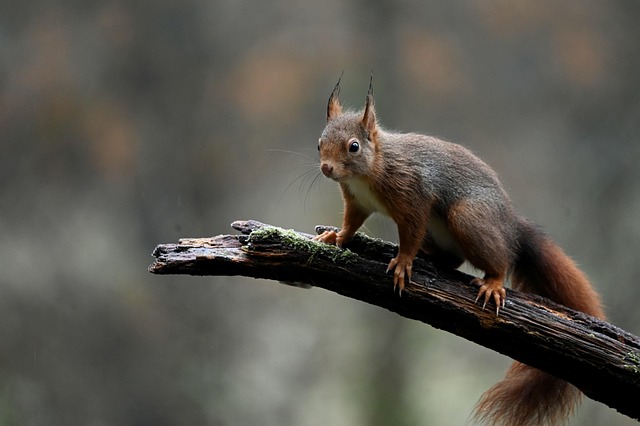
Spring has arrived in Scotland's woodlands, and with it comes the sight that has charmed generations: red squirrels darting between the branches, bushy tails catching the light, as the breeding season gets under way.
It is a scene that feels timeless. But behind the charm lies a story of survival — and of the remarkable human effort keeping it alive.
Scotland is home to an estimated 230,000 red squirrels, according to Scottish Forestry — roughly 80% of the entire UK population of 287,000. That makes Scotland the last great stronghold for one of Britain's most iconic mammals, and the place where the battle for the red squirrel's future will be won or lost.
The grey threat
The red squirrel's decline across Britain is one of the most familiar conservation stories of the past century. The invasive grey squirrel, introduced from North America in the 1870s, outcompetes reds for food and habitat and carries squirrelpox — a virus that is lethal to red squirrels but largely harmless to greys.
Across England and Wales, red squirrel populations have been devastated. In Scotland, the picture is more hopeful — but the threat has not gone away.
Grey squirrels continue to press northward, particularly through the Central Lowlands, and an isolated population around Aberdeen presents a persistent challenge. In southern Scotland, squirrelpox outbreaks remain a serious concern.
The partnership fighting back
At the heart of Scotland's conservation effort is the Saving Scotland's Red Squirrels project, led by the Scottish Wildlife Trust in partnership with NatureScot, Scottish Forestry, RSPB Scotland, Scottish Land & Estates, Forestry and Land Scotland, and Loch Lomond & The Trossachs National Park Authority.
Since 2009, the project has demonstrated that it is possible to halt and even reverse the decline of red squirrels through strategically targeted, landscape-scale grey squirrel management.
The work is focused on three priority areas. In the North East, the aim is to eradicate the isolated grey squirrel population in and around Aberdeen, allowing reds to thrive once more. In the Central Lowlands, efforts concentrate on preventing greys and squirrelpox from spreading north of the Highland Line. And in South Scotland, volunteer-led groups are protecting red squirrels in key locations where both species overlap.
The citizen army
What makes the project truly distinctive is the scale of community involvement. Across Scotland, networks of local volunteers monitor squirrel populations, report sightings, and assist with grey squirrel management on the ground.
The project's sightings database — accessible at scottishsquirrels.org.uk — allows anyone who spots a red or grey squirrel to report it, whether from their back garden or the wider countryside. Every sighting adds to the scientific picture, helping researchers track where reds are thriving and where greys are advancing.
Scottish Forestry also supports red squirrel conservation through the Forestry Grant Scheme, which funds grey squirrel control, habitat management, and the protection of 18 designated red squirrel strongholds across Scotland, including the Isle of Arran. Productive conifer plantations are the most important habitat — in the best spots, there can be close to one squirrel per hectare.
A story of hope
The results are real. In many areas where the project operates, red squirrel populations are stabilising or increasing. The combination of professional science, strategic management, and grassroots volunteer action has become a model for species conservation — proof that with sustained effort, even a long decline can be turned around.
As spring unfolds and the breeding season begins, Scotland's red squirrels are emerging into a landscape that is, slowly but surely, being reshaped in their favour.
For those who want to help, the path is simple: report your sightings, volunteer with a local group, or simply take a walk in a Scottish woodland this spring and keep your eyes on the canopy. The red squirrel's quiet comeback is one of Scotland's great conservation stories — and it belongs to everyone who plays a part.
For more information or to report a sighting, visit scottishsquirrels.org.uk