
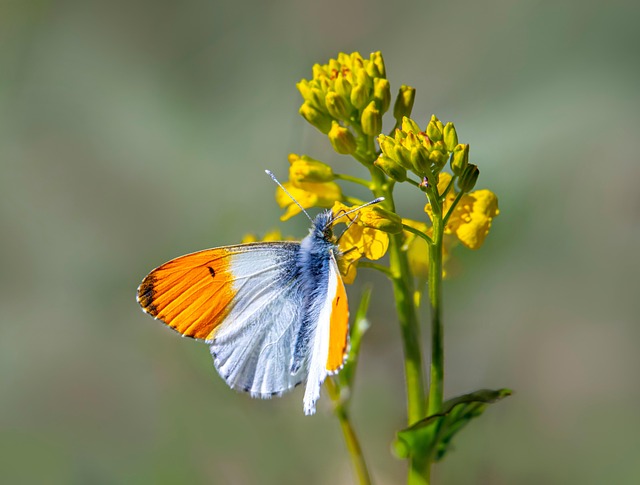
Something extraordinary is happening in the hedgerows, woodlands and gardens of Britain. Bluebells are flowering, swallows are returning, and orange-tip butterflies are taking to the wing in what could become the earliest recorded spring in the nation's history.
And the evidence is not coming from satellites or supercomputers. It is coming from ordinary people — thousands of citizen scientists armed with nothing more than sharp eyes and a love of the natural world.
Nature's Calendar, the Woodland Trust's long-running phenology project, has been collecting volunteer observations of seasonal change since 2000, drawing on a biological record stretching back to 1736. Its data for 2026 is smashing records across the board: frogspawn, blackbird nesting, brimstone butterfly emergence and hazel flowering are all running at the earliest this century.
An 80-year record broken
Perhaps the most striking finding comes from Wytham Woods in Oxfordshire, where an 80-year study of great tits has recorded its earliest-ever egg-laying this spring. A nest was logged on 23 March, beating the previous record by three days. Since the 1960s, the average egg-laying date for these birds has advanced by a remarkable 16 days, as warming temperatures push caterpillar emergence — and the birds that depend on them — ever earlier.
Down in Devon, Dunsford Woods recorded its earliest coal tit egg since observations began in 1955. Similar record-breaking early nesting has been documented in the Netherlands, pointing to dramatic climatic shifts right across northern Europe.
Caterpillars "large enough to notice"
The naturalist Matthew Oates, one of Britain's foremost butterfly experts, has been finding unusually large caterpillars of midsummer species — purple emperors, white admirals and silver-washed fritillaries — weeks ahead of schedule. "The latter caterpillars should be so small you don't even notice them," he said, adding with characteristic wit: "We need a ministerial statement on the state of the nation's caterpillars!"
Oates predicts that midsummer butterflies could emerge in May this year — something not seen since the freakishly hot summer of 1893. The first orange-tip butterfly, that classic harbinger of true spring, was spotted on 18 March, a full month ahead of its typical emergence date fifty years ago.
"These are very exciting times to be a naturalist," Oates said. "And the nation needs its naturalists to tell it what's going on."
Scotland feels the shift
The story is not confined to England's southern counties. Across Scotland, the signs are unmistakable. Dr Judith Garforth, a citizen science officer at the Woodland Trust, recorded elder first leaf on 20 February in northern England and noted that spring is "spreading north rapidly." She described the sighting as "much earlier than I'd expect, especially this far north."
At the Scottish Wildlife Trust's Loch of the Lowes reserve in Perthshire, ospreys have been returning from West Africa, while the woods at Falls of Clyde are already ringing with the songs of chiffchaffs, garden warblers and blackcaps. Along the Clyde, birders from the Scottish Ornithologists' Club logged 144 species in March, with early arrivals including common sandpipers and redstarts — species not typically recorded until later in the season.
Yet there is a bittersweet note: the willow warbler, once a staple of the Scottish spring chorus, is conspicuously absent from many 2026 records — a proven consequence of climate change, according to the Guardian's country diarist Nick Acheson, who called it "the most obvious sacrament of the changing spring."
The numbers tell the tale
Provisional data from Nature's Calendar paints a vivid picture. First frogspawn was laid on average on 23 February, well ahead of the previous earliest average of 5 March. Blackbirds were nesting by 4 March. Hazel was flowering by 14 January — eight days earlier than the previous record set just two years ago.
A relatively warm winter, one of the wettest Januaries on record and Britain's joint tenth-warmest March have turbo-charged this spring's growth. Writer Richard Mabey said he had "rarely seen such sensational displays of early spring flowers."
How you can help
The beauty of this story is that anyone can be part of it. Nature's Calendar tracks more than 150 seasonal events and welcomes volunteers from across the UK. Whether you have spotted your first butterfly of the year, heard a cuckoo, or noticed frogspawn in a local pond, your observation matters.
Visit naturescalendar.woodlandtrust.org.uk to register, add your records and explore a live map of sightings from fellow citizen scientists. As Dr Garforth puts it: "We must continue to monitor this ever-important data to keep tracking nature's response."
Spring has arrived early. The question now is what it can teach us — and the answer lies in the hands of anyone willing to look.