
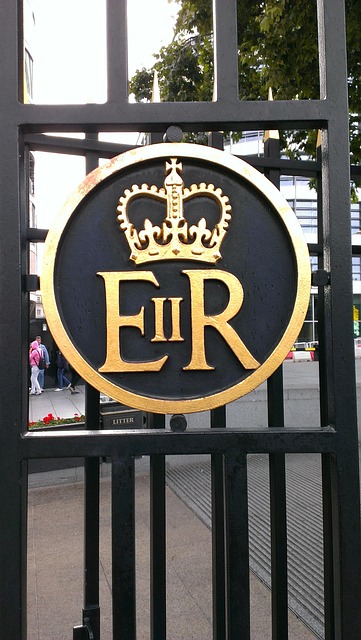
There is a corner of the internet — there is always a corner of the internet — where people genuinely believe that Queen Elizabeth II was, at some point in the 1980s, quietly replaced by a lookalike. The real monarch, so the theory goes, was swapped out, and the woman who waved from balconies and met prime ministers for the next four decades was someone else entirely.
It is, to be clear, complete nonsense. But it is fascinating nonsense — and it has a surprisingly long pedigree.
The Bisley Boy and the Birth of a Template
The idea of a replaced royal didn't start on Reddit. It dates back at least to the reign of Elizabeth I, whose refusal to marry and habit of wearing heavy makeup spawned rumours that the queen had died as a child and been replaced by a boy from the village of Bisley. The theory gained fresh life in 1910 when Bram Stoker — yes, the Dracula author — wrote about it in his book Famous Imposters, lending it a veneer of literary respectability it absolutely did not deserve.
More than a century later, the template remains irresistible. In 2024, the Kate Middleton body-double conspiracy swept social media after the Princess of Wales stepped back from public life during cancer treatment. Every blurry photograph became "evidence." Every slightly different camera angle was proof of a switch. The BBC documented how the theory spread from fringe forums to mainstream discussion in a matter of days.
Queen Elizabeth II attracted her own share of extraordinary claims — from the QAnon-adjacent theory that she had actually died long before September 2022, to the enduring internet legend that the royal family are shape-shifting reptilians. A 1980s body-double switch is, by these standards, almost restrained.
Why We Want to Believe
Professor Karen Douglas, a social psychologist at the University of Kent who has spent more than a decade studying conspiracy theories, identifies three psychological drivers behind such beliefs: epistemic motives (the desire to make sense of confusing events), existential motives (the need to feel safe and in control), and social motives (the desire to feel special or to belong to a group with exclusive knowledge).
"People are drawn to conspiracy theories when events are especially large in scale or significant," Douglas has written, "and leave people dissatisfied with mundane, small-scale explanations."
A monarch who reigned for seventy years, who remained an inscrutable public figure through decades of social upheaval? That is precisely the kind of large-scale, hard-to-fathom reality that conspiracy thinking loves to explain away. If you can't quite comprehend how one woman held the same role for so long, a secret swap offers a tidy — if barking mad — alternative.
A Glasgow Pub and the Art of the Switch
Glasgow has its own contribution to the genre of royal conspiracy theories, though it involves a stone rather than a queen. The Arlington Bar in the city's West End has long claimed a connection to the Stone of Destiny — the ancient coronation relic taken from Scotland by Edward I in 1296. When Scottish students famously "liberated" the stone from Westminster Abbey on Christmas Day 1950, legend has it that a copy was made, and the real stone ended up hidden in Glasgow. The Arlington has cheerfully encouraged speculation about its role in the story ever since.
It is a fine example of how conspiracy theories and local identity can become happily intertwined — less sinister plot, more beloved pub quiz answer.
What It Tells Us
None of these theories have a shred of credible evidence behind them. Queen Elizabeth II was one of the most photographed, most scrutinised, and most consistently present public figures in modern history. She was not replaced. She did not need to be.
But the theories persist, because they were never really about the Queen at all. They are about us — about the stories we tell when reality feels too vast, too random, or too ordinary to accept. As Professor Douglas puts it, conspiracy belief may be "more appealing than satisfying."
The Queen, one suspects, would have been mildly amused.