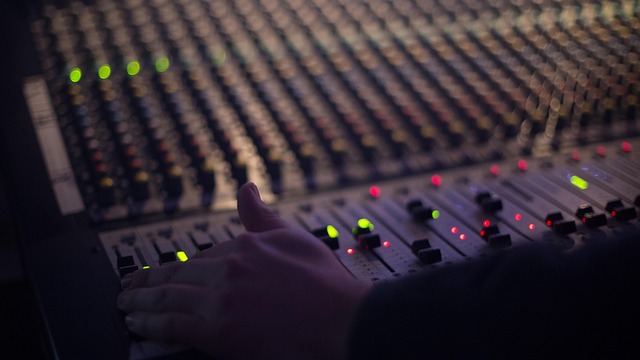

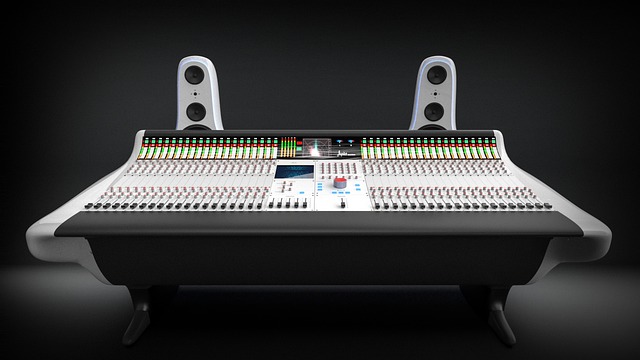
Walk into Studio 4 at Larrabee Sound in Los Angeles and the first thing you notice isn't the gold discs on the wall — it's the ceiling. Strapped above your head are a pair of Meyer Sound Ultra X23 overheads, part of a speaker array that wraps the room like a cocoon. This is what a Dolby Atmos mix room looks like, and it is where a quiet revolution in the way records are made is currently playing out.
Until a few years ago, Atmos was a cinema format — the thing that made helicopters thunder over your head during a Bond film. Now, propelled by Apple Music, Tidal and a wall of new car audio systems, it has become a serious second life for pop, rock, jazz and classical records. The What Hi-Fi? journalist Harry McKerrell, invited into Larrabee for JBL's 80th anniversary, described the experience of hearing Portugal. The Man's Feel It Still in the room as "a wholesale reinvention of a familiar track", adding that for the first time he was "hearing music not as an observer but… like an active participant".
Beds, objects and a 3D canvas
So what is actually different? In stereo, every instrument is glued to two channels: left and right. In Atmos, engineers work with a combination of beds — channel-based foundations such as 7.1.4 (seven speakers around you, one subwoofer, four overhead) — and objects, individual sounds tagged with metadata that tells the playback system precisely where in three-dimensional space they should appear. The renderer in your phone, soundbar or car then translates that data to whatever speakers it has available.
"The bed means it's channel-based. An object is object-based, in that imaginary 3D space with panning metadata," Grammy-winning mix engineer James Auwarter told the Abbey Road Institute. "Objects give you pinpoint accuracy, especially for movement."
The workflow shift
For working engineers, the workflow shift is significant but not seismic. Most Atmos mixes still begin life as approved stereo masters, which are then broken back down into stems — drums, bass, vocals, guitars, effects — and rebuilt across the immersive field. Reverbs and delays are kept as separate stems so they can be flown around the room independently of the dry signal. Loudness rules change too: Atmos masters are capped at –18 LUFS (Loudness Units Full Scale, the broadcast-standard measure of perceived volume) with a true peak of –1 dBFS, miles below the brick-walled stereo norm.
The temptation, of course, is to throw everything everywhere. Most experienced mixers warn against it. Kick, snare, bass and lead vocal generally stay locked front-and-centre; pads, textures, backing vocals and effects do the wandering. "Spread things too far apart and certain grooves just fall apart," Auwarter cautions. "Shakers can sometimes move around, but in other grooves they have to stay near the hi-hat or snare or it just feels wrong."
Believers and sceptics
Not every artist is convinced. Critics argue that headphone Atmos — which uses a binaural renderer to fake the speaker array — can sound thin, phasey or simply gimmicky compared with a well-judged stereo master. Yet manufacturers and a growing roster of engineers are doubling down. JBL's senior vice president of global engineering, Sharon Peng, calls spatial audio "more than surround sound… dynamic, adaptive and emotional".
The democratising twist is that you no longer need a Larrabee-grade room to start. Engineers including Auwarter and Andrew Scheps now mix Atmos partly on headphones, using tools such as APL Virtuoso to model the room. Final tweaks happen in a certified space — but the day-one barrier to entry has tumbled.
For the listener at home, the lesson from the pros is simple. Stereo isn't dead, and a bad Atmos mix is worse than a great two-channel one. But in a properly built room, with a thoughtful engineer at the desk, spatial audio stops being a marketing word and starts behaving like what it is — a new instrument for the people who make records.