
Of all the crops that might sustain humanity's future on the Moon, the chickpea wasn't exactly the obvious choice. But it turns out the unassuming star of hummus, falafel and countless curries could be the key to feeding astronauts on the lunar surface.
Researchers from the University of Texas at Austin and Texas A&M University have successfully grown and harvested chickpeas in simulated lunar soil — a first for the crop — according to a study published on March 5 in the journal Scientific Reports.
The problem with Moon dirt
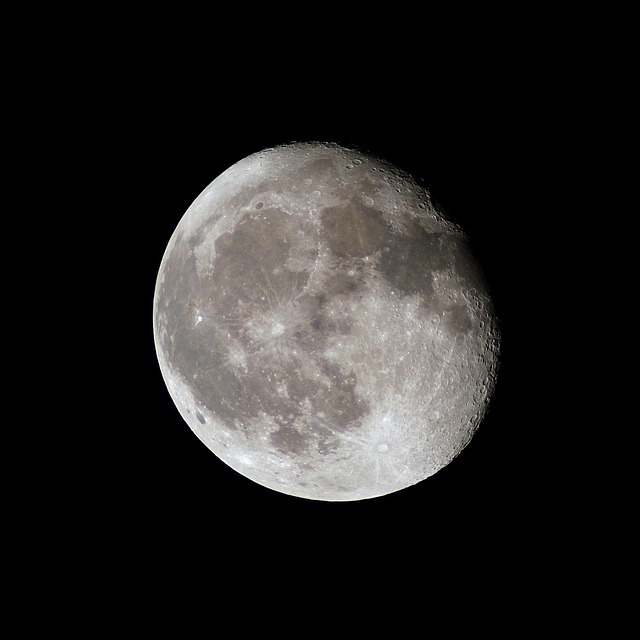
Growing anything on the Moon is, to put it gently, a nightmare. Lunar regolith — the dusty grey stuff that covers the surface — contains no organic matter, no microorganisms, and none of the biological richness that makes Earth soil so fertile. It's as fine as baby powder, sticky, metallic, sharp, loaded with toxic metals like aluminium, copper and zinc, and terrible at holding water.
"It is a hazard unamended," said Jessica Atkin, a doctoral candidate at Texas A&M and the study's lead author. "It is the worst. It is awful."
Enter the chickpea — and some helpful friends
The team chose the 'Myles' variety of chickpea for its compact size, hardiness, and high protein content — all qualities you want in a space crop. But they didn't send the chickpeas in alone.
Before planting, the researchers dusted seeds with arbuscular mycorrhizal fungi, a beneficial fungus that helps plant roots branch out and absorb nutrients while locking away toxic heavy metals. They also enriched the simulated Moon dirt with vermicompost — a nutrient-dense fertiliser produced by red wiggler worms digesting food scraps and organic waste.
The combination worked. Chickpea plants grew for weeks to months and produced flowers and seeds in soil mixtures containing up to 75 percent lunar simulant. Plants treated with the fungi survived two weeks longer than those without, and the fungi themselves colonised the simulated soil — suggesting they might only need to be introduced once.
Why chickpeas beat the competition
Chickpeas tick nearly every box on a space farmer's wish list. They're packed with protein and essential nutrients. They're nitrogen-fixing, meaning they enrich soil rather than deplete it — a crucial trait for building sustainable lunar farmland over time. They're resilient, compact, and calorie-dense. And in a cramped lunar habitat, they're versatile enough to become dozens of different meals.
A farm on the Moon — not quite science fiction anymore
The findings arrive at a moment when lunar agriculture is more than a daydream. NASA's Artemis programme aims to return humans to the Moon in the coming years, with the long-term goal of establishing a permanent presence. China is pressing ahead with its own lunar base plans. Both efforts face the same fundamental challenge: you can't keep sending food from Earth forever.
"The research is about understanding the viability of growing crops on the Moon," said Sara Oliveira Santos, the study's principal investigator at UT Austin's Institute for Geophysics. "How do we transform this regolith into soil? What kinds of natural mechanisms can cause this conversion?"
Not quite dinner time — yet
There's still work to do. The team needs to confirm the Moon-grown chickpeas are safe to eat and nutritionally adequate. Seeds produced in the simulant were fewer than those from regular soil, and the plants showed clear signs of stress. Researchers are now testing whether those seeds can sprout new generations of plants.
Santos, for one, is eager to find out. "I asked to eat it," she admitted, "but she said no."
Atkin, meanwhile, has her sights set squarely on the future: "I will be the first one to make some moon hummus."
Pass the pita.