
In September 1936, an animal called Benjamin — the last known thylacine, or Tasmanian tiger — died of exposure at the Beaumaris Zoo in Hobart. It was a miserable end for one of nature's most extraordinary creatures: a carnivorous marsupial with tiger stripes and a kangaroo's pouch, hunted to oblivion by European settlers who branded it a pest.
Ninety years on, the thylacine has taken its first tentative steps back from extinction. Researchers have unveiled healthy thylacine joeys in a high-security sanctuary, the culmination of years of advanced CRISPR gene editing and the use of a closely related surrogate species. By any measure, it is one of the most remarkable achievements in the history of biological science.
The science: from dunnart to tiger
The road to this moment has been long and painstaking. At its heart lies the work of Professor Andrew Pask at the University of Melbourne's TIGRR (Thylacine Integrated Genetic Restoration Research) Lab, in partnership with Colossal Biosciences, the US-based company that has committed more than $600 million to de-extinction research across multiple species.
The process begins with the thylacine genome, first sequenced by Pask's team in 2018 from DNA extracted from a 108-year-old preserved specimen. Researchers identified the fat-tailed dunnart — a tiny, mouse-sized carnivorous marsupial — as the thylacine's closest living genetic relative, despite being separated by some 70 million years of evolution.
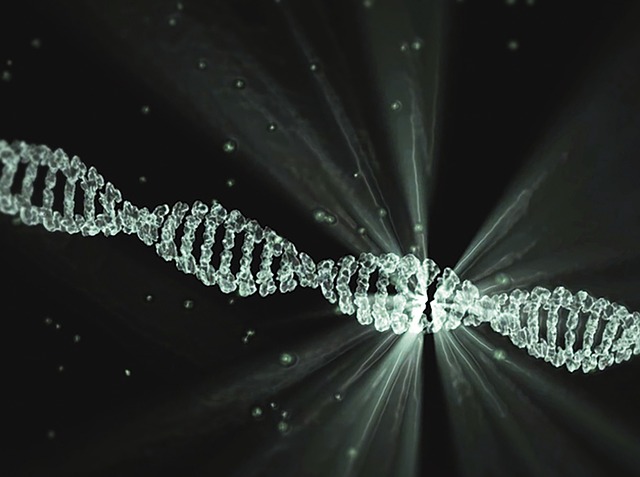
Using CRISPR gene-editing technology, scientists methodically edited dunnart cells at every point where their DNA differed from the thylacine's, effectively engineering a dunnart cell into something approaching a thylacine cell. The edited nucleus was then transferred into an egg cell to create an embryo — a technique known as somatic cell nuclear transfer, the same principle behind the cloning of Dolly the sheep.
Because thylacine young are only slightly larger than a grain of rice at birth, the dunnart could serve as a plausible surrogate mother. After birth, the joeys were transferred to an artificial marsupial pouch designed to replicate the conditions of a real thylacine mother's pouch.
The result: healthy, living thylacine joeys — or, more precisely, thylacine proxies — that represent the most advanced proof of concept de-extinction has yet produced.
Caution, not spectacle
What is most striking about this milestone is the restraint with which the scientists have presented it. There has been no triumphalist fanfare, no talk of releasing thylacines into the Tasmanian bush next Tuesday. The researchers stress this is an early, carefully managed effort aimed at ecological restoration rather than a fast return to the wild.
"The best thing we can do to protect our ecosystems is to prevent species extinctions," Pask has said. "But where a cornerstone species has been lost from that environment, the next best thing we can do is try to bring that animal back."
The thylacine sat at the apex of its food chain in Tasmania, and its loss triggered what ecologists call trophic downgrading — a cascading disruption of the ecosystem below it. The near-catastrophic spread of facial tumour disease among Tasmanian devils, for instance, is believed to have been exacerbated by the absence of a predator that would have culled infected and weakened animals.
Restoring the thylacine, even as a proxy species, could help rebalance an ecosystem that has been out of kilter for nearly a century.
A question for Scotland
The thylacine breakthrough arrives at a moment when Scotland is deep in its own conversations about restoring lost species. The Lynx to Scotland coalition — led by Trees for Life, Scotland: The Big Picture, and The Lifescape Project — has spent six years building the case for reintroducing the Eurasian lynx to the Scottish Highlands, where it was driven to extinction more than a thousand years ago.
"We all know the urgency of the situation with nature," Lisa Chilton, chief executive of Scotland: The Big Picture, said recently. "But if you don't bring society with you it can't possibly work."
The lynx effort relies on traditional rewilding — physically relocating animals from existing populations. But the thylacine milestone raises a longer-term question: could CRISPR-based genetic restoration ever play a role in bringing back species lost from these islands? The Scottish wildcat, functionally extinct due to hybridisation with domestic cats, is one candidate that conservationists have long agonised over. Beavers, successfully reintroduced to Scotland in recent years, prove that species restoration can work when done carefully and with public consent.
Steve Micklewright, chief executive of Trees for Life, has been blunt about the challenges of rewilding in a landscape shaped by centuries of human interference. "It's a matter of when, not if," he told The Guardian of the lynx's return, "but the 'when' could be quite a long time away."
Wonder first, questions second
There are legitimate ethical questions about de-extinction. Critics argue that the resources would be better spent protecting species that still exist. Others worry about unforeseen ecological consequences of introducing proxy species into environments that have adapted to their absence.
These are serious concerns, and they deserve honest debate. But today, the dominant note should be one of wonder. A creature that existed only in faded black-and-white photographs and a handful of haunting film clips is alive again — breathing, growing, and being watched over by scientists who understand the weight of what they have achieved.
The thylacine's return is not a stunt. It is a careful, considered act of scientific restoration — and a reminder that human ingenuity, when directed with humility and purpose, can sometimes begin to undo the damage that human recklessness once wrought.