

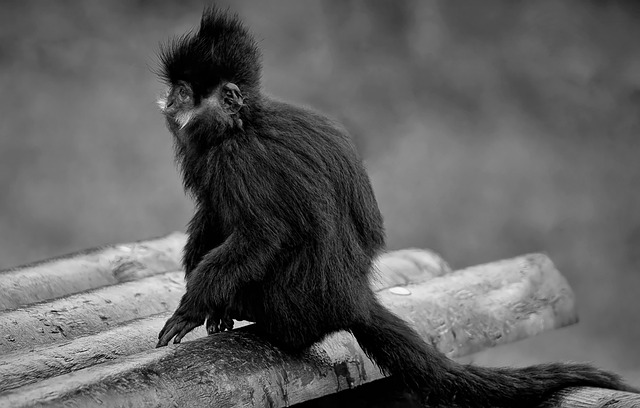
In the rugged karst mountains of southern China, a primate rarer than the giant panda is staging one of the most remarkable comebacks in modern conservation history.
The white-headed langur — a striking, critically endangered monkey found nowhere else on Earth but the limestone cliffs of Guangxi province — has seen its population surge from just 300 individuals in the 1980s to more than 1,400 today, spread across 130 groups in the Chongzuo White-headed Langur National Nature Reserve.
The secret? A pioneering blend of artificial intelligence, ecological restoration, and legal protection that conservationists say could serve as a blueprint for endangered species programmes worldwide.
Eyes on the cliffs
Monitoring langurs in their natural habitat is no small feat. The animals live on sheer limestone karst formations — towering, jagged rock pillars cloaked in subtropical forest — making traditional patrols dangerous and patchy at best.
To solve this, the reserve partnered with technology company Huawei and the China-ASEAN Artificial Intelligence Application Cooperation Centre to develop an intelligent monitoring platform. More than 20 stations fitted with video-based monitoring devices now line the cliffsides, collecting real-time data on langur distribution, behaviour, and activity patterns.
AI-driven labelling analyses the footage, identifying individual animals and flagging changes in group dynamics. To date, the system has logged over 37,200 instances of langur activity — a volume of data that would have taken human observers years to compile.
"Digital technology enables more precise observation of these limestone langurs and more informed management of their living environment," said Nong Dengpan, Director of the reserve's Management Centre. "This integrated conservation model can serve as a reference for the protection and population recovery of other endangered primate species."
Rebuilding a habitat
But technology alone didn't save the langurs. The reserve has restored 77.6 hectares of degraded habitat, built two dedicated drinking water sources and 18 water points for the animals, and constructed two ecological corridors — vital green bridges that allow separate langur groups to move between isolated karst peaks, supporting genetic diversity and long-term population health.
China's first-ever species-specific habitat protection regulation, the Chongzuo White-Headed Langur Habitat Protection Regulations, provided the legal backbone for these measures, giving conservationists the authority and funding to act decisively.
The results extend beyond the langurs themselves. As an umbrella species for the karst ecosystem, their recovery is lifting the fortunes of the entire habitat. Wild duck lettuce, a nationally protected plant species, was recently discovered in the reserve for the first time — a sign that the broader ecosystem is healing.
A model for the world?
Dr Chen Wei, a primatologist studying the species, described the programme as "a fundamental shift from reactive crisis management to proactive ecosystem service management."
"We're not just counting animals — we're rebuilding entire forest ecosystems," he said.
Conservation experts say the Chongzuo model is particularly significant because it demonstrates how cutting-edge technology can amplify — rather than replace — traditional ecological knowledge and on-the-ground stewardship. Rangers who have patrolled these mountains for decades provide the contextual understanding that makes AI data actionable. The technology tells them where the langurs are; their experience tells them what that means.
The approach has already attracted international attention. By the end of 2025, similar digital conservation projects had been implemented in 65 protected areas worldwide, applying comparable combinations of AI monitoring, habitat restoration, and community engagement.
For the white-headed langur — once dismissed as a species beyond saving — the message is unambiguous. With the right tools, the right laws, and the right people, even the most precarious wildlife populations can be brought back from the brink.