
When Simba Srivastava first held the fossil, he was not exactly reverent.
"You want to stick your finger in a dinosaur brain?" the Virginia Tech undergraduate asked a visiting reporter, cradling a lumpy, pockmarked lump of rock. "This is a uniquely sucky specimen. It's so bad. Like, if you saw a human skull in this way, you'd throw up."
Two years later, that "uniquely sucky specimen" has a name, a family, and a place in the story of life on Earth. It is a brand new species of meat-eating dinosaur — one that lived more than three times as long ago as Tyrannosaurus rex.
A drawer in Blacksburg
The skull had been waiting a very long time for someone to pay it attention. A crew from the Carnegie Museum of Natural History pulled it out of the ground at Ghost Ranch, New Mexico, back in 1982. Crushed, flattened and fiendishly difficult to interpret, it was quietly filed away.
Decades later, Virginia Tech geobiologist Sterling Nesbitt dug it out of a drawer and brought it home to Blacksburg. He and colleague Michelle Stocker then did something unusual: they handed the project to a first-year student.
"We want undergraduate researchers to experience the whole paleontological research process at Virginia Tech," Nesbitt told the university's news team. "Simba grabbed the project by the reins."
Building a dinosaur out of a jumble
The trouble with the skull was that bone and surrounding rock were, in places, almost identical in density — meaning even a CT scanner could not cleanly tell them apart. Srivastava spent months working through the scans, separating fragments by hand on screen, before 3D printing a reconstruction he could finally turn over in his palms.
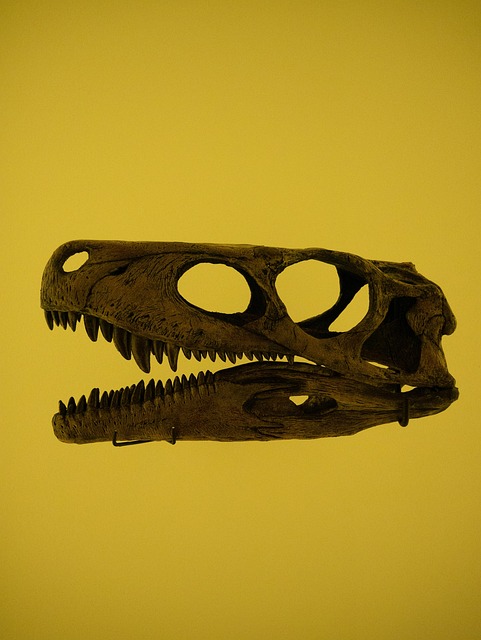
What emerged was strange and rather charming: massive cheekbones, a wide braincase, and a short, deep snout. "One paleo-artist said that it looked like a murder muppet," Srivastava said.
The team gave it a more dignified Latin name — Ptychotherates bucculentus, "folded hunter with full cheeks" — and published their findings on 15 April in the peer-reviewed journal Papers in Palaeontology.
A last stand in the Late Triassic
Ptychotherates lived near the end of the Triassic period, between 252 and 201 million years ago, when dinosaurs were not yet the apex predators of Hollywood imagination. They shared the landscape with the forerunners of crocodiles and mammals, jostling for resources.
"Dinosaurs go from being co-stars to the headliner," Srivastava said.
The Virginia Tech team concluded that their folded hunter belonged to Herrerasauria — one of the earliest-evolving families of carnivorous dinosaurs — and was very probably one of the last of its kind. No member of the group has ever been found in rocks from the Jurassic that followed.
That is a quietly significant twist. The usual story is that the end-Triassic mass extinction cleared the stage of dinosaurs' competitors, letting the survivors flourish. Ptychotherates suggests it also took some ancient dinosaur lineages down with it.
"This forces us to reconsider the impact of the end-Triassic extinction as something that wiped out not just the competitors to dinosaurs, but some long-standing dinosaur lineages themselves," Srivastava said.
The American Southwest, the team suggest, may have been this old lineage's final refuge before the world changed.
One skull, billions of voices
For now, Ptychotherates is known from a single crumpled head — the only evidence that its kind ever lived this late, this far south, with this peculiar shape.
"This specimen, it fits in my hands, but it is the only proof that any of these dinosaurs lived this long, lived in these latitudes, the only proof that they evolved to have this skull shape," Srivastava said. "All these billions of individuals that existed through time are spoken for by this one specimen."
Not bad for a lump of rock nobody wanted to look at.