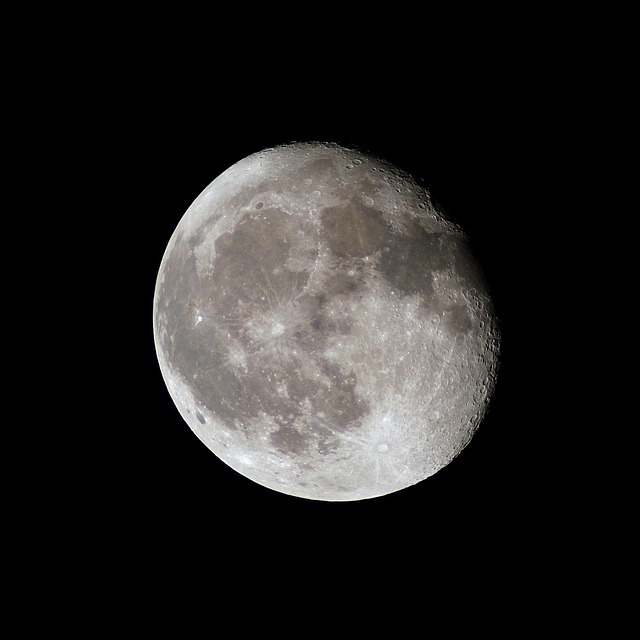


For the first time since Eugene Cernan brushed lunar dust off his boots in December 1972, human beings have travelled to the Moon and back.
The Artemis II capsule Integrity splashed down in the Pacific Ocean southwest of San Diego on 11 April, ending a ten-day mission that carried four astronauts around the far side of the Moon and into the record books.
It is, by any honest measure, the biggest moment in crewed spaceflight in more than half a century.
A ten-day arc around the Moon
Artemis II launched on NASA's Space Launch System rocket from Kennedy Space Center on 1 April. On board were commander Reid Wiseman, pilot Victor Glover, and mission specialists Christina Koch and Jeremy Hansen — the latter becoming the first Canadian ever to travel beyond low Earth orbit.
The mission was not a landing. It was a free-return flyby: a looping trajectory that used the Moon's gravity to sling the crew home without the need to fire engines into lunar orbit. The profile is a deliberate echo of Apollo 8, and a deliberate shakedown of the systems that will one day put boots back on the regolith.
On 6 April, Artemis II quietly made history a second time, surpassing Apollo 13's 1970 distance record to become the farthest a crewed spacecraft has ever flown from Earth.
The view from the far side
By all accounts, the crew were changed by what they saw. In downlinks to mission control, they spoke of the silence of deep space, of an Earth that looked smaller and more fragile than any training sim had prepared them for, and of the strange wonder of watching an "Earthset" — the planet slipping behind the lunar limb — for the first time in half a century.
The far side, NASA relayed, was observed to be bright, cratered, and entirely unbothered by human company.
What NASA says it proves
NASA administrators were quick to frame the flight as a bridge, not a destination.
"Artemis II has validated the life-support systems, the communications architecture, and the deep-space navigation we need for what comes next," the agency said in a post-splashdown briefing. "Every subsystem performed to specification or better."
The mission's objectives were deliberately unglamorous: confirm that Orion could keep four humans alive beyond low Earth orbit for a sustained period, verify the capsule's heat shield at lunar-return velocities, and rehearse the communications relays that future surface crews will depend on.
All three, NASA says, were achieved.
The road to Artemis III — and Mars
The path forward shifted earlier this year. In February, NASA restructured the Artemis programme, converting Artemis III into a low-Earth-orbit demonstration flight and moving the first crewed lunar landing to Artemis IV. The Exploration Upper Stage was dropped in favour of Centaur V.
The agency has framed the reshuffle as a way to increase mission cadence. Critics have called it a delay. Artemis II's clean run gives the programme political cover either way.
Further out sits Mars. SpaceX in February pushed its Martian ambitions back by "five to seven years" to concentrate on lunar work — a reminder that the Moon is no longer a stepping stone the industry is in a hurry to leave.
A quieter kind of giant leap
There were no new bootprints this time. No flag, no plaque, no rock boxes brought home.
What Artemis II brought back instead was proof: that the hardware works, that the crew came home healthy, and that the long, expensive, frequently doubted business of returning humans to deep space is, finally, underway again.
Fifty-four years is a long time to wait for a sequel. On the evidence of the last ten days, it was worth it.