
Imagine a crocodile the length of a school bus hauling itself out of a Cretaceous swamp, jaws wide, eyeing up a passing dinosaur as a light lunch. That was Tuesday afternoon, give or take 76 million years.
Now, for the first time, you can stand next to one.
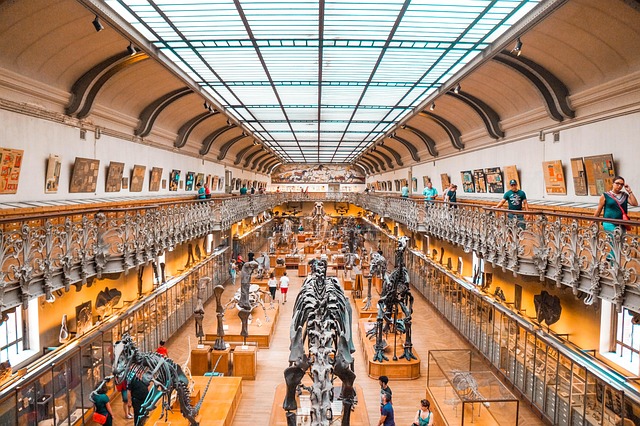
Scientists have unveiled the first scientifically accurate, fully mounted skeleton of Deinosuchus schwimmeri — a 31-foot "terror croc" that ruled the swamps and estuaries of the eastern United States between 83 and 76 million years ago. The life-size replica has just gone on display at the Tellus Science Museum in Cartersville, Georgia, which is currently the only place in the world you can see one.
A very big lizard with a very bad attitude
Deinosuchus was not a dinosaur. It was an enormous ancient relative of modern alligators — and, crucially, it ate dinosaurs. At up to 9.45 metres (31 feet) long, it was comfortably longer than a Routemaster bus and heavier than anything you'd want to meet on a riverbank.
Palaeontologists have long nicknamed it the "dinosaur-killer". Fossil bite marks on dinosaur bones suggest this was not marketing puff: Deinosuchus really did ambush dinosaurs that came to drink, in much the same way today's saltwater crocs snatch wildebeest.
"These replicas are more than just creating a 'scare factor'," said Dr David Schwimmer, the Columbus State University geology professor whose four decades of research underpin the reconstruction — and after whom the species was named in 2020. "Understanding dinosaurs' predatory habits helps us decode some of nature's greatest survival strategies."
What's actually new
Deinosuchus has been known to science for well over a century, but until now nobody had mounted a full skeleton that palaeontologists were willing to sign off as accurate. Fossils tend to turn up in fragments: a skull here, a chunk of tail there, a scattering of the bony armour plates known as osteoderms.
The new replica, two years in the making, is the result of a collaboration between Schwimmer and Triebold Paleontology Inc., a firm that builds museum-quality skeletons. The team used high-resolution 3D scans of real fossil specimens to piece together both the skeleton and the distinctive armoured skin, rather than guessing at the gaps.
The underlying taxonomy is also recent. In 2020, palaeontologists Adam Cossette and Christopher Brochu published a systematic review in the Journal of Vertebrate Paleontology that split Deinosuchus into separate species — and named the eastern one schwimmeri in recognition of Schwimmer's work on the Late Cretaceous of the American Southeast.
A window into a lost ecosystem
For palaeontologists, the excitement isn't really the monster. It's the ecosystem.
During the Late Cretaceous, rising seas cut North America in two, and what is now Georgia, Alabama and Texas sat on the edge of a warm, shallow sea. The swamps and river mouths of that coastline were teeming with fish, turtles, early mammals, and dinosaurs such as the tyrannosaur-relative Appalachiosaurus — all of which shared the water with an apex predator bigger than any of them.
Seeing Deinosuchus fully reconstructed, in scale with its neighbours, lets researchers and visitors appreciate how the whole food web fitted together.
"We can tell you that Deinosuchus is 30 feet long, but seeing it is far more impactful," said Rebecca Melsheimer, curatorial coordinator at Tellus. Hannah Eisla, the museum's director of education, added that school groups from across Georgia will now be able to picture "how this area's ecosystem looked in the Cretaceous Period" rather than just reading about it.
A childhood obsession, vindicated
For Schwimmer, the mounted skeleton is the payoff for a lifetime of muddy fieldwork. He grew up ten blocks from the American Museum of Natural History in New York, where a Deinosuchus skull first caught his eye as a child. He dug up his own first specimen in 1979.
"Bones and fossils tell us only part of the story," he said. "Fully assembled, life-size replicas become a blueprint for better understanding the dynamic animals that creatures like Deinosuchus really were."
Or, to put it another way: the bus-sized croc that ate dinosaurs is back — and this time, it's standing still long enough for us to take notes.