
March 2026 will go down as one of those months where the universe decided to show off. Within weeks of each other, two separate teams of scientists announced breakthroughs that span the extremes of scale — from the ancient magnetic heartbeat of the Moon to a brand-new building block of matter conjured inside a 27-kilometre underground ring.
Both stories share a thread: decades of patient work, finally paying off.
The Moon's Magnetic Secret
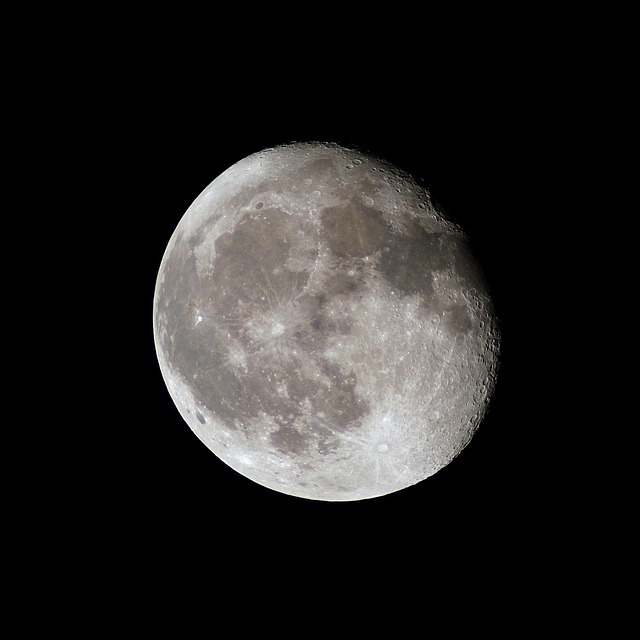
Here's a puzzle that's nagged scientists since the Apollo astronauts came home with their haul of moon rocks in the early 1970s. The samples were magnetic — strongly so. But the Moon today has no magnetic field. So what magnetised those rocks?
For fifty years, two camps argued. One said the young Moon must have had a powerful internal dynamo, like Earth's. The other said a body that small couldn't sustain one. A team at the University of Oxford, led by Associate Professor Claire Nichols, has now shown that both sides were partly right.
Publishing in Nature Geoscience in late February, Nichols and colleagues found that the Moon did produce an extraordinarily strong magnetic field — at times even stronger than Earth's — but only in brief, explosive bursts lasting a few thousand years at most. For the vast majority of its early history, the lunar field was weak.
The key? Titanium. Every Apollo sample that recorded strong magnetism was rich in titanium. When titanium-laden rock melted deep at the Moon's core-mantle boundary, it triggered short-lived but ferocious magnetic "heartbeats."
"Our new study suggests that the Apollo samples are biased to extremely rare events that lasted a few thousand years — but up to now, these have been interpreted as representing 0.5 billion years of lunar history," Nichols said.
The bias happened because all six Apollo missions landed on the relatively flat mare plains — prime real estate for titanium-rich volcanic rock. Co-author Jon Wade put it beautifully: "If we were aliens exploring the Earth, and had landed here just six times, we would probably have a similar sampling bias."
NASA's upcoming Artemis missions should provide the test. By sampling different regions, scientists can check whether the predictions hold.
Particle Number 80
Meanwhile, 100 metres below the French-Swiss border, the Large Hadron Collider was busy making history of its own. CERN announced the discovery of its 80th subatomic particle: the Ξcc⁺, or "Xi-cc-plus."
Think of it as the proton's exotic, heavyweight cousin. A proton is built from two "up" quarks and one "down" quark — the lightest building blocks available. Swap those two up quarks for their beefier relatives, "charm" quarks, and you get Xi-cc-plus: same architecture, four times the mass.
It's only the second baryon ever observed with two heavy quarks, and the first new particle spotted by the upgraded LHCb detector. The team identified it through a clear signal of around 915 events in data from proton-proton collisions in 2024.
"The result will help theorists test models of quantum chromodynamics, the theory of the strong force that binds quarks into not only conventional baryons and mesons but also more exotic hadrons," said LHCb spokesman Vincenzo Vagnoni.
If that sounds abstract, here's why it matters: the strong nuclear force is the glue that holds every atom's nucleus together. Understanding it better means understanding why matter itself holds its shape. Each new particle is another piece of the puzzle — and particle 80 is a particularly satisfying one.
Patience, Curiosity, and the Long Game
What makes these stories sing together is the timescale. The Apollo rocks sat in labs for over fifty years before modern techniques cracked their secret. The LHCb detector underwent a massive upgrade, completed in 2023, before it could see Xi-cc-plus. Science rarely delivers instant gratification — but when the payoff comes, it's spectacular.
March 2026 has reminded us that the universe still has plenty of surprises tucked away, in half-century-old sample vaults and in the debris of collisions at nearly the speed of light. If eighty particles and fifty years of lunar detective work have taught us anything, it's that the best discoveries reward those who keep looking.