

Edition No. 71 · Saturday, April 25, 2026

← Past Editions · Edition No. 71 · Saturday, April 25, 2026

Today’s outlook: Hero hounds, holy manuscripts, and the steady hum of regeneration

Hero hound: Fillmore's frantic barks rouse Tustin family from garage blaze
Dogs & Animals Rescue

Hero hound: Fillmore's frantic barks rouse Tustin family from garage blaze

A three-year-old German shorthaired pointer who almost never makes a peep at night refused to be ignored at 4.20am — and his owners say he saved their home and their lives

It was just after 4.20 in the morning when Fillmore decided his family needed to wake up — right now.

The three-year-old German shorthaired pointer, who almost always sleeps soundly through the night, began barking urgently from his unlocked crate in the master bedroom of the Dalis family home in North Tustin, California.

"There was no quieting him," owner Eleni Dalis, 62, told the Los Angeles Times. At first she assumed he had spotted a coyote. Then she looked out of her bedroom window and saw a "strong red glow" coming from the direction of the neighbour's house.

Read full story →


Clydebank East crowned Scotland's best for affordable housing — 'a beacon for regeneration'
News Clydebank

Clydebank East crowned Scotland's best for affordable housing — 'a beacon for regeneration'

An 88-home development on a former industrial site has won national recognition, capping a transformation that's given families across West Dunbartonshire a place to put down roots.

For one Clydebank mother of a young family, the difference a five-bedroom home makes isn't an abstraction. When Herald Property Award judges visited the new Clydebank East development last autumn, she told them, plainly, that the spacious house had been life-changing.

That tenant's story helped clinch a national award for the 88-home regeneration project — and it tells you most of what you need to know about why this matters.

Clydebank East has been named Affordable Housing Development of the Year at The Herald Property Awards for Scotland, beating nine other shortlisted projects from a field of more than 120 entries. Judges visited each finalist to assess quality, impact and innovation; they liked what they found on the banks of the Clyde.

Read full story →
The 3-million-year-old secret hiding in a chunk of Antarctic ice
Science Discoveries

The 3-million-year-old secret hiding in a chunk of Antarctic ice

Scientists at the bottom of the world have cracked open Earth's oldest climate diary — and the story it tells is stranger than anyone expected

At the windswept edge of the East Antarctic ice sheet, in a place called Allan Hills, scientists have been chipping away at what may be the oldest ice ever pulled from our planet — and the tiny bubbles trapped inside it have just rewritten three million years of Earth's climate story.

The discovery, published in two new papers in the journal Nature, comes from a team led by Oregon State University's Center for Oldest Ice Exploration, known as COLDEX. By analysing the ancient air sealed inside the ice — pockets no bigger than a pinhead — researchers have produced the first direct measurements of carbon dioxide, methane and ocean temperature stretching back three million years.

And the picture they've painted is a puzzle.

Read full story →
Glasgow scholars recover 42 lost pages from one of the world's oldest New Testament manuscripts
News Scotland

Glasgow scholars recover 42 lost pages from one of the world's oldest New Testament manuscripts

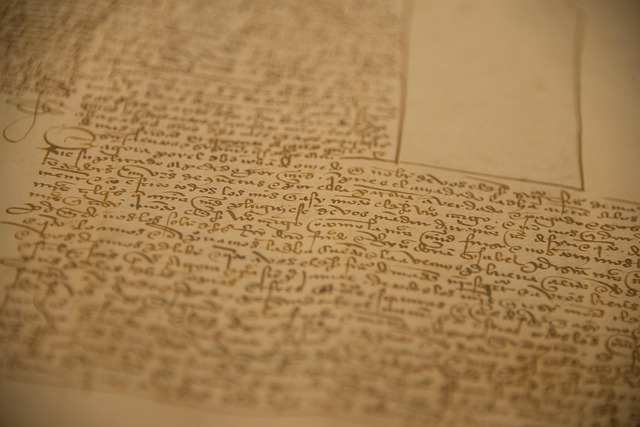
A University of Glasgow-led team has used multispectral imaging to coax 'ghost' text out of a 6th-century manuscript scattered across five countries — and it began with a simple observation about ink.

When Professor Garrick Allen and his team set out to study Codex H, they were working with what most people would charitably describe as scraps. Just 41 surviving leaves of a 6th-century copy of the Letters of St Paul, scattered across libraries in Italy, Greece, Russia, Ukraine and France — the unhappy remains of a manuscript that medieval monks took apart for spare parts in the 13th century.

What the Glasgow-led team has now done sounds closer to forensic science than divinity scholarship. They have recovered 42 pages of text that no longer physically exist.

"Given that Codex H is such an important witness to our understanding of Christian scripture, to have discovered any new evidence — let alone this quantity — of what it originally looked like is nothing short of monumental," said Professor Allen, who holds the chair of Divinity and Biblical Criticism at the University of Glasgow.

Read full story →
How AI Rewrote the Rulebook for the Universe's Most Common Stuff
Science Breakthroughs

How AI Rewrote the Rulebook for the Universe's Most Common Stuff

A neural network trained on the dance of charged dust has uncovered laws of plasma that older theories got subtly wrong — and the team behind it say the same trick could work far beyond physics

Look up at the night sky and almost everything you see — the Sun, the stars, the glowing wisps between them — is plasma. It is the fourth state of matter, the stuff that makes up an estimated 99.9% of the visible universe, and we still do not fully understand how it behaves.

Now we understand it a little better. And the breakthrough came from a neural network running on a desktop computer.

Physicists at Emory University in Atlanta have used a custom-built artificial intelligence to uncover previously unknown laws governing "dusty plasma" — an ionised gas peppered with tiny charged grains. Their findings, published in the Proceedings of the National Academy of Sciences (PNAS), describe the forces between those grains with better than 99% accuracy and, in the process, quietly correct two long-standing assumptions that textbooks had taken for granted.

Read full story →