
Edition No. 81 · Tuesday, May 5, 2026

← Past Editions · Edition No. 81 · Tuesday, May 5, 2026

Today’s outlook: Hope, hidden worlds and a hiccup at the GP

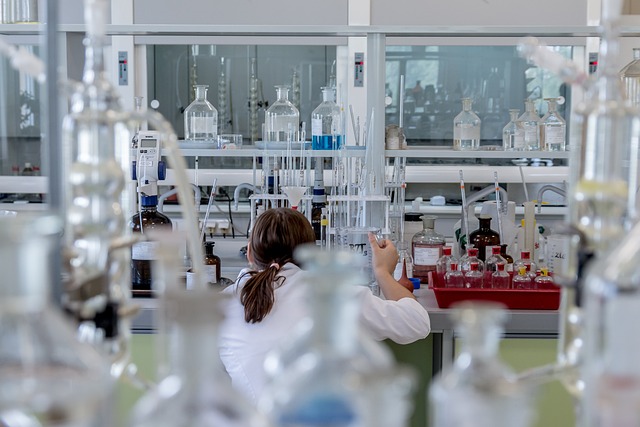
Harvard team's decade-long quest points to lithium as a possible Alzheimer's breakthrough
Science

Harvard team's decade-long quest points to lithium as a possible Alzheimer's breakthrough

A 10-year study finds lithium occurs naturally in the brain — and that its depletion may be one of the earliest signs of Alzheimer's. Now a new compound is heading for clinical trials.

When Bruce Yankner's team published their findings last August, his inbox stopped being his own.

Messages have been pouring in ever since, from people living with Alzheimer's and from the families who love them. All of them want to know the same thing: is this the breakthrough?

"I try to get back to everybody who contacts me," Yankner, a professor of genetics and neurology at Harvard Medical School, told the Harvard Gazette. "I try to provide hope."

Read full story →

AI uncovers more than 100 hidden worlds lurking in NASA's data
Science

AI uncovers more than 100 hidden worlds lurking in NASA's data

A new tool called RAVEN has sifted through observations of 2.2 million stars — and found planets nobody knew were there

Somewhere out there — quite a lot of somewheres, in fact — more than a hundred new worlds have just stepped out of the shadows.

Astronomers at the University of Warwick have validated over 100 previously hidden exoplanets buried in data from NASA's Transiting Exoplanet Survey Satellite (TESS), thanks to a new artificial intelligence tool that can spot the faint fingerprints of distant planets where humans struggle to look.

The system is called RAVEN — RAnking and Validation of ExoplaNets — and it has been let loose on observations of more than 2.2 million stars gathered during the first four years of the TESS mission. The results, published in the Monthly Notices of the Royal Astronomical Society, are nothing short of staggering.

Read full story →
ChatGPT Images 2.0: OpenAI's 'Thinking' Image Model Now Browses the Web — and Marks Its Own Homework
AI Model Releases

ChatGPT Images 2.0: OpenAI's 'Thinking' Image Model Now Browses the Web — and Marks Its Own Homework

Real-time search, self-checking outputs and a December knowledge cutoff: what's actually new in OpenAI's biggest multimodal upgrade since GPT-4o.

OpenAI's latest multimodal upgrade arrived overnight with the kind of confident understatement the company has made its trademark. ChatGPT Images 2.0 — rolling out to Plus and Enterprise tiers first — adds what OpenAI is calling "thinking capabilities" to its image generation and analysis stack: real-time web search inside the image pipeline, self-checking of outputs, and a sharper hand at multimodal reasoning.

In plain English: the model can now look something up before it draws it, and look at what it drew before it shows you.

That second part matters more than the marketing suggests. Earlier image models hallucinated text, fingers and physics with cheerful abandon. Images 2.0 runs a verification pass — comparing the rendered image against the prompt and, where relevant, against fresh search results — before returning a final output. OpenAI says this cuts visible errors in text rendering and factual diagrams "substantially," though it has not yet published a headline benchmark figure.

Read full story →