
Edition No. 88 · Sunday, September 27, 2026

← Past Editions · Edition No. 88 · Sunday, September 27, 2026

Today’s outlook: Plays, pies, spires and sweets — a well-rounded Sunday

Plays, Pies and Pints: Òran Mór's Autumn Lunchtime Season Serves Up Eight More New Shows
What's On Glasgow

Plays, Pies and Pints: Òran Mór's Autumn Lunchtime Season Serves Up Eight More New Shows

Brian Logan's Scots comedy Whaur's Yer Wullie Shakespeare Noo? and the A Slice of the Pie scratch night open on Monday, with premieres running on Byres Road until 21 November

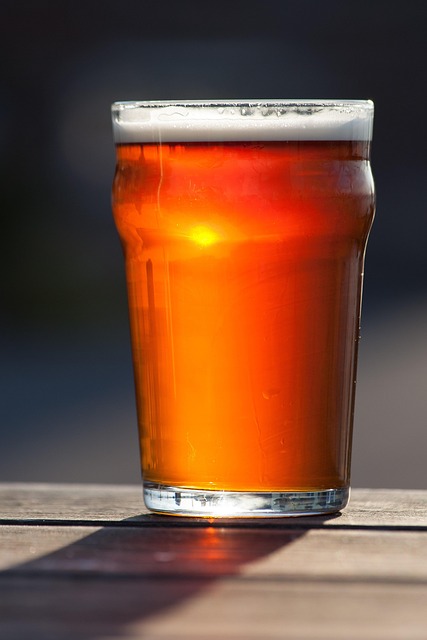
There are worse ways to spend a lunch hour than watching an 18th-century church stramash with a pie in one hand and a pint in the other. From Monday, that is exactly what's on the menu at Òran Mór.

A Play, A Pie and A Pint's autumn season continues with Whaur's Yer Wullie Shakespeare Noo?, a new Scots comedy written and directed by the company's artistic director, Brian Logan. It runs from Monday 28 September to Saturday 3 October and is the first of eight new shows still to come at the West End venue before the season closes on 21 November.

The idea is gloriously simple. One ticket buys a new one-act play, a pie (meat or vegan) and a drink (beer, wine or a soft drink). Shows start at 1pm, Monday to Saturday, with doors at 12pm, or 12.30pm on Mondays, according to the company's website.

Read full story →

The Dialogue Comes Back: How a Rewrite of America's Loudness Rulebook Should End the Remote-Control Shuffle
Audio Film & TV

The Dialogue Comes Back: How a Rewrite of America's Loudness Rulebook Should End the Remote-Control Shuffle

The first major revision of ATSC A/85 since 2013 restores dialogue as the yardstick for TV loudness. It is a win for the mixers who lobbied for it, and it arrives just as California brings streaming adverts under CALM-style rules.

You know the ritual. The characters murmur, so you turn it up. Then something explodes, the dog leaves the room, and you lunge for the remote. You repeat this until the credits roll, or until you give up and switch on the subtitles.

It is not your ears. Much of the blame lies in a long-running muddle over how television sound is measured. This summer, the body that writes America's broadcast audio rulebook set it straight.

In July the Advanced Television Systems Committee (ATSC) completed what it calls the first comprehensive update since 2013 to A/85, its recommended practice for establishing and maintaining audio loudness. Mixonline reported the release on 15 July. According to re-recording mixer Jon Greasley, CAS, the revision passed on 8 July.

Read full story →
Three-year rescue project begins on Glasgow Cathedral's medieval spire
News Glasgow

Three-year rescue project begins on Glasgow Cathedral's medieval spire

Historic Environment Scotland has started work to dismantle and rebuild the top of the 225ft spire, tackling rusted 1970s steelwork and rain damage worsened by climate change

Glasgow's skyline is changing, and for a very good reason. Historic Environment Scotland (HES) has begun a three-year conservation programme to carefully take down and rebuild the upper section of Glasgow Cathedral's iconic 225ft spire, securing the future of one of Scotland's most important medieval buildings.

Under the programme, announced on 24 September, the head of the spire will be dismantled and rebuilt so that damaged stonework can be repaired. HES stonemasons have already begun carving replacement stones. Conservation teams will retain and reinstate as much of the original medieval fabric as possible.

The root of the problem dates back more than fifty years. In 1970, a steel frame was installed inside the spire to help support the ageing medieval masonry. Over time, the bolts holding that frame in place have rusted and pushed against the stone, causing cracks and movement.

Read full story →
How Tropical Trees Evolved to Breathe at Night to Beat Drought
Science

How Tropical Trees Evolved to Breathe at Night to Beat Drought

Scientists have traced how a group of tropical trees evolved to keep their pores shut by day and take in carbon dioxide by night — the water-saving trick behind a leaf that puzzled Alexander von Humboldt more than two centuries ago.

In the tropical forests of the Americas, a small group of trees has a peculiar habit: they hold their breath all day.

Most plants open the tiny pores on their leaves, called stomata, during daylight to take in carbon dioxide for photosynthesis. Trees in the genus Clusia can do the opposite. They keep their pores sealed under the hot midday sun, then open up after dark to take in CO2 through the night, storing it as malic acid to use once the sun is back up. It is a slow, patient way of avoiding losing precious water to evaporation in the heat — and scientists have now worked out how these trees came to do it, adding a new chapter to a story that began more than two centuries ago.

Around 1800, the explorer and naturalist Alexander von Humboldt noticed something odd about a tropical tree leaf he had dipped in water. Even in sunlight, it produced none of the oxygen bubbles he expected from a photosynthesising plant. The explanation, worked out much later, is that the tree's pores were closed for the day — it was doing its gas exchange overnight instead.

Read full story →
Dinner on the drums: ASUNA serves up Falling Sweets at Tramway
What's On Glasgow

Dinner on the drums: ASUNA serves up Falling Sweets at Tramway

The Japanese sound artist behind Sonica 2019's 100 Keyboards returns to Glasgow with a UK premiere this Sunday at 2pm

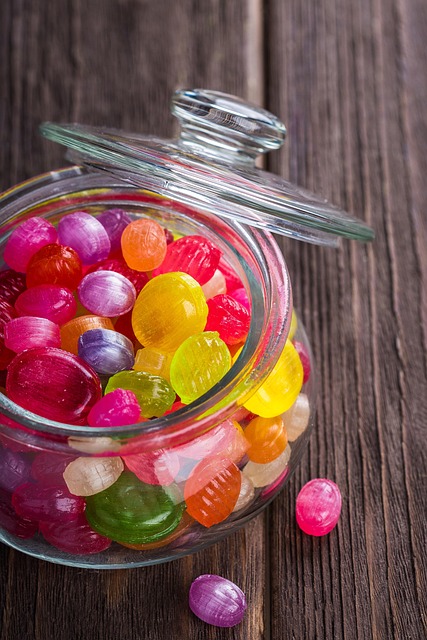
Imagine sitting down to dinner and finding that the table is made of drumskins. The plates and cutlery have been swapped for toys and electronic instruments, the meal itself is a spread of colourful sweets, and the whole lot has started to shake, rattle and wobble without warning.

That is the gloriously odd idea behind Falling Sweets / Afternoon Membranophone, which gets its UK premiere at Tramway this Sunday, 27 September, as part of Sonica Glasgow 2026. Just one performance is listed, at 2pm, so if you fancy a seat at this particular table, Sunday afternoon is your chance.

According to Tramway, the piece sees a couple sit down to "a very unusual meal". The table is set not on a solid surface but on a series of drumskins. As those surfaces start to vibrate unpredictably, the meal becomes what the venue calls "a knockabout performance and a hilarious illustration of the dynamics of vibration".

Read full story →