On the northernmost tip of Queensland, Australia, something remarkable has happened. After years of careful science and quiet persistence, a palm cockatoo chick has hatched inside an artificial nest hollow — the first time the endangered species has ever accepted a human-made home.
"This is huge news," said Christina Zdenek, associate researcher with conservation group People for Wildlife. "We have a highly endangered species in severe decline, and we've been working for years to crack the code of how to help them. And we finally have."
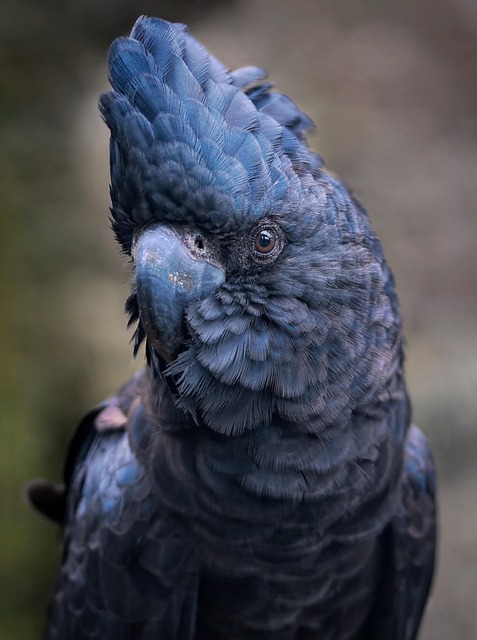
The palm cockatoo is one of Australia's most striking and ancient birds — over 60 centimetres long, jet-black, with a dramatic crest and vivid red cheek patches. It is also famously musical: males drum sticks against hollow trees during courtship, earning them the nickname "the Ringo bird" after Beatles drummer Ringo Starr.
But with fewer than 2,000 left in the wild, the species is in serious trouble. Palm cockatoos depend on tree hollows large enough to accommodate their substantial frames — hollows that can take more than 250 years to form naturally, carved out by termites and fungi, then exposed when cyclones snap the tops off mature trees.
Land clearing, logging, and increasingly fierce bushfires have decimated these ancient nesting sites. The birds simply cannot wait centuries for replacements.
The 'Palm Cockatube'
Working alongside Apudthama Traditional Owners and specialist woodcarver Matt Stephens — inventor of a tool called the Hollowhog — the People for Wildlife team designed the "Palm Cockatube": a section of fallen old-growth trunk, hollowed and layered with sticks of varying sizes to mimic natural conditions.
Twenty-nine artificial hollows of three different designs were installed across prime habitat where cockatoos were present but not nesting. Within two months, researchers observed adult birds entering one particular hollow. By September, an egg had appeared. When it hatched, conservation scientist Benjamin Muller was on the ground to witness the moment.
"On the day it fledged, the chick was perched on top of the hollow, ready to go," Dr Muller said. "We've now demonstrated that with our methodology, we can create that crucial nesting habitat for this species and apply it across its range."
Dr Zdenek believes the implications reach well beyond cockatoos. More than 400 Australian species depend on tree hollows for shelter, and if the notoriously fussy palm cockatoo will accept an artificial home, others will follow.
"Palm cockatoos here are the umbrella species — if you save them, you save dozens of others," she said.
What It Means for Scotland
The principle translates directly to British conservation. In the UK, the Hawk Conservancy Trust's Raptor Nest Box Project has installed more than 1,600 artificial nest boxes since 2008, producing over 2,500 barn owl fledglings and 2,000 kestrel chicks in areas where natural cavities in old trees and buildings have disappeared.
Scotland faces its own version of the challenge. The loss of mature woodland and traditional farm buildings has squeezed cavity-nesting species including kestrels and barn owls, while the welcome recovery of the pine marten — itself a protected species — has introduced new competition for tree holes and predation pressure on ground-nesting birds like the capercaillie, of which about 532 remain in the wild.
Recent research from the University of Aberdeen, working with RSPB Scotland and NatureScot as part of the Cairngorms Connect Predator Project, has shown that innovative, non-lethal interventions can make a real difference. A study led by researcher Jack Bamber found that placing diversionary food near capercaillie nests increased their survival chances by 83 per cent — evidence that creative thinking, rather than lethal predator control, can protect vulnerable species.
The Australian breakthrough adds another tool to the conservation kit. As Dr Zdenek put it: "All of a sudden, it's not a lack of knowledge that would send them to extinction. It would be a lack of effort."