Imagine catching Alzheimer's disease not when memory has already begun to fade, but years — possibly decades — before the first symptom appears. That future is closer than most people realise, and Scotland is paying attention.
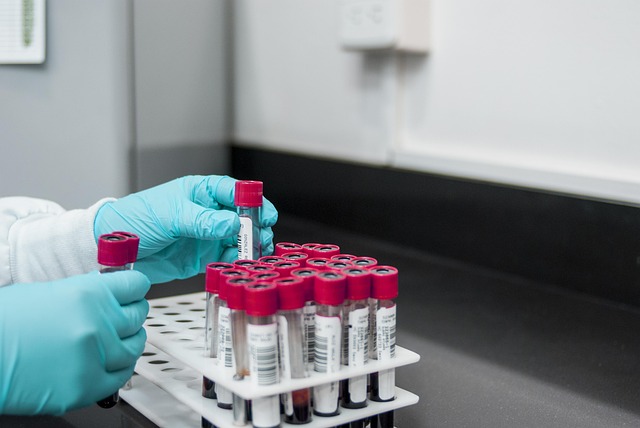
A new generation of blood tests can now detect the biological hallmarks of Alzheimer's disease with remarkable accuracy, measuring tiny traces of a protein called p-tau217 that reflects the buildup of rogue amyloid and tau proteins in the brain. Those proteins can accumulate for up to 20 years before a person notices anything wrong.
The test costs around £100. It requires nothing more than a standard blood draw. And in clinical studies involving nearly 1,800 patients across Europe, it has detected Alzheimer's pathology with accuracy rates between 85 and 96 per cent — a dramatic improvement on the current system, where diagnosis often relies on pen-and-paper cognitive tests that misidentify the disease in up to a third of cases.
From guesswork to certainty
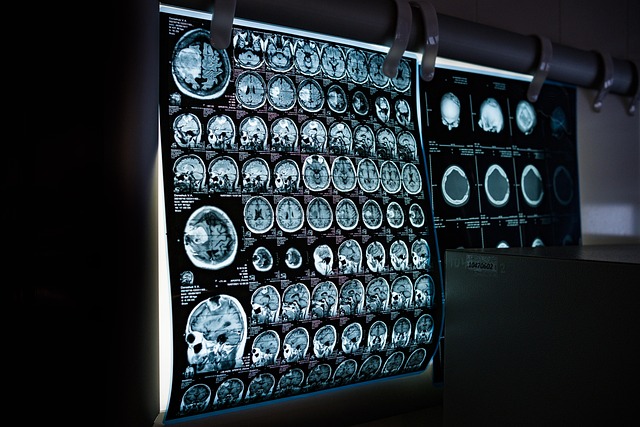
Until now, confirming Alzheimer's has required either a PET brain scan or a lumbar puncture — invasive, expensive procedures that only two per cent of patients ever receive. Most people are diagnosed on the basis of symptoms alone, often years after the disease has taken hold.
"We're sitting on the cusp of a new era," said Dr Susan Kohlhaas, executive director of research and partnerships at Alzheimer's Research UK. "Low-cost tools like blood tests that are non-invasive and simpler to administer than current gold standard methods are the answer."
The UK's landmark ADAPT trial, launched in September 2025 and led by Professor Jonathan Schott at University College London, is now recruiting more than 1,100 participants across 20 NHS memory clinics. The five-year Blood Biomarker Challenge programme aims to prove that the p-tau217 test is accurate, cost-effective, and ready for routine NHS use — potentially by 2029.
What this means for Scotland
In Scotland, where more than 60,000 people are currently identified as living with dementia — and the true figure is likely considerably higher — the stakes are acute.
Glasgow's NeuroClin clinic became the first in Scotland to offer a commercially available blood biomarker test in October 2025, through a partnership with Advance Tests. But that service is private. For most Scottish families, the test is not yet available on the NHS.
Henry Simmons, chief executive of Alzheimer Scotland, has been candid about the gap. "While we wish blood biomarker tests were routinely available on the NHS, this is not yet the case," he said. "Earlier diagnosis can help people and families get answers sooner, plan ahead, and access the right support and emerging treatments."
The Scottish Government's ten-year dementia strategy, launched in 2023, commits to improving equity of access to diagnosis and care, with a Brain Health Service pilot already running in Aberdeen. But the question of when — and how — blood biomarker testing will be incorporated into NHS Scotland's diagnostic pathway remains unanswered.
The missing piece
This matters because diagnosis is only half the story. New disease-modifying drugs — lecanemab and donanemab — have now been approved by UK regulators, offering the first treatments that can actually slow the progression of Alzheimer's. But they work best when given early, before significant brain damage has occurred.
Without early diagnosis, those drugs cannot reach the people who would benefit most. The blood test and the treatment are two halves of the same revolution.
Hope, not fear
For families affected by dementia, the emotional weight of diagnosis can be crushing. But Steven Pidwill, whose partner Rachel Hawley has lived with Alzheimer's for nearly a decade, sees the blood test as a reason for hope.
"I think it would mean everybody's idea of Alzheimer's would change," he told the BBC. "We would treat Alzheimer's more like having a disability, rather than sort of a curse, and something we can't talk about."
Rachel, 72, agrees. "I think I still have a very happy life," she said, "and am very lucky in all sorts of ways."
A Scotland where Alzheimer's is caught before the memory fades — where a routine blood test at a GP surgery could change the course of a life — is no longer a distant dream. The science is here. The question now is how quickly Scotland's NHS can bring it to the people who need it.