
For some people, a pill a day is not a simple ask.
If you are sleeping rough, fleeing domestic violence, or sharing a house where a blister pack of tablets invites questions you are not ready to answer, daily medication is not a matter of discipline — it is a matter of circumstance. And for years, that gap between a drug that works brilliantly and a life that makes taking it nearly impossible has left some of the most vulnerable people without protection against HIV.
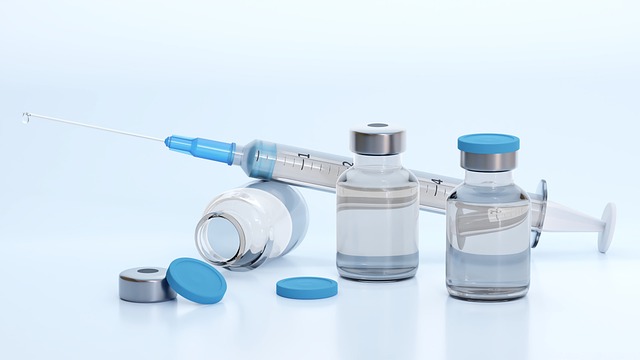
That may be about to change. In December 2025, the UK's Medicines and Healthcare products Regulatory Agency approved lenacapavir — sold under the brand name Yeytuo — for the prevention of sexually transmitted HIV-1 infection. It is given as an injection once every six months, with a short course of tablets for the first dose only. After that, two visits a year to a clinic is all it takes.
"It's really astounding brilliant news," said Dr Will Nutland, founder of The Love Tank, a public health community interest company that has campaigned for wider, more equitable access to HIV prevention.
A pill that works — but not for everyone
Pre-exposure prophylaxis, or PrEP, has been available as a daily tablet for years and is extraordinarily effective at preventing HIV infection. In England in 2023, more than 146,000 people accessing sexual health services were identified as having a PrEP need, and around 76 per cent began or continued treatment — a significant rise on the previous year.
But those figures mask deep inequalities. Uptake among white gay and bisexual men stands at nearly 80 per cent, while among Black African heterosexual women it drops to just 34.6 per cent. For people experiencing homelessness, addiction, or unstable living conditions, daily adherence can be all but impossible.
The approval of cabotegravir, an injection given every two months, in October 2025 was a first step. Lenacapavir goes further: two jabs a year, and you are protected.
Richard Angell, chief executive of the Terrence Higgins Trust, called injectable PrEP "a vital tool for tackling inequalities — with the potential to reach those who are not currently accessing other HIV prevention."
Scotland: ahead of the game
Scotland has form here. In 2017, it became the first UK nation to approve PrEP on the NHS, years ahead of England and Wales. The PrEP4Scotland Coalition — which includes Waverley Care, Terrence Higgins Trust Scotland, HIV Scotland, and the National AIDS Trust — drove that campaign with community engagement that became a model for the rest of the country.
Grant Sugden, then chief executive of Waverley Care, Scotland's HIV and hepatitis C charity, said that PrEP had the potential to "reduce new HIV infections and also improve the quality of life of at-risk communities in Scotland."
Scotland's HIV Transmission Elimination Delivery Plan, running from 2023 to 2026, sets out the ambition to end new HIV transmissions by 2030 — a target shared across the UK but pursued with particular determination north of the border.
The arrival of long-acting injectables fits squarely into that mission. For sexual health services already stretched thin, a twice-yearly appointment is far easier to manage than monthly or daily regimens — for clinicians and patients alike.
The trajectory is remarkable
And the science is not standing still. In March 2025, Gilead Sciences presented the first clinical data for a once-yearly formulation of lenacapavir at the Conference on Retroviruses and Opportunistic Infections. Phase 1 results, published in The Lancet, showed that a single intramuscular injection maintained protective drug levels for at least 56 weeks. A Phase 3 trial is planned.
From daily pills to two-monthly injections, to twice-yearly, to — potentially — once a year: the trajectory is remarkable.
Dr Paul Martin, chief executive of LGBT Foundation, put it plainly: "This approval is a game-changer for HIV prevention. It gives people more choice, more control, and more hope."
This is not just a story about a clever drug. It is a story about medicine finally meeting people where they are — not where the system finds it convenient to put them.