
When Najma Omar's professor at the University of Minnesota asked her doctoral class to imagine tools that should exist but don't, she didn't have to think very long. She thought of her sister.
Nasteho Omar is 17, autistic, and one of three neurodivergent siblings in a family of ten children. Every day, she faced the same quiet struggle: wearing her hijab meant enduring sensory overwhelm — the weight of the fabric, the pressure around her ears, the amplification of sound against her skin. Headphones or earmuffs helped with noise, but added bulk and pressure that made things worse.
"I thought, 'Why can't we have something a lot less pressurised and a lot more fitting to her needs?'" Najma told Sahan Journal.
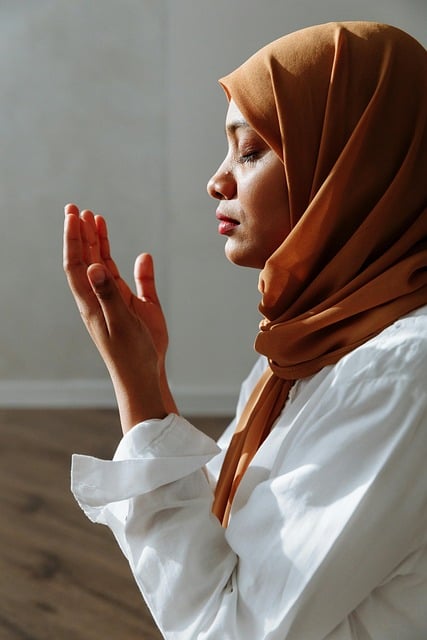
The answer, developed over two years with help from her twin sister Nafis, a nurse, and her husband Ibrahim Barqadle, is SereniHijab — a sensory-friendly hijab whose name derives from "serenity." Its design is deceptively simple: lightweight fabric blending 30 per cent jersey with 70 per cent spandex, making it stretchy and breathable, with subtle built-in ear padding that dampens overwhelming sounds without adding weight.
Nasteho was the first to test it. After rejecting earlier prototypes — she is, her sister says, "very particular in what she wants and what makes her feel comfortable" — she finally asked to keep one. For Najma, that was the proof she needed.
Faith, comfort, and identity
At the heart of SereniHijab is a refusal to force a choice between religious identity and physical comfort. "Islam teaches ease, compassion, accommodation and meeting people where they are at," Najma said. "It's making sure that all women like my sister don't have to choose between their comfort and then their identity."
The first production run — 100 pieces, split between pull-on hijabs and headcap-and-scarf sets in brown and black — is set to launch in early May through Submerge in Sensory, the mental health initiative Najma runs with Nafis offering occupational and speech therapy services.
Khadra Ahmed, a speech therapist who works with patients up to age 21, said the hijab could meaningfully support the kind of sensory regulation her patients need before they can engage in therapy. "If you're not able to be regulated and able to process some of those sensory experiences that may be hard for you already, it's really hard to do some of that communication integration," she said.
A growing movement closer to home
The thinking behind SereniHijab reflects a wider shift in how healthcare professionals approach sensory processing — one that is gathering momentum in Scotland. NHS Greater Glasgow and Clyde's specialist children's occupational therapy team runs an active programme helping families understand and manage sensory differences, offering workshops, questionnaires, and one-to-one advice for children and young people struggling with everyday activities like dressing, eating, and attending school.
In March 2026, the Royal College of Occupational Therapists published an updated Informed View on sensory approaches for children and young people — a sign that the profession is sharpening its focus on the kind of practical, person-centred solutions that SereniHijab embodies.
It is, in the end, a story about paying attention. Najma Omar noticed her sister's discomfort because she lived alongside it. She had the professional training to understand what was happening, and the love to do something about it. The result is a small, quiet product that says something large about design: the best innovations begin not in laboratories, but in the gap between what someone needs and what the world has bothered to provide.