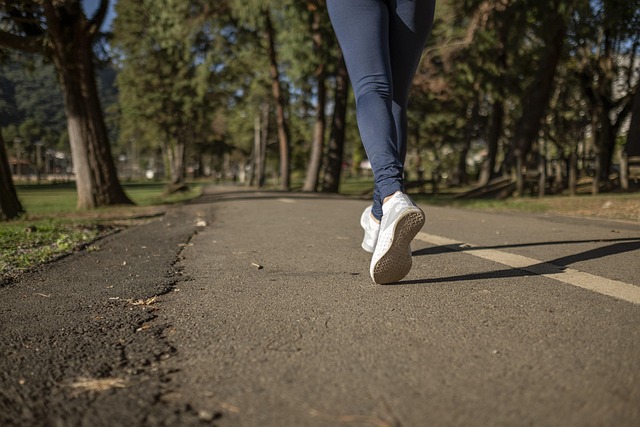
Something rather encouraging is happening in the way Britain moves. After years of gym guilt, punishing boot camps and diet culture that made exercise feel like penance, the biggest wellness trend of 2026 is gloriously simple: do something that makes you happy, preferably outside, ideally with other people.
The numbers tell a striking story. The Global Wellness Institute projects the worldwide wellness economy will reach nearly $9 trillion by 2028, up from $6.3 trillion in 2023. But the most interesting shift isn't about money — it's about attitude. Social movement, green prescribing and joy-led exercise are reshaping how millions of people think about keeping well.
The Joy Movement
The principle is straightforward. If you dread your workout, you'll stop doing it. If you love it, you won't.
Across Glasgow, that philosophy is already in full swing. At Pinkston Watersports in the north of the city, open water swimmers gather year-round for one-hour sessions in Scotland's only purpose-built urban watersports centre. At just £7 a swim, it's a fraction of the cost of a gym membership — and participants describe the combination of cold water, fresh air and community as transformative.
Meanwhile, Queen's Park Parkrun draws hundreds of runners every Saturday morning for a free, timed 5K through one of Glasgow's finest green spaces. No membership, no kit requirements, no judgement. You can walk the entire thing if you like. The point is showing up.
Green Prescribing: Nature on the NHS
Scotland has been at the forefront of a movement that sounds almost too sensible to be true: doctors prescribing nature.
NatureScot's Green Health Partnerships programme, which ran as a pilot from 2018 to 2024, brought together health boards, local authorities and environmental organisations to make green spaces work as health resources. The results, published in the report Realising the Potential of Scotland's Natural Health Service in Practice, demonstrated measurable improvements in physical activity and mental health when patients were referred to nature-based activities rather than simply told to exercise more.
The approach is now influencing NHS practice across the country, with community link workers connecting patients to walking groups, conservation volunteering and outdoor activity programmes.
A Cultural Shift
What makes 2026 different is that these ideas have moved beyond the margins. Running clubs aren't niche. Open water swimming isn't eccentric. Walking groups aren't just for retirees. The wellness conversation has shifted from "no pain, no gain" to something considerably more humane: move your body in ways that bring you joy, and do it with other people.
The UK workplace is catching on too. The CCLA Corporate Mental Health Benchmark found that 93 per cent of UK companies now acknowledge mental health as a business concern — though poor mental health among workers still costs the economy around £102 billion annually. The gap between acknowledgement and action remains wide, but the direction of travel is clear.
Five Free Wellness Activities in Glasgow This Spring
- Queen's Park Parkrun — Free 5K every Saturday at 9am. All abilities welcome. parkrun.org.uk/queensglasgow
- Pollok Country Park — Miles of woodland trails in Glasgow's largest green space. Free, open daily.
- Glasgow Botanic Gardens — Wander the glasshouses and riverside paths. Free admission.
- The Kelvin Walkway — A riverside path stretching from Kelvingrove to Milngavie. Free and accessible year-round.
- Glasgow Green — The city's oldest park, with open lawns, the People's Palace and the Doulton Fountain. Free.
The message of 2026 is not that you need to do more. It's that you might enjoy what you're already doing — if you let yourself.