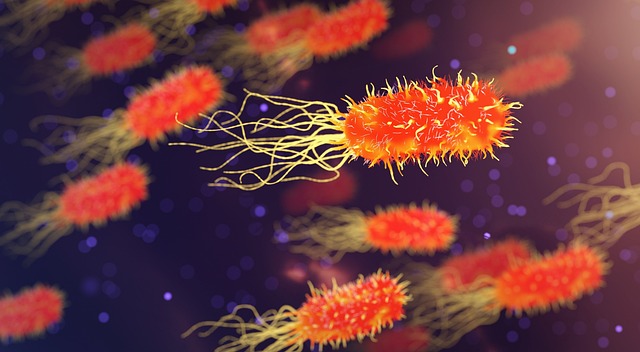
Almost everyone reading this is carrying it. The Epstein-Barr virus, or EBV, quietly infects about 95% of adults worldwide, usually arriving as a mild illness in childhood or as glandular fever in teenagers. Most of us never know it is there.
But EBV does not always stay quiet. It is now firmly linked to multiple sclerosis, several types of cancer — including some lymphomas and nasopharyngeal carcinoma — and a range of long-term conditions. After decades of trying, scientists have struggled to find a way to block it.
That may be about to change. Researchers at the Fred Hutchinson Cancer Center in Seattle have developed human-like antibodies that prevent EBV from latching onto and entering human immune cells. It is the first time this has been achieved in a way that could realistically lead to a treatment.
The findings, published in Cell Reports Medicine, describe how the team used mice engineered to carry human antibody genes. That clever trick allowed them to grow fully human-like monoclonal antibodies, sidestepping a long-standing problem: antibodies harvested from animals tend to trigger an immune backlash when given to people.
"Finding human antibodies that block Epstein Barr virus from infecting our immune cells has been particularly challenging because, unlike other viruses, EBV finds a way to bind to nearly every one of our B cells," said Dr Andrew McGuire, a biochemist at Fred Hutch and senior author of the study. "We ended up taking a critical step toward blocking one of the world's most common viruses."
How the antibodies work
The team focused on two proteins on the surface of EBV. The first, gp350, is the grappling hook the virus uses to attach to human cells. The second, gp42, is the key it uses to fuse with the cell and slip inside.
By targeting these proteins, the researchers identified two antibodies against gp350 and eight against gp42. In lab tests using mice with human-like immune systems, one of the gp42 antibodies completely blocked EBV infection. A gp350 antibody offered partial protection.
Crystal Chhan, the pathobiology PhD student who worked on the study, said the team had also "validated an innovative new approach for discovering protective antibodies against other pathogens" — a method that could one day be turned on other hard-to-tackle viruses.
Why it matters
The most immediate beneficiaries would be transplant patients. More than 128,000 people in the United States receive a solid organ or bone marrow transplant each year, and the immunosuppressant drugs that keep their bodies from rejecting the new tissue also let EBV run riot.
Uncontrolled EBV can drive a serious complication called post-transplant lymphoproliferative disorder, or PTLD — an aggressive lymphoma that is one of the leading causes of illness and death after transplantation. Children are particularly at risk, because many have not yet been exposed to EBV and have no natural defences.
"Effective prevention of EBV viremia remains a significant unmet need in transplant medicine," said Dr Rachel Bender Ignacio, an infectious disease physician at Fred Hutch and the University of Washington School of Medicine. Stopping the virus early, she added, could "preserve graft function while improving overall patient outcomes".
What happens next
The team envisages an infusion treatment given to high-risk patients before or shortly after transplantation. Fred Hutch has filed intellectual property claims on the antibodies and is working with an industry partner to move the work toward clinical trials. Safety testing in healthy adults is the likely next step, followed by trials in transplant recipients.
A wider rollout — to people at risk of MS or EBV-linked cancers — would be much further off, and the antibodies still need to prove themselves outside the lab. But for the first time in years, researchers are talking about EBV as a virus that might one day be stoppable.
"After many years of searching for a viable way to protect against Epstein Barr virus," McGuire said, "this is a significant stride."