
If you have ever worked on an analogue mixing console — or merely stood behind someone who has — you will know the ritual. The session ends. The engineer reaches for a camera, or a printed sheet covered in tiny circles, and begins the painstaking business of documenting every knob, fader, and routing switch on the desk. Polaroids of the patch bay. Handwritten notes on EQ curves. A small prayer that nothing gets bumped before the client returns for revisions.
For more than four decades, this has been the price of admission for analogue sound. The warmth, the depth, the harmonic character that no plug-in has quite replicated — all of it came tethered to a workflow that belonged to the age of the fountain pen.
Solid State Logic believes it has finally cut that tether.
ActiveAnalogue: The Forty-Year Itch
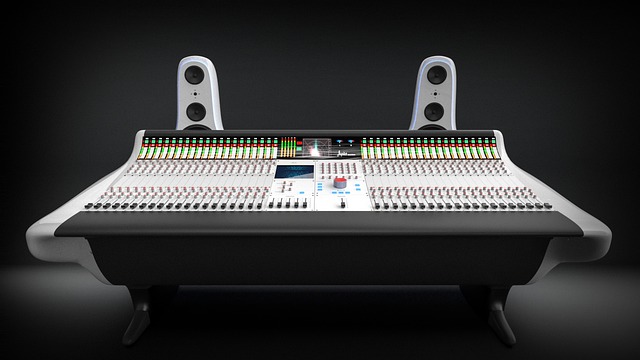
The Oracle, SSL's new flagship mixing console unveiled at NAMM 2026 in Anaheim, is built around a technology the company calls ActiveAnalogue. The principle is deceptively simple: every parameter on the desk — gain, EQ, panning, routing, filter settings, insert points — is controlled digitally, but the audio signal itself never leaves the analogue domain. There is no conversion. No digital audio processing. The sound that enters the console emerges from it having passed through nothing but SSL's SuperAnalogue circuitry.
What the digital control layer provides is memory. A complete session — every setting on every channel — can be stored and recalled in three to four seconds. That is faster, as Sound on Sound's Matt Houghton noted in his hands-on review, than most DAW sessions take to load.
The implications for working studios are significant. An engineer mixing three albums in a month can switch between projects instantly. A producer building a twenty-song record can recall any track at any point without paying an assistant to spend an hour resetting the desk. Client revisions that once demanded a full recall session now require a few seconds and a button press.
"No trade-offs. No downtime. No disruption," is how SSL frames it. "Superior SuperAnalogue sound and workflow with instant recall at your fingertips."
A Vision Four Decades in the Making
The Oracle is not the first attempt at digitally controlled analogue. SSL's own founder, Colin Sanders, published a paper in 1985 arguing that assignable, remotely controlled analogue consoles were the future. Others tried: Calrec's VCS console for the BBC, Harrison's SeriesTen in the United States, and Euphonix's Crescendo series all pursued the concept through the late 1980s and 1990s. None achieved lasting commercial success.
SSL concluded at the time that the technology was not yet commercially viable. Forty years and several generations of component miniaturisation later, they believe it finally is. The Oracle won the 2026 TEC Award for Large Format Console — the industry's most prestigious hardware honour — within months of its launch.
Available in 24- and 48-channel configurations, the Oracle scales to 112 inputs at mixdown while fitting into roughly the same footprint as SSL's own AWS desk. The analogue electronics sit in remote 13U racks, keeping the control surface compact and the cable management civilised.
Five Decades of SSL Sound, Side by Side
Alongside the Oracle, SSL has launched two standalone channel strips that offer a rather compelling comparison. The Revival 4000 faithfully recreates the E Series console sound of the late 1970s — the desk that shaped records from Peter Gabriel to Prince — with authentic discrete Class A VCA dynamics. The Super 9000 delivers the SuperAnalogue circuitry introduced in the SL 9000 J and refined through the Duality era: ultra-low distortion, extraordinary bandwidth, and a transparency that defined the sound of modern pop, hip-hop, and electronic music from the mid-1990s onward.
Both are housed in 1U rack units, and both offer switchable EQ curves — the surgical 242 "Black Knob" E Series EQ alongside the smoother 292 "Pink Knob" G Series design. Place them side by side, and you have fifty years of SSL sonic evolution at your fingertips for under four thousand pounds.
The Bigger Picture
The Oracle arrives at a moment when many engineers have already made peace with mixing entirely inside a computer. But for those who never stopped believing that analogue summing, analogue EQ, and analogue harmonic saturation offer something that digital cannot replicate, this console removes the last great practical objection.
The recall sheet, it seems, may finally be ready for the museum.