
When every other monitor manufacturer is racing to add more DSP calibration, more software correction, more room-analysis algorithms, one London startup has gone in exactly the opposite direction. Telegrapher Speakers' new Carbon Fox is a touring reference monitor built around a completely analogue signal path — no digital signal processing, no calibration software, no room correction. Just signal in, sound out.
It is, the company claims, the world's first fully carbon-fibre reference monitor, and it was born not in a laboratory but on the road — specifically, the world tours of Muse.
A Monitor Built by a Touring Engineer
Marc Carolan has mixed front-of-house for Muse since 2001 and has also toured with Snow Patrol — more than two decades of arenas, stadiums and festivals across the globe. He had been using Telegrapher's original Fox monitors as his personal reference on tour, carrying them from venue to venue to tune PA systems before each show. But he wanted something tougher.
"The time pressures in modern live production mean having a trusted pair of reference monitors is invaluable," Carolan said at the monitor's NAMM 2026 debut. "I was already relying on the Fox, but I wanted something even more rugged and road-ready. Carbon Fox delivers that. It stays honest, no matter how tough the environment."
That collaboration produced the Carbon Fox: the same trusted Fox voicing, rebuilt in a fully carbon-fibre enclosure using constrained-layer damping technology. The result is 30 per cent lighter than the original — just 6.5 kg per speaker — while being dramatically more rigid. Less cabinet vibration means less colouration and a more honest picture of what's actually coming through the signal chain.
The Analogue Argument
Here's where it gets philosophically interesting. In professional monitoring, the dominant trend runs firmly toward digital correction. Genelec's Smart Active Monitor systems, for instance, use proprietary GLM software to analyse room acoustics and automatically calibrate each speaker to its environment — adjusting levels, delays and frequency response via onboard DSP. It's clever, effective and increasingly standard.
Telegrapher's position is that this approach, however sophisticated, introduces a fundamental compromise. When a DSP algorithm "corrects" a room, it is also making decisions about what the engineer hears. For a touring FOH engineer who works in a different room every night, that correction becomes a variable rather than a constant.
"What I get from Carbon Fox is confidence," Carolan said. "It tells me the truth quickly, and I trust it. That's everything when you're making decisions that affect thousands of people in a room."
Erce Kaslioglu, Telegrapher's co-founder and CEO, frames it as a matter of philosophy rather than technology. "This project wasn't about making something exotic," he said. "It was about making something dependable — something that stays inert, stable and truthful under demanding conditions."
Carbon Fibre, Borrowed from the Track
The enclosure technology comes from an unexpected source. Telegrapher's sister company, MATA Automotive, specialises in carbon-fibre components for high-performance vehicles. That expertise was adapted for audio, producing an enclosure that minimises panel flex and stored energy.
"The enclosure disappears, and that's the goal," said Emre Telci, Telegrapher's co-founder and chief designer. "Carbon-fibre composite enclosures allow extremely high stiffness with low mass. When combined with proper damping strategies, this significantly reduces panel flex and stored energy, keeping resonances well controlled."
The Specs
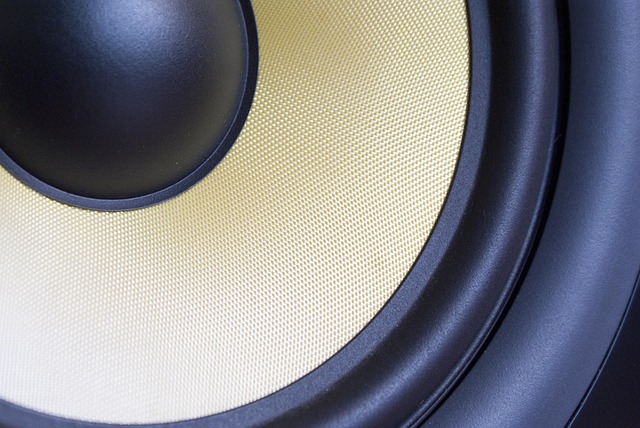
The Carbon Fox is a compact two-way active nearfield monitor with a 5.5-inch coated paper woofer and one-inch textile dome tweeter, each powered by a dedicated 125W Class D amplifier. Frequency response runs from 45 Hz to 20 kHz, with a peak SPL of 97.2 dB at one metre. The sealed enclosure design contributes to tight, precise bass and strong transient response. Inputs are balanced XLR or unbalanced RCA — analogue only, naturally.
Available in matte and glossy carbon-fibre finishes, with an optional protective grille designed to be acoustically transparent. European retail pricing sits at around €5,000 per pair.
A Principled Bet
Telegrapher is not suggesting that DSP calibration doesn't work. They're suggesting that for touring engineers making fast, high-stakes decisions in unfamiliar rooms, a monitor that never changes its character may be worth more than one that tries to adapt to every environment.
Whether the rest of the live sound world agrees remains to be seen. But with Carolan's name behind it and a build quality borrowed from the racetrack, the Carbon Fox makes a compelling case for the road less digitally processed.