When broadcast audio's DSP engine no longer needs dedicated hardware, something fundamental has changed. At NAB 2026 in Las Vegas, Calrec is making the case that the change is already here.
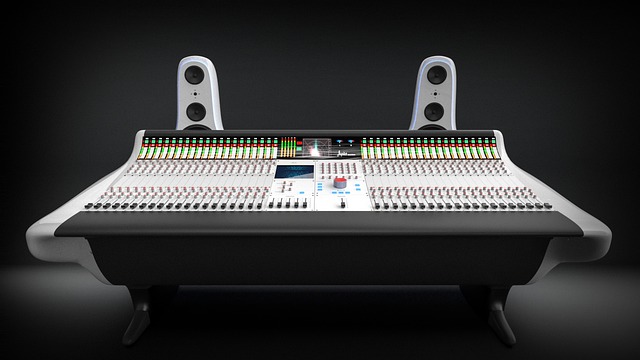
The Hebden Bridge company — whose consoles underpin live audio at the BBC, Sky Sports, and major OB operations worldwide — arrives at the Las Vegas Convention Center (booth C6907, April 18–22) with a twin-pronged announcement. One is physical: the US debut of the 48-fader Argo M, a compact IP-native console built for tighter outside broadcast truck footprints. The other is philosophical: a preview of ImPulseV running on virtualised commodity server hardware, meaning the DSP engine that processes live broadcast audio can now live in a data centre, on public cloud, or distributed across remote facilities.
Together, they represent what may be the broadcast audio equivalent of video's SDI-to-IP transition.
The Argo M: compact power, full Calrec DNA
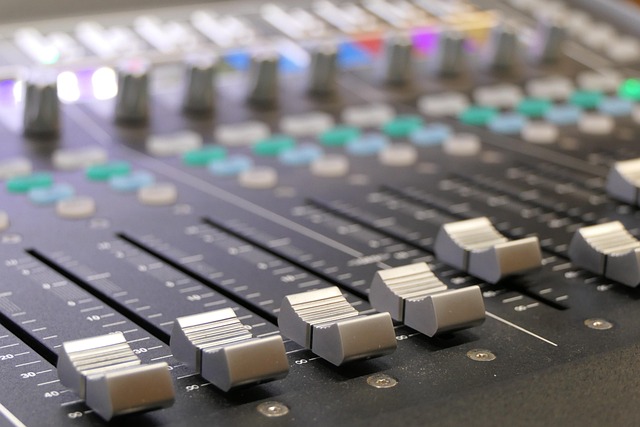
The Argo M packs up to 356 channels of internal DSP into a streamlined footprint available in 24-, 36-, and now 48-fader configurations. Full-sized fader strips and plug-and-play SMPTE ST 2110 connectivity mean it slots into existing IP environments without compromise. Crucially, it connects seamlessly to Calrec's ImPulse, ImPulse1, and ImPulseV processing cores, so additional DSP capacity can be added as production demands shift.
For OB truck designers juggling space and weight, the 48-fader Argo M offers flagship-grade mixing in a console that doesn't demand a flagship-sized desk. Early adopters include Balkan broadcast facility provider MVP, which installed an Argo M in its HD1 truck earlier this year.
ImPulseV: when DSP becomes a software workload
The bigger story at NAB may be what's happening behind the faders. Calrec will preview ImPulseV running on virtualised server hardware — commercial off-the-shelf (COTS) machines rather than proprietary DSP boxes. The implications are significant: broadcasters could spin up additional audio processing capacity for a Champions League final, a general election, or an Olympic opening ceremony, then release those resources the following morning.
ImPulseV supports deployment across public cloud, private cloud, and on-premise hardware. It uses the same interface operators already know from physical Calrec systems, controllable via any Argo surface, True Control 2.0–enabled console, or the company's Assist web UI. The operational model shifts from capital expenditure on dedicated hardware to a flexible OpEx approach — and Calrec argues this opens up second- and third-tier events that previously couldn't justify the infrastructure cost.
True Control 2.0: the glue
Linking it all together is True Control 2.0, Calrec's orchestration layer for its IP ecosystem. At NAB, the company will demonstrate the system live by connecting consoles on the Las Vegas show floor to a Calrec system in California — full remote control over EQ, dynamics, routing, direct outputs, and delay across a continental distance.
A single True Control 2.0 controller can manage up to five Calrec consoles or processing cores simultaneously, with no additional hardware investment. For broadcasters building distributed production workflows — hub-and-spoke models where a central facility serves multiple venues — this is the practical demonstration that the concept works at broadcast grade.
The Scottish angle: IP audio is already here
Scottish broadcasters are no strangers to the IP audio transition. STV, Scotland's commercial broadcaster, completed a full IP audio overhaul of its Glasgow headquarters in 2021, installing a Lawo mc²56 console with the A__UHD Core — becoming the first UK broadcaster to do so. Sam Dornan, STV's Channels Operations Manager, noted at the time that the move to Audio-over-IP workflows offered "flexible and scalable workflows" that integrated with existing sound systems.
That installation used Lawo's ecosystem rather than Calrec's, which highlights the competitive dynamic at play. Lawo's HOME platform takes a containerised microservices approach, with HOME Apps running on COTS servers and a HOME mc² DSP engine on generic CPU hardware. Where Calrec offers an owned ecosystem with True Control 2.0 as the integration layer, Lawo leans into open-standards modularity.
Both companies are converging on the same destination — virtualised, software-defined broadcast audio — but taking distinctly different roads to get there. For facilities planning their next infrastructure cycle, the choice between ecosystems will shape operations for a decade.
What it means
Calrec's NAB 2026 lineup signals that broadcast audio's hardware era isn't ending — the Argo M proves physical consoles still matter — but the processing behind them is being fundamentally decoupled from the boxes they once lived in. When your DSP is a software workload, the broadcast facility becomes as elastic as the production demands it serves.
That's not a future promise. At booth C6907, Calrec is demonstrating it live.