
In the world of professional audio, some microphones are merely excellent. A very small number are legendary. And then there is the Neumann M 50 — the microphone that, quite literally, defined the way we record orchestras.
At NAMM 2026 in Anaheim, Neumann unveiled the M 50 V, a faithful reissue of the original tube condenser microphone that has shaped orchestral recording since the 1950s. Alongside it, the German manufacturer debuted VIS — Virtual Immersive Studio — a new software tool for spatial audio mixing that signals Neumann's push into the immersive audio future.
The Microphone That Changed Everything
The original M 50 was designed in 1951 for broadcast use, but it was the Decca recording engineers who discovered its true calling. Placed in a distinctive triangular arrangement that became known as the Decca Tree, three M 50s could capture a full symphony orchestra with a warmth, spaciousness, and three-dimensional quality that no other microphone could match. The technique became the gold standard for classical recording, and virtually every great orchestral recording from the second half of the twentieth century owes something to the M 50 and the approach it inspired.
Original M 50s are vanishingly rare. Surviving units change hands for five-figure sums when they appear at all, and their age means that even well-maintained examples require careful restoration. The M 50 V reissue promises the same sonic character — the same capsule design, the same tube amplifier topology, the same characteristic warmth and openness — built to modern manufacturing standards with modern reliability.
For recording engineers, the significance is difficult to overstate. The M 50's sound is not simply a matter of frequency response or technical specification. It is a sonic signature — an immediately recognisable quality of air and space around an orchestra that microphone designers have spent decades trying to replicate. The reissue puts that signature back into production for the first time in over half a century.
The Spatial Audio Future
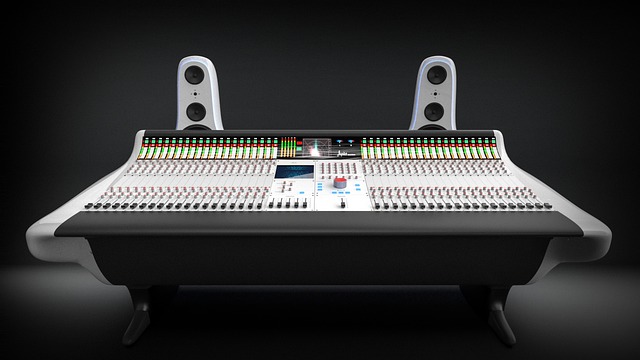
Neumann's NAMM showcase did not stop at heritage. VIS — Virtual Immersive Studio — represents the company's bid to make spatial audio mixing accessible to working engineers. As immersive audio formats such as Dolby Atmos become standard in music production, film post-production, and broadcasting, the tools for creating spatial mixes have often been complex and expensive. VIS aims to simplify the process with an intuitive visual interface that allows engineers to position and move sound sources in three-dimensional space.
The pairing of the M 50 V and VIS at NAMM was no accident. Neumann is drawing a direct line from the microphone that pioneered spatial recording in the analogue era to the software tools that will define spatial mixing in the digital one. It is a statement of intent: heritage and innovation are not opposites but two expressions of the same commitment to how music should sound.
Practical Details
Pricing for the M 50 V has not yet been confirmed, but given the original's collector value and the reissue's handcrafted construction, it will not be an impulse purchase. VIS is expected to be available later in 2026.
Whether you record orchestras or mix in Atmos — or simply care about the craft of capturing sound — Neumann's NAMM 2026 announcements mark a moment worth paying attention to. The mic that defined orchestral recording is back. And the future of spatial audio just got a little more accessible.