When the envelope opened at the 98th Academy Awards on March 15, five sound professionals — Gareth John, Al Nelson, Gwendolyn Yates Whittle, Gary A. Rizzo, and Juan Peralta — took the stage for the kind of work audiences feel in their chests before they ever think about it consciously. Their film, Joseph Kosinski's F1, had just won Best Sound. The applause was loud. Their work had been louder.
The challenge facing the Skywalker Sound team was deceptively simple: make a cinema audience feel like they're strapped inside a Formula 1 car at 200 miles per hour. No racing film had ever attempted it with this level of access to the real sport, and the team knew broadcast audio wouldn't cut it. "F1 has done a great job getting mics on the cars for TV," Nelson told Variety. "But it's still broadcast quality. For cinema, we wanted to build on that."
Matchbook Recorders and a Half-Pound Problem
Authenticity started with production sound mixer Gareth John, who found himself navigating the obsessive weight restrictions of real Formula 1 teams. When Nelson showed Mercedes team principal Toto Wolff a Zoom F3 recorder weighing about half a pound, Wolff shut it down immediately. "Absolutely not. You're never putting that on our car," Nelson recalled in a Skywalker Sound interview.
So the team found recorders the size of a matchbook. During tyre tests — when the cars run but aren't racing — they finally got their microphones on, strapping packs near exhausts and air ducts with cable ties. Hours of pristine recordings came back, many from George Russell's Mercedes.
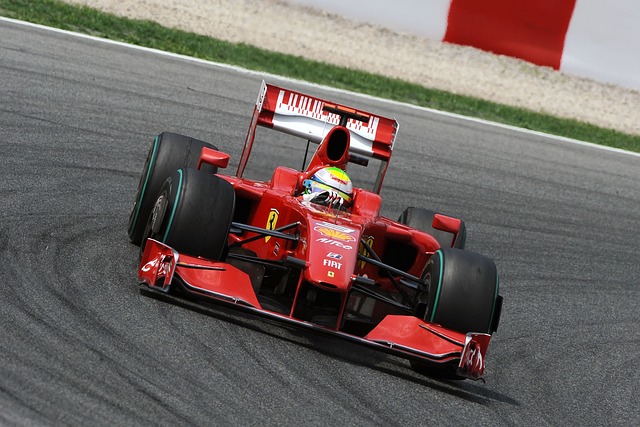
There was a further complication. The cars driven on set by Brad Pitt and Damson Idris were actually Formula 2 machines — visually similar, but with six gears instead of eight. Every engine sound had to be replaced. The team called the process "ADR-ing the cars," matching real F1 recordings to each on-screen moment, turn by turn, gear by gear.
Lewis Hamilton's Three-Word Brief
Real-life seven-time world champion Lewis Hamilton served as technical advisor, and his input reshaped the entire sonic approach. "Up until we met with Lewis, we thought we were really getting the sound dialled in," Nelson told IndieWire. Hamilton pushed for more detail — where different corners demand different driving, where specific sounds reach the driver's ear — and delivered a three-word edict that became the team's north star.
"Authentic, authentic, authentic," as re-recording mixer Juan Peralta put it.
From there, the team could bend the rules for cinema. Each race on the global circuit was given its own sonic personality. The Silverstone sequence plays with no music at all — pure engine roar and trackside atmosphere. Hungary gets a traditional Hans Zimmer score. Las Vegas turns inward, filtering effects and commentary through the frustration of Pitt's character, Sonny Hayes.
"If we just played the cars against music in a standard way, it would become monotonous," said re-recording mixer Gary Rizzo. "Each race needed to have its own signature."
A World-Class Pit Crew
The team brought serious pedigree to the task. Rizzo is a multiple Oscar winner for Dunkirk and Inception. Whittle's credits include Avatar. Kosinski himself had pushed the boundaries of cinematic sound with Top Gun: Maverick. But Whittle insisted that character, not spectacle, drove every decision. "Character always leads," she said. "It's the story about this loner overcoming obstacles. If that doesn't work, the movie doesn't work."
The win came from a strong field. Also nominated were Frankenstein, One Battle After Another, Sinners (featuring the legendary Benjamin A. Burtt), and Sirāt — a lineup reflecting the breadth and ambition of modern film sound.
Whittle summed up the experience with a metaphor fitting for the subject. "Everyone was supporting each other. Juan was giving Gary notes about dialogue and music, Gary was giving Juan notes about the effects. Appropriately for this movie, we had a really great pit crew."
The audience never sees the pit crew. But at 200 miles per hour, you feel every second of their work.