When Gareth John, Al Nelson, Gwendolyn Yates Whittle, Gary A. Rizzo and Juan Peralta took the stage at the 98th Academy Awards on March 15, they accepted more than a golden statuette. They collected a vindication of craft — proof that in an era when visual effects dominate awards conversation, the art of sound can still steal the show.
Their work on Joseph Kosinski's F1: The Movie had already swept every major sound award on the calendar — the AMPS Award for Excellence in Sound, the Cinema Audio Society Award, the BAFTA, and the Critics Choice — before the Oscar confirmed what the industry already knew. This wasn't a fluke. It was a consensus.
Recording at 140 Decibels
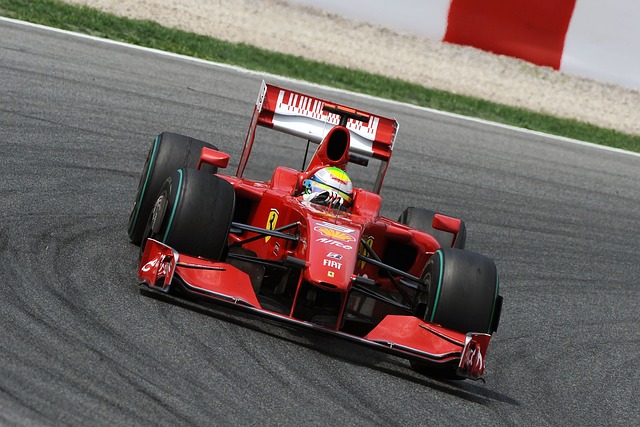
The challenge facing the team was staggering in scale. Kosinski shot during real Formula One Grand Prix weekends, embedding his crew into a world where engines scream at 140dB and teams obsess over every gram of weight on their cars.
Production sound mixer Gareth John discovered just how obsessive. "They were militant about how much weight goes on them," John told IndieWire. "Our recording packs were only 30 to 40 grams. I don't know how many milliseconds that might have shaved off on one of their laps, but they weren't going to take the risk."
The solution? Recording during tyre testing sessions, when teams run the cars outside race conditions and tolerate microphone mounts. Meanwhile, the Formula One Media & Broadcast Centre gave the production unprecedented access to around 150 microphones positioned around circuits, capturing sound from practice sessions, qualifying, and races.
There was another complication rarely discussed: the cars on set were actually Formula 2 machines, not the modern hybrid F1 cars they portrayed. Nearly all engine audio had to be entirely re-created in post — a monumental sound design challenge that fell to supervising sound editor and sound designer Al Nelson and supervising sound editor Gwendolyn Yates Whittle.
Making Each Race Tell a Different Story
The real genius of the F1 mix isn't volume — it's restraint and variation. Re-recording mixer Gary Rizzo recognised early that 135 minutes of identical-sounding races would numb audiences.
"We figured out pretty quickly that each race needed to have its own signature," Rizzo told IndieWire. "If we just put the music in and played the cars against it in a standard way, it would become monotonous." The early Silverstone race plays with no music at all. Hungary uses traditional score. The climactic Las Vegas sequence filters everything — effects, announcer voices — through lead character Sonny's emotional state.
"Character always leads," said Whittle. "That's the driving force. It's the story about this loner overcoming a lot of obstacles. If that doesn't work, then the movie doesn't work."
The Lewis Hamilton Factor
Seven-time world champion Lewis Hamilton, who served as producer and technical advisor, proved invaluable in the dubbing theatre. Nelson recalled the moment Hamilton walked into the studio: "Up until we met with Lewis, we thought we were really getting the sound dialed in." Hamilton could identify which corner a sound belonged to and specify where more reverb was needed on a straight — the kind of granular feedback only a driver who has lived inside that cockpit can provide.
Re-recording mixer Juan Peralta, himself a lifelong F1 fan, served as the team's authenticity conscience — particularly on commentary. When early mixes over-explained the racing for newcomers, Peralta pushed back until the team found a balance that satisfied both diehards and first-timers.
The Great Pit Crew
The film was mixed in Dolby Atmos, with extensive use of overhead and rear-surround channels to place audiences inside the car. Director Kosinski's preference for practical effects — really sending a car off a ramp into woods rather than generating the crash digitally — gave the sound team real-world recordings to anchor the mix.
At the AMPS ceremony in January, Whittle captured the team's spirit perfectly: "I shrieked in my car — I pulled over first — and went on an instant texting frenzy to let my fellow F1 crew know the fantastic news."
Her summary of the collaboration is even better: "It was an unusually cohesive crew. Everyone was supporting each other. Juan was giving Gary notes about dialogue and music, Gary was giving Juan notes about the effects. Appropriately for this movie, we had a really great pit crew."
In a year when audiences flocked to spectacle, the F1 sound team proved that what you hear can be every bit as thrilling as what you see — and the Academy agreed.