How did complex life get started? That question covers the distant ancestors of everything from mushrooms to whales to us, and it is one of biology's biggest open puzzles. A new fossil discovery from northern Australia has now handed scientists a striking clue: oxygen.
In a study published in Nature, researchers Maxwell Lechte and Leigh Anne Riedman describe finding more than 12,000 microscopic fossils preserved in mudstone cores drilled decades ago in the Northern Territory. The oldest of these fossils date back 1.75 billion years. That makes them the oldest eukaryote fossils currently known anywhere on the planet.
A eukaryote is any organism made of complex cells, with a nucleus and specialised internal parts. Animals, plants, fungi and algae are all built from this kind of cell, which is quite different from the simpler cells of bacteria and archaea. The shift from simple to complex cells was, as the researchers put it, a "major evolutionary leap". It paved the way for animals and, in time, for us.
Cracking open ancient rock
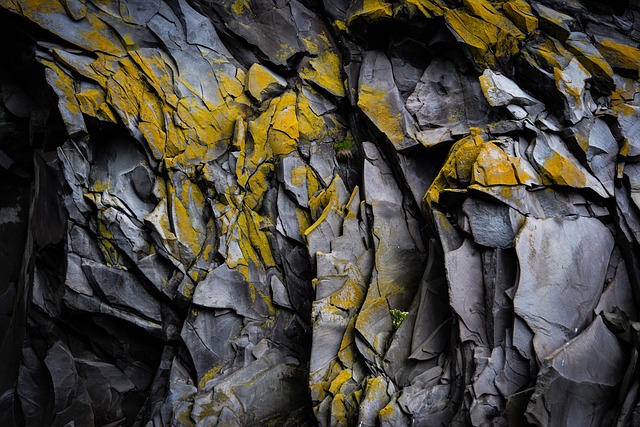
The cores have an unglamorous backstory. Mineral exploration companies bored them from hundreds of metres below the surface, and they now sit in trays in an open-air warehouse in tropical Darwin, run by the Northern Territory Geological Survey. The drilling companies were largely unaware that the mudstone held the remains of microscopic organisms. Those organisms were buried on the floor of an ancient inland sea that covered much of northern Australia more than 1.5 billion years ago.
Lechte and Riedman's team crushed samples of the mudstone and dissolved them. They then studied the organic residue left behind under a microscope and identified the fossilised remains of ancient single-celled organisms. The team also analysed the chemistry of the surrounding rock. This allowed them to work out what each environment was like and whether oxygen was present in the seawater when the sediment was laid down.
Where oxygen was, life got complex
A clear pattern emerged. Eukaryote fossils turned up in a range of ancient settings, from coastal mudflats to the open sea, but only in samples deposited in oxygenated water. Samples from oxygen-free environments contained only simple prokaryotic microbes, the bacteria-like organisms that can get by without oxygen.
That matters because nearly all living eukaryotes rely on aerobic respiration, which means breaking down food using oxygen. This process generates the large amounts of energy that complex life demands. The new fossil evidence suggests this dependence goes right back to the earliest known eukaryotes, which lived some 1.7 to 1.4 billion years ago.
"These data lend support to a long-held hypothesis that oxygen played a key role in driving the evolution of early eukaryotes," the researchers write in an account of their work for The Conversation.
What's still unknown
The finding isn't the final word. In recent years, scientists have discovered some living eukaryotes that thrive without oxygen. Geological evidence also suggests that oxygen was scarce, and oxygen-free seas were the norm, when the first eukaryotes were evolving. Both findings have raised doubts about how universal the oxygen link really was. The fossil record, too, can only tell us so much about long-extinct lineages, and much about the world these ancient organisms inhabited remains a mystery.
Lechte and Riedman present their results as strong supporting evidence rather than a closed case. As they put it, resolving what drove the rise of early eukaryotes "is one of the major outstanding questions in the life sciences". They expect ongoing study of these ancient microfossils to keep chipping away at it.
For now, a warehouse full of billion-year-old mud has offered a rare, tangible glimpse of the conditions that may have shaped the earliest chapter of complex life's story, a chapter that eventually led to our own.