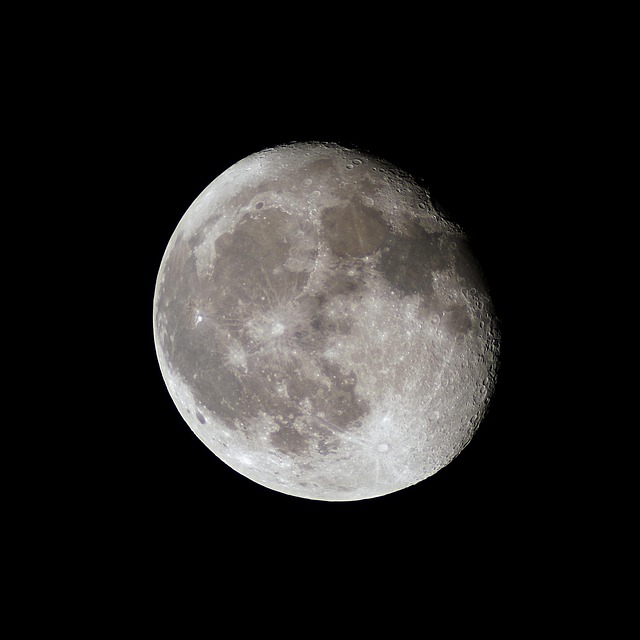

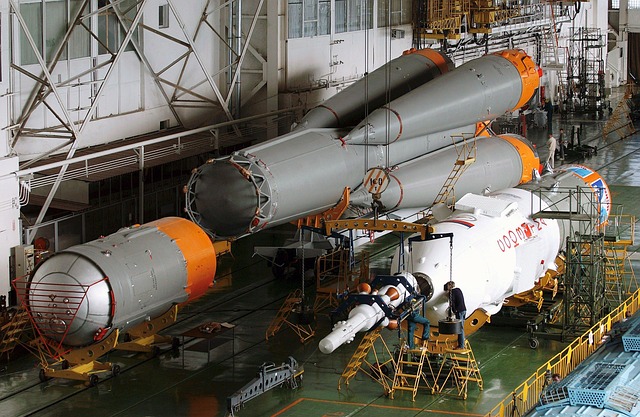
More than 50,000 events in more than 100 countries are planned this week for World Space Week, which the United Nations calls the world's largest space event. It runs until Saturday 10 October.
This year's theme is "Rocket Revolution". According to UN News, it is about how quickly the way we reach space is changing, thanks to commercial launch providers, reusable rockets, university teams and other innovators.
That may sound a long way from the Clyde. It is not.
Built in Glasgow, flown from afar
In March, three satellites built in Scotland went into orbit aboard a single SpaceX mission called Transporter-16, the UK Space Agency reported. They were developed in Glasgow by Spire Global and AAC Clyde Space.
The agency said the missions demonstrate "Glasgow's position as the leading city for small satellite manufacturing in Europe".
The West of Scotland Space Cluster, an industry body, names four satellite makers leading that work: Spire Global UK, AAC Clyde Space, Alba Orbital and Craft Prospect.
Many of their spacecraft are CubeSats, which Forbes Scotland describes as shoebox-sized satellites built from 10cm modules. The same report says Scotland's wider space sector earned £335 million in 2022-23 and employs more than 2,800 people outside satellite broadcasting.
So what is the revolution?
Traditional rockets are used once and thrown away. A reusable rocket can be recovered and flown again. SpaceX's Falcon 9, for example, makes a controlled descent and lands upright on a ship at sea, as the space-tracking site Orbital Radar explains.
Commercial launch simply means companies selling rides to orbit. The UN Office for Outer Space Affairs notes that launching anything beyond Earth was long "reserved for a relatively small number of national space programmes".
Put the two together and you get "rideshare": dozens of small satellites sharing one rocket and splitting the bill. Industry site SpaceNexus puts SpaceX's published price at $350,000 for the first 50kg, a figure also reported by trade publication New Space Economy. Booking a whole rocket, SpaceNexus notes, costs tens of millions of dollars.
That is how a small satellite built in Glasgow gets a seat.
Rockets of our own
Scotland wants to launch as well as build. SaxaVord Spaceport on Unst in Shetland was promised £30 million by the UK Government last month, Daily Business reported, as part of a wider £60 million public and private investment programme. Shetland News reported that the government money was still subject to final sign-off.
German firm Rocket Factory Augsburg is working towards the first vertical orbital test flight from UK soil at SaxaVord. That flight was due in August or September but was postponed, according to Shetland News, and as far as we could establish it had not taken place at the time of writing.
Closer to home, the cluster says the West of Scotland hosts the UK's largest rocket engine manufacturing facility, run by Skyrora.
There are challenges too. Forbes Scotland reports that European rivals are investing heavily, and that Prof Malcolm Macdonald of the University of Strathclyde sees not decline but competitors catching up. The same report finds fresh confidence: camera maker Simera Sense is opening a production site in Dalmarnock with 20 skilled jobs.
The students already flying
The UN singles out university teams, and Glasgow's two big universities each have one.
GU Rocketry at the University of Glasgow says it has more than 120 members. Its Saltire-2 rocket reached 15,569ft in August 2022, which the team says broke the Scottish student altitude record.
At Strathclyde, the StrathAIS rocketry team says it has 95 members and took its rocket Taranis to the 2025 International Rocket Engineering Competition in Texas. A motor malfunction spoiled the flight, the team reports, but its technical report placed sixth overall.
Strathclyde also runs the Scottish Space School, a free week-long programme each June for S5 pupils.
Joining in this week
A word of honesty. We could not confirm a Glasgow event officially billed as part of World Space Week before publication. Space Scotland's own celebration, a show at The Stand Comedy Club in Edinburgh, took place on Sunday 4 October.
What we can confirm is that Glasgow Science Centre lists its Space Explorers planetarium show, aimed at younger visitors, at 2pm and 3pm on Friday 9 and Saturday 10 October, as an add-on to admission. It is not billed as a World Space Week event, but it is a fine way to look up.
The British Interplanetary Society, which coordinates World Space Week in the UK, points readers to the global event listings at worldspaceweek.org.