
Edition No. 89 · Monday, September 28, 2026

← Past Editions · Edition No. 89 · Monday, September 28, 2026

Today’s outlook: Breathing new life into the content pipeline

How Oxygen May Have Sparked the Rise of Complex Life
Science

How Oxygen May Have Sparked the Rise of Complex Life

Scientists dissolved 1.7-billion-year-old Australian mudstone cores and found more than 12,000 microscopic fossils, revealing a striking link between oxygen and the dawn of complex life.

How did complex life get started? That question covers the distant ancestors of everything from mushrooms to whales to us, and it is one of biology's biggest open puzzles. A new fossil discovery from northern Australia has now handed scientists a striking clue: oxygen.

In a study published in Nature, researchers Maxwell Lechte and Leigh Anne Riedman describe finding more than 12,000 microscopic fossils preserved in mudstone cores drilled decades ago in the Northern Territory. The oldest of these fossils date back 1.75 billion years. That makes them the oldest eukaryote fossils currently known anywhere on the planet.

A eukaryote is any organism made of complex cells, with a nucleus and specialised internal parts. Animals, plants, fungi and algae are all built from this kind of cell, which is quite different from the simpler cells of bacteria and archaea. The shift from simple to complex cells was, as the researchers put it, a "major evolutionary leap". It paved the way for animals and, in time, for us.

Read full story →
DNA Reveals Medieval "Family" Graves Often Weren't Family At All
Science

DNA Reveals Medieval "Family" Graves Often Weren't Family At All

A Stockholm University study of 142 skeletons uncovers a pilgrim's remarkable journey, and reshapes what "family" meant in the Middle Ages.

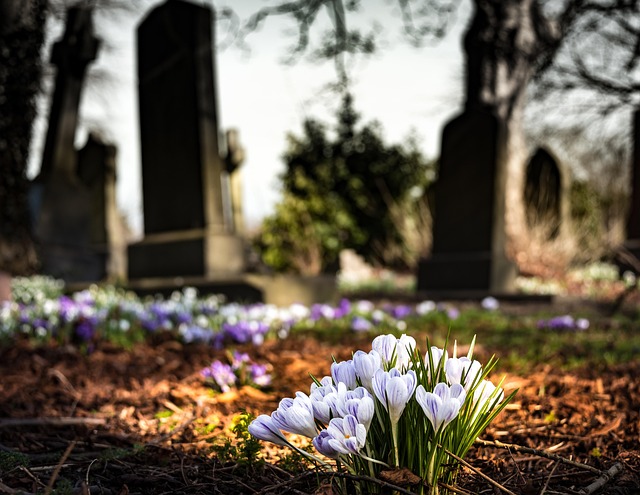
Archaeologists have long made a comfortable assumption about graves holding an adult and a child together: that they must be family. A new study from Stockholm University suggests that, in medieval Sweden at least, they usually weren't.

Researchers analysed ancient DNA from 142 people who lived from the late Viking Age into the early Christian Middle Ages. The remains came from three Swedish sites: the urban cemetery at Sigtuna, the rural churchyard of Västerhus in Jämtland, and Fjälkinge in Skåne. Sixty-eight of them were children or adolescents, many buried in shared graves with adults.

"We often assume that adults and children sharing a grave were parents and children or other close family members. In most cases, that was not what we found," says Maja Krzewińska of the Centre for Palaeogenetics at Stockholm University, lead author of the study, published in the journal Science Advances.

Read full story →
One-Shot CRISPR Therapy Keeps 'Bad' Cholesterol Halved a Year On
Health

One-Shot CRISPR Therapy Keeps 'Bad' Cholesterol Halved a Year On

A single gene-editing infusion that silences a cholesterol-regulating gene has kept LDL and triglycerides down for a full year in a small Cleveland Clinic trial — an early but genuinely encouraging step for people with hard-to-treat lipid disorders.

One injection. Twelve months later, the effect was still holding.

That's the headline finding from a small but closely watched trial at Cleveland Clinic. In the trial, a single dose of an experimental gene-editing therapy cut "bad" cholesterol and triglycerides by roughly half, and kept them there for a year.

The results were presented at the European Society of Cardiology's ESC Congress 2026 and published simultaneously in the New England Journal of Medicine. They build on earlier two-month data that the team first reported in November 2025.

Read full story →
New Trial Suggests More AF Patients Could Benefit From Blood Thinners
Health

New Trial Suggests More AF Patients Could Benefit From Blood Thinners

The SINGLE-AF study found a 69% relative drop in serious events for people with atrial fibrillation at "intermediate" stroke risk — without a rise in major bleeding

For anyone living with atrial fibrillation — or caring for someone who does — stroke is the fear that sits quietly in the background. AF is the most common heart rhythm disorder in the UK, affecting around 1.5 million people according to the British Heart Foundation, and the Stroke Association says it is linked to around one in five strokes in this country.

Now a new randomised trial has produced the first evidence of its kind that a group of AF patients whose treatment guidance has been less clear-cut could benefit from taking modern blood thinners.

The SINGLE-AF trial, presented at the European Society of Cardiology (ESC) Congress 2026 in Munich and published simultaneously in the New England Journal of Medicine, looked at people with AF classed as being at "intermediate" risk of stroke. Doctors estimate stroke risk using a checklist called the CHA2DS2-VASc score, which adds points for factors such as age, high blood pressure, diabetes and existing heart problems. In this trial, intermediate risk meant a score of 1 for men or 2 for women.

Read full story →
Scottish Scientists Help Find a Cheaper Way to Read Soil's Hidden Phosphorus
Science

Scottish Scientists Help Find a Cheaper Way to Read Soil's Hidden Phosphorus

A simpler lab test, trialled on 32 UK soil types, could help researchers understand how microbes feed crops, and how fertiliser might one day be used more wisely

Beneath every field, a busy, invisible kitchen is at work. Countless soil microbes are constantly taking in nutrients, breaking them down and passing them on to plants. Now a team that includes eight scientists from the James Hutton Institute, which has sites in Aberdeen and Dundee, has found a cheaper, simpler way to look inside.

The researchers have streamlined a laboratory test for measuring a particular form of phosphorus in soil, according to a study published in the Journal of Agricultural and Marine Sciences. They tested the refined method on 32 different soil types from across the United Kingdom.

This is a research tool, not a kit you'll find at the garden centre. But it could help scientists answer a question that matters to every farmer and gardener: how does soil life help feed our food?

Read full story →