There are days when the news from the natural world reads like a long, slow elegy. Species lost. Habitats shrinking. The relentless arithmetic of decline.
But buried in the data — and sometimes soaring magnificently above it — are stories that run the other way entirely. Stories of creatures hauled back from the very edge by human effort, stubbornness, and something that looks very much like love.
Here are four of the most extraordinary.
Twenty-two birds and a prayer
In 1987, the California condor existed as little more than a rumour on the wind. Just 22 birds remained on Earth — the entire species reduced to a number you could count on your fingers and toes, with two left over. The U.S. Fish and Wildlife Service took a desperate gamble: capture every last wild condor and breed them in captivity, hatching chicks with puppet heads shaped like adult birds to stop them imprinting on their human keepers.
It worked. By 1992, the first captive-bred condors were soaring over California once more. Today, the global population exceeds 600, with more than 300 flying free. A bird with a nine-foot wingspan, ancient as the mountains it circles, saved by people who refused to write its obituary.
The wolves that fixed a river
When grey wolves were exterminated from Yellowstone by 1926, nobody predicted what would unravel. Without predators, elk herds ballooned and browsed the willows down to stumps. Beavers starved. Riverbanks eroded. Songbirds vanished.
In 1995, biologists airlifted 14 wolves from Canada into the park. What happened next has become one of ecology's great stories. Wolves kept elk moving, willows recovered, beavers rebuilt dams, and rivers stabilised. When the wolves arrived, Yellowstone had one beaver colony. Today there are nine. The entire ecosystem began to heal — set right by the return of an animal humans had spent decades destroying.
Songs in the deep
Industrial whaling reduced global humpback whale numbers to fewer than 5,000 by the 1960s — a fraction of the millions that once breached in every ocean. Protection by the International Whaling Commission from the mid-1960s began a slow but remarkable recovery.
Today, an estimated 80,000 humpbacks swim the world's oceans, with North Atlantic populations approaching pre-whaling levels. The International Union for Conservation of Nature has moved the species to "Least Concern." Their complex songs echo once more through depths that were, within living memory, falling silent.
America's emblem, reborn
DDT, the pesticide that thinned eggshells and poisoned waterways, reduced bald eagle breeding pairs to fewer than 500 by the early 1960s. The 1972 ban on DDT and the protections of the Endangered Species Act turned the tide. Today, more than 71,000 nesting pairs soar across the lower 48 states — a population estimated at over 316,000 individual birds. The eagle was delisted in 2007 — America's living symbol, restored by the very legislation its image represents.
Bringing it home
These are not distant tales. Scotland has its own comeback stories unfolding right now.
On the west coast, white-tailed eagles are thriving more than fifty years after the first young birds were brought from Norway to the Isle of Rum. The last native sea eagle in Britain was shot in 1918. Today, over 200 breeding pairs patrol the skies above Mull, Skye, and Argyll — worth millions annually to the local economy through wildlife tourism.
On the River Tay and at Knapdale in Argyll, Eurasian beavers — hunted to extinction in Scotland in the 16th century — are engineering wetlands once more. The Scottish Wildlife Trust released the first wild beavers in 2009, and the species is now legally protected, creating habitat for dragonflies, otters, and fish.
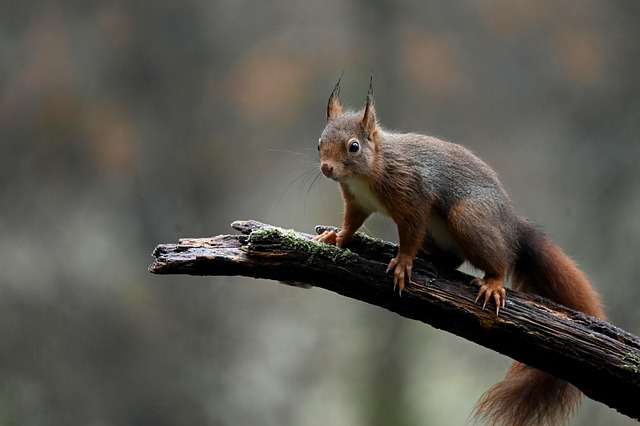
And across the Highlands, the Saving Scotland's Red Squirrels project is holding the line for around 80 per cent of the UK's estimated 287,000 remaining red squirrels against the advance of grey squirrels and the lethal squirrelpox virus.
The numbers in these stories are not abstractions. They are condors over canyon rims, wolves howling at dusk, whales breaching in silver spray, and sea eagles banking over Scottish lochs. They are proof — concrete, documented proof — that when humanity decides to mend what it has broken, nature responds with a generosity that takes the breath away.