
It began, as all the best friendships do, with simple curiosity.
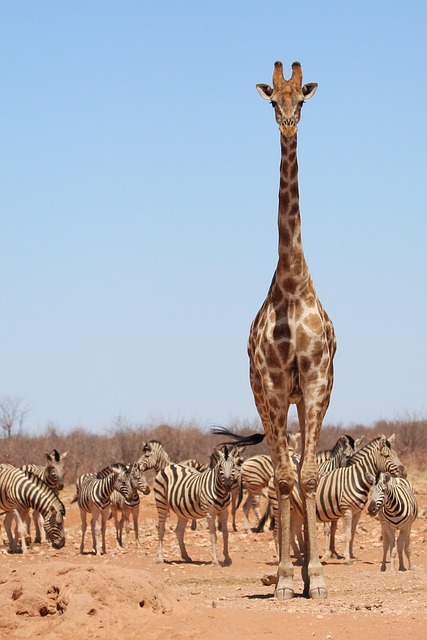
When Wild Adventures Theme Park in Valdosta, Georgia, opened its expansive Giraffe Overlook habitat — a sprawling enclosure designed to let multiple species mingle much as they would on the African savanna — staff noticed something almost immediately. Bakari, a young giraffe, kept drifting toward the zebra herd. And one zebra in particular kept drifting back.
Her name is Kurtsie. She weighs a fraction of Bakari's 2,500 pounds. She is small enough to walk directly beneath his legs. And she is, by all accounts, his best friend in the world.
"The animal care team says the friendship has had a positive impact on both animals," a Wild Adventures staff member told the New York Post. "Kurtsie has grown more relaxed and confident, often taking cues from Bakari's calm demeanour around caretakers, while Bakari has become even more social and playful with his constant companion nearby."
The pair now spend nearly all their time side by side. They lounge together, nudge each other for attention, share snacks, and even groom one another. During giraffe feedings, Kurtsie tags along contentedly, weaving between Bakari's long legs or playfully bumping him for a bit of notice.
Videos of their antics have gone viral, racking up tens of thousands of shares — and it's not hard to see why.
Why do animals do this?
Cross-species friendships like Bakari and Kurtsie's are more common than you might think, and scientists are increasingly fascinated by them. Research published in Current Biology by an international team led by Dr Eduardo Sampaio of the University of Konstanz examined the cognitive underpinnings of interspecies cooperation — from cleaner wrasses servicing reef fish to octopuses hunting alongside other species.
"Partnerships like these challenge traditional views of intelligence and cooperation in the animal kingdom," Sampaio said. "Social complexity, problem-solving and communication do not only arise within one's own group, but can also be shaped by the need to collaborate across species boundaries."
In other words, animals don't just tolerate other species — in the right conditions, they actively seek connection. Experts point to shared environments, social bonding instincts, and even mutual emotional benefit as drivers. Kurtsie's newfound confidence and Bakari's increased sociability are textbook examples.
Closer to home
Anyone who has watched a cat curl up with the family dog, or found their rabbit grooming the guinea pig, will know the feeling. Keepers at zoos and sanctuaries across Scotland — and indeed anywhere animals of different species share space — will tell you that unexpected friendships are one of the quiet joys of the work. These bonds remind us that the capacity for companionship runs deeper than species.
Share your story
Have you witnessed an unlikely animal friendship? We'd love to hear about it. Send your photos and stories to our letters page — the odder the pairing, the better.
Tips for fostering animal welfare at home
Animal welfare experts recommend introducing pets gradually, in neutral spaces, and always under supervision. Provide each animal with its own retreat space, and never force interaction. With patience, you may just witness the next great interspecies friendship — right in your own living room.