If you have ever been told you look young for your years, you already understand the idea behind one of the more intriguing tools in modern brain research.
Scientists can estimate a "brain age" from an MRI scan and compare it with a person's actual age. A large study in the journal PLOS Medicine has used that approach to compare nine different conditions side by side.
Its findings are interesting, and in places hopeful. They also need reading with care.
What a brain-age scan measures
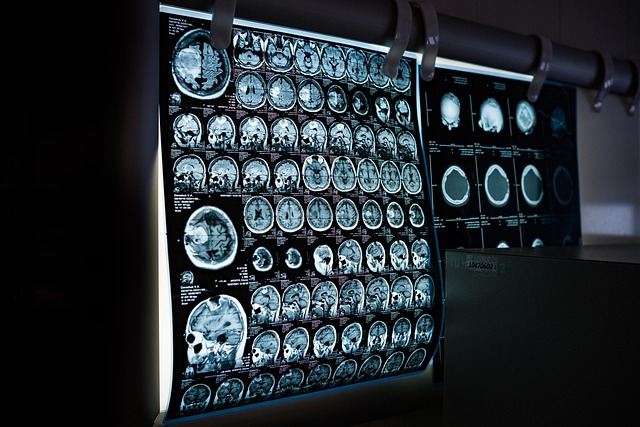
A structural MRI scan is a detailed picture of the brain's physical shape. Everyone's brain changes gradually with the years, and computer models can learn from thousands of scans what a typical brain looks like at different ages.
Show such a model a new scan and it will estimate an age. The gap between that estimate and the person's real age is called the predicted age difference, or PAD. A positive figure means the scan looks somewhat older than expected.
It is a statistical estimate, not a diagnosis. It says nothing about any individual's abilities, character or future.
What the researchers found
The team compared scans from 45,900 people without a diagnosis with those of 2,698 people living with one of nine conditions: Alzheimer's disease, mild cognitive impairment, alcohol use disorder, tobacco use disorder, schizophrenia, bipolar disorder, major depressive disorder, ADHD and autism.
The work was led by Shile Qi of Nanjing University of Aeronautics and Astronautics in China, with Chuang Liang as first author and an international group of co-authors. It was published on 21 July 2026 and is free to read.
The researchers used "effect size", a measure of how far apart two groups' averages sit. By the usual rule of thumb, 0.2 is small, 0.5 moderate and 0.8 large.
Alzheimer's disease showed the largest average gap, at 0.97. The groups living with alcohol or tobacco use disorder ranged from 0.62 to 0.84. Schizophrenia came out at 0.53, bipolar disorder at 0.46, mild cognitive impairment at 0.45 and depression at 0.28.
These are averages across groups. Differences of this size still leave a great deal of overlap between individuals.
No overall difference for ADHD or autism
For ADHD and autism the figures were 0.01 and 0.06, which is statistically no different from zero.
In plain terms, the study found no overall difference in brain age between people with ADHD or autism and the comparison group.
Different conditions, different patterns
The patterns were not the same everywhere. For dementia, the differences appeared mainly in the front and rear of the brain. For psychiatric conditions, they appeared in the front and sides. For addiction, they involved networks that include deeper structures called the putamen and thalamus.
One area, the prefrontal cortex behind the forehead, featured across several conditions.
"Different neurological disorders appear to leave different signatures on the brain aging clock, which may help researchers better understand the neural and biological pathways involved in these conditions," the authors said.
An association, not a cause
This is the most important point. The study shows that these conditions and an older-looking scan tend to appear together. It does not show that one causes the other.
It cannot tell us which comes first, or whether something else lies behind both. The authors also acknowledge a limitation: psychiatric conditions and addiction often occur together, and the analysis did not account for that.
Where the hope lies
There is no brain-age test at your GP surgery or memory clinic, and nothing in this study changes how any condition is diagnosed or treated today.
The hope is for the future. The authors say later studies should test whether these patterns could serve as biomarkers, meaning measurable signs that might one day help doctors spot conditions earlier or understand them better.
That remains a possibility rather than a promise. For now, anyone with concerns about memory or mental health should speak to their GP.