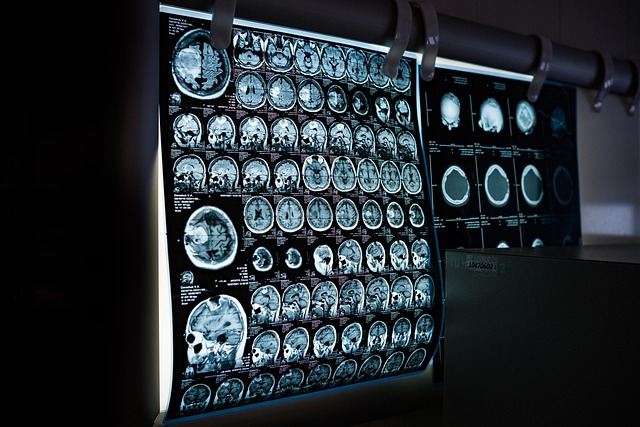

When Ed Waldner left hospital after surgery for a brain tumour, he says he was told: "that's it, that's all we can do."
The Calgary man went on to join a clinical trial of high-dose vitamin B3. When the University of Calgary shared his story earlier this year, he said he was feeling "really good" and was happy whenever his routine scans came back with one word: stable.
It began at 55, when Waldner felt exhausted whatever he had done that day. He wondered about sleep apnoea. Then his heels began to drag when he walked. When his symptoms worsened one day, he went to the emergency department. "The doctor said I had a mass on my brain and needed to see an oncologist," he says. The mass was glioblastoma.
First, the caveats. This is an early trial, and the results are interim, based on just 24 patients. Researchers at the University of Calgary say 82 per cent of them had no progression of their cancer at six months. That is an encouraging signal, not proof. The comparison is with figures from older studies, not with a randomised control group in the same trial. The researchers have acknowledged the small sample and short follow-up, and say larger, controlled trials are needed. Nor is this brand new: the paper appeared online in November 2025 and the university announced the findings in February.
Crucially, high-dose niacin is not a harmless supplement. The team warns that large amounts of vitamins can be toxic without medical oversight. In the trial's safety phase, the published summary reports, two patients had severe side effects at 2,500mg a day, a low platelet count and raised bilirubin in the blood, and the dose was capped at 2,000mg a day. Flushing was the most common side effect. Doses are carefully controlled and monitored. Nobody should try to copy this at home.
Why it matters
Glioblastoma is the most aggressive brain cancer in adults. Surgeons remove as much of the tumour as they can, followed by radiotherapy and chemotherapy, but the cancer spreads into surrounding tissue and usually comes back.
"Survival of patients with this condition hasn't changed significantly for 20 years," says Dr Gloria Roldan Urgoiti, an oncologist and clinical associate professor at the university's Cumming School of Medicine. "Anything that may help should be explored, but it requires strict protocols and safety monitoring."
In the UK, Brain Tumour Research says around 3,200 people are diagnosed with glioblastoma each year, and just 4 per cent survive five years or more. The charity says no new treatments for it have been approved since 2005.
How might niacin help?
The idea comes from the lab of neuroscientist Professor Wee Yong. Glioblastoma, he explains, switches off the body's defences. "Normally the immune system will try to counter and prevent tumour growth; however, this brain cancer suppresses the immune system," he says. "Niacin treatment rejuvenates immune cells so they can do what they are supposed to do, attack and kill the cancer cells. I see it as an ongoing 'battle for the brain.'"
Experiments in Yong's lab found niacin extended survival in mice. That work moved into a combined Phase I and II trial in people. The Phase I part looks mainly at safety and the right dose. The Phase II part starts to look for signs of benefit.
Patients receive controlled-release niacin alongside standard chemotherapy and radiotherapy. The team wants to find the highest dose that can be given safely. They also want to see whether it lengthens progression-free survival, the time patients live without their cancer getting worse.
Before starting, the researchers set a bar. They were looking for six-month progression-free survival to improve by at least 20 percentage points on older studies, and planned to stop if the early results fell short. The first 24 patients cleared it. With standard treatment alone, the paper puts the historical figure at about 54 per cent. The interim result was 82 per cent, a rise of 28 percentage points, which the researchers call promising.
What happens next
The team hopes to include 48 participants in total, with a final analysis expected by the end of 2026 or early 2027. The research is supported by the Canadian Institutes of Health Research and the Alberta Cancer Foundation. The interim findings were published online in the Journal of Neuro-Oncology in November 2025.
For Waldner, taking part has been valuable in itself. "I can tell you being part of this research helps me mentally because we're trying," he says.
For a disease where options have been so few for so long, a larger, controlled trial is the next step that matters.