
In an age where most mixing happens on nearfields — or increasingly, on headphones — asking an engineer to invest in main monitors feels like asking a chef to buy a wood-fired oven. Lovely if you can, but is it necessary?
Genelec's answer is the 8380A, a three-way coaxial main monitor that doesn't just make the case for big speakers — it makes small ones feel incomplete.
A coaxial solution to an old problem
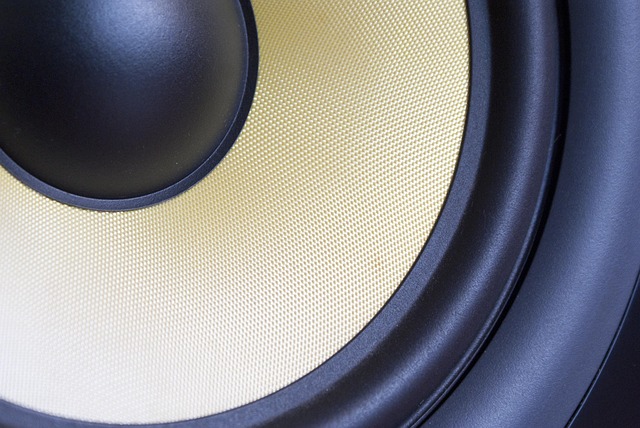
The 8380A is built around Genelec's Minimum Diffraction Coaxial (MDC) driver technology, which mounts the 125mm midrange cone and 25mm metal dome tweeter on the same axis, nested inside the company's Directivity Control Waveguide. The result is a single, time-aligned point source for everything above 470 Hz.
Why does that matter? In a large room, separate mid and high-frequency drivers create small timing differences that smear the stereo image as you move off-axis. A coaxial design eliminates that. Genelec's particular trick — the MDC part — is minimising the diffraction artefacts that have historically plagued coaxial designs, producing a smoother, more neutral off-axis response. For immersive formats like Atmos, where listeners and speakers aren't always perfectly aligned, that consistency is critical.
Below the coaxial driver sits a 380mm (15-inch) woofer, crossed over at 470 Hz, with the system reaching down to 29 Hz at the −6 dB point. That's genuine full-range performance from a single enclosure — no subwoofer required for most music and post-production work.
Silence as a feature
Genelec specifies self-generated noise of ≤0 dB SPL at one metre — effectively inaudible. The fan-less RAM-L2 amplifier module, which packs 950 watts across three channels (500W Class D bass, 250W Class D midrange, 200W Class AB treble), runs silently cooled. In a mastering suite or dialogue editing room, where you're listening into the quietest passages, amplifier noise isn't a trivial concern. It's the difference between hearing the room and hearing the gear.
The quoted frequency response of 29 Hz to 43 kHz won't matter much at the extremes of human hearing, but it signals generous headroom in the audible band. Genelec specifies ±1.5 dB accuracy from 38 Hz to 20 kHz — a tighter tolerance than many competitors claim.
The real differentiator: GLM room calibration
Where the 8380A pulls ahead of traditional passive-and-amplifier main monitor setups is Genelec's SAM (Smart Active Monitoring) platform. Every 8380A connects to Genelec's GLM software via its network ports, allowing automated room calibration using the AutoCal 2 algorithm. The system measures and compensates for room anomalies — standing waves, boundary reflections, asymmetric speaker placement — storing correction profiles either in the software or in each monitor's onboard DSP.
GLM's GRADE feature goes further, generating a detailed report on room and system performance with specific recommendations for acoustic treatment and speaker positioning. For studios investing at this level, that kind of diagnostic intelligence pays for itself quickly.
Built to last, built in Finland
The 8380A is manufactured at Genelec's factory in Iisalmi, Finland, and designed for decades of service — a philosophy the company has maintained since 1978. At around €8,000 per unit, it's a serious investment, but Genelec has sweetened the upgrade path: the 8380A shares identical dimensions with the 1038 and 1238 monitors, meaning existing flush-mounted installations can swap directly without cabinet modifications.
"With the recent introduction of the free-standing 8381A five-way main monitor, we could see the clear potential for a more compact three-way design that distils our latest coaxial technology into a traditional flush-mounting format," says Genelec Managing Director Siamäk Naghian. "The 8380A fills that gap perfectly."
Who is it for?
Mid-sized music studios, post-production facilities, and mastering rooms that need accurate, high-SPL monitoring with room calibration built in. Engineers currently running 1038s or 1238s have the clearest upgrade path, but any professional facility designing a new room around immersive formats should have the 8380A on the shortlist.
A global World Tour of listening events is underway — with a Stockholm session on 24 March offering engineers the chance to hear the 8380A for themselves.