
Edition No. 5 · Tuesday, March 17, 2026

← Past Editions · Edition No. 5 · Tuesday, March 17, 2026

Today’s outlook: Warm hearts, orange-headed lizards, and blankets for all — today's forecast is pure kindness


Meet the Orange-Headed Rock Monitor: One of Three Stunning New Lizard Species Just Discovered in Australia
Dogs & Animals

Meet the Orange-Headed Rock Monitor: One of Three Stunning New Lizard Species Just Discovered in Australia

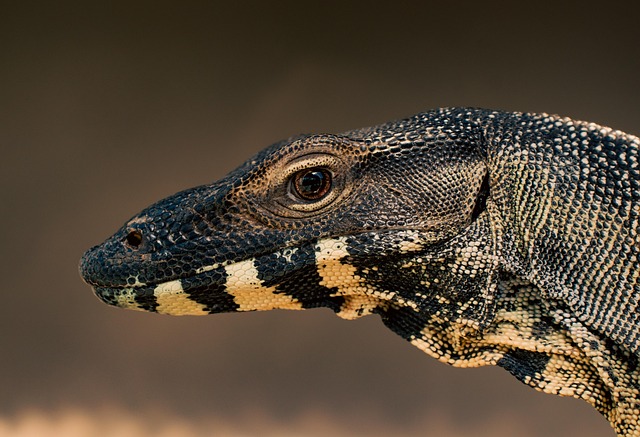
Scientists have formally described three colourful monitor lizards hiding in plain sight across the remote savannas of Far North Queensland — and one of them has a head like a sunset.

Imagine trudging through the rugged, sun-scorched savanna of Far North Queensland, clambering over sandstone escarpments that few vehicles can reach — and spotting a lizard with a blazing orange head staring back at you from a rock crevice.

That's exactly what happened to the team led by Dr Stephen Zozaya, a research fellow at the Australian National University (ANU), when his colleague Wes Read stumbled upon what would become one of the most striking reptile discoveries in recent Australian history.

"I was like, 'What is that?'" Dr Zozaya told ABC News. "I had no idea these things existed."

Read full story →


🐾Image coming soon
Dogs & Animals

Nature's Engineers Are Back: Beavers Return to Cornwall After 400 Years

Wild beavers have been officially reintroduced to Cornish rivers for the first time in four centuries — and they're already reshaping the landscape.

On a quiet morning in February, conservation teams carried crates to the banks of a river in mid-Cornwall, opened the doors, and watched as four beavers slipped into the water. It was a small, unhurried moment — and a historic one. For the first time in over 400 years, wild beavers were officially back in Cornwall.

The release, led by Cornwall Wildlife Trust in partnership with Beaver Trust, took place in the Par and Fowey river catchment area, near the Trust's Helman Tor Nature Reserve. Two pairs were released initially, with a further two pairs following shortly after — eight beavers in total now calling Cornwall's waterways home.

"We are delighted to have released beavers back into the Cornish landscape," said Lauren Jasper, Beaver Officer at Cornwall Wildlife Trust. "Today is a huge win for nature!"

Read full story →
🔬Image coming soon
Science

A Failed Experiment, an LED Lamp, and a Drug Discovery Breakthrough

A Cambridge PhD student's botched control test has unlocked a cleaner, faster way to modify medicines — using light instead of toxic chemicals.

David Vahey was having a bad day in the lab. The PhD researcher at St John's College, Cambridge, was testing a photocatalyst when he decided to remove it as part of a routine control experiment. The reaction should have flopped. Instead, it worked just as well — and in some cases better — without the catalyst at all.

At first, the unusual result looked like a mistake. Most researchers might have binned it and moved on. Vahey didn't.

"Failure after failure, then we found something we weren't expecting in the mess — a real diamond in the rough," Vahey said. "And it is all thanks to a failed control experiment."

Read full story →
❤️Image coming soon
Health

French Scientists Uncover How Cancer Spreads — And It Could Lead to New Treatments

Researchers in France have uncovered hidden mechanics of metastasis, opening the door to therapies that could one day stop cancer in its tracks.

For decades, scientists have understood that cancer becomes most dangerous when it travels — when rogue cells break free from a tumour and set up shop in distant organs. What they didn't fully understand was how those cells make the journey. Now, two French research teams have pulled back the curtain on that process, and their findings could reshape the future of cancer treatment.

At INSERM's Tumor Biomechanics Lab in Strasbourg, a team led by researcher Jacky Goetz has spent over a decade studying how cancer cells spread through the body. Their latest discovery is striking: the walls of our blood vessels aren't passive bystanders in cancer's spread — they actively help tumour cells escape.

Here's how it works. When a cancer cell enters a blood vessel, it's too large for the space and blocks blood flow. The vessel wall responds by remodelling itself to push the cell out — inadvertently helping it colonise a new organ. The key player? Calcium ions. The more calcium signalling occurs, the more the vessel wall reshapes to expel the tumour cell.

Read full story →
🔬Image coming soon
Science

Moon Hummus, Anyone? Scientists Grow Chickpeas in Lunar Dirt

Researchers have coaxed the humble chickpea into growing — and producing seeds — in simulated Moon soil, bringing lunar farming one delicious step closer to reality.

Of all the crops that might sustain humanity's future on the Moon, the chickpea wasn't exactly the obvious choice. But it turns out the unassuming star of hummus, falafel and countless curries could be the key to feeding astronauts on the lunar surface.

Researchers from the University of Texas at Austin and Texas A&M University have successfully grown and harvested chickpeas in simulated lunar soil — a first for the crop — according to a study published on March 5 in the journal Scientific Reports.

Growing anything on the Moon is, to put it gently, a nightmare. Lunar regolith — the dusty grey stuff that covers the surface — contains no organic matter, no microorganisms, and none of the biological richness that makes Earth soil so fertile. It's as fine as baby powder, sticky, metallic, sharp, loaded with toxic metals like aluminium, copper and zinc, and terrible at holding water.

Read full story →
🐾Image coming soon
Dogs & Animals

Every Time Someone Walks By, Roxy Picks Up a Toy and Offers It to Them

A seven-year-old shelter dog in West Palm Beach has spent two months trying to win a family — one stuffed animal at a time.

When footsteps echo down the corridor at Peggy Adams Animal Rescue League in West Palm Beach, Florida, a dog named Roxy springs into action. She dashes to the front of her kennel, a plush toy clamped gently in her mouth, and holds it up to the stranger on the other side of the glass. Here. This is for you. Will you stay?

She does this every single time. Every visitor, every staff member, every set of passing shoes. It's her ritual — hopeful, earnest, and so far, unanswered.

Roxy is seven years old, a larger bully breed mix with bright eyes and a heart that seems to have no off switch. She's been at Peggy Adams for nearly two months, making her one of the shelter's longest-term residents. In a place where many animals find homes within days, each extra week chips away at a dog's chances.

Read full story →
The Stuff of Stars: Asteroid Ryugu Contains All the Building Blocks of DNA and RNA
Science

The Stuff of Stars: Asteroid Ryugu Contains All the Building Blocks of DNA and RNA

A tiny pinch of space dust, returned from a distant asteroid, holds every molecular "letter" needed to write the genetic code of life.

The black grains look like nothing special — a pinch of dark dust, barely 20 milligrams, sealed in a sterile tray. But these particles travelled 300 million kilometres to reach a laboratory in Japan, and what scientists found inside them is extraordinary: all five nucleobases, the fundamental molecular building blocks of both DNA and RNA, present together in a single asteroid sample.

The discovery, published Monday in Nature Astronomy, strengthens one of science's most poetic hypotheses — that the raw ingredients for life on Earth may have been delivered by asteroids billions of years ago, drifting down through the atmosphere like cosmic care packages.

A team led by biochemist Toshiki Koga of the Japan Agency for Marine-Earth Science and Technology (JAMSTEC) analysed two samples collected from the asteroid Ryugu by Japan's Hayabusa2 spacecraft. The mission launched in 2014, touched down on the 900-metre-wide, spinning-top-shaped asteroid between 2018 and 2019, and returned its precious cargo to Earth in December 2020.

Read full story →
The Singing Postman Who Got His Song Back
Community

The Singing Postman Who Got His Song Back

When a Chicago mailman's doorstep serenade went viral, the community he'd been uplifting for months returned the favor — with a car.

Lavonte Harvey doesn't just deliver mail. He delivers music.

Every morning for the past five months, the 23-year-old letter carrier has wound through the streets of Oak Park and Chicago's West Side, singing gospel, R&B, whatever moves him. Residents along his route know the drill: the creak of a mailbox, then a voice — warm, full-throated and impossible to ignore.

One of those residents was Wanda, a 76-year-old widow living in the Austin neighbourhood. She'd recently lost her husband of 50 years. Most days were quiet. But when the mail arrived, there was Harvey on her doorstep, filling the silence with song.

Read full story →
An 18-Year-Old's First Paycheck Could Have Gone Anywhere — He Spent It on 100 Blankets for the Homeless
Community

An 18-Year-Old's First Paycheck Could Have Gone Anywhere — He Spent It on 100 Blankets for the Homeless

When Jessie Wade got one of his first paychecks from Burger King, he skipped the new sneakers and the video games. Instead, he loaded up on blankets and hand warmers and hit the streets of Norfolk, Virginia.

Most 18-year-olds have a mental wishlist ready long before their first paycheck lands. Jessie Wade had one too — it just didn't have his name on it.

Wade had only been working at Burger King in Norfolk, Virginia, for a few weeks when winter tightened its grip on the city. He looked at the money in his account, thought about the people sleeping out in the cold, and made a decision that left even his own father speechless.

"We bought about 100 blankets, and I walked around and started handing them out to people that were out because I knew how cold it was and I didn't want them to freeze," Wade told WAVY TV 10. "They were thankful and they had a smile on their face."

Read full story →
Sunshine on Wheels: The Tunisian Startup Building Solar Cars for Africa
Science

Sunshine on Wheels: The Tunisian Startup Building Solar Cars for Africa

A small company in Tunis is proving that the future of electric vehicles doesn't need expensive charging networks — just clear skies.

On the sun-drenched streets near ancient Carthage, a tiny two-seater called the Bee hums quietly through traffic. It has no exhaust pipe, no petrol tank, and — on a good day — no electricity bill. The car charges itself, soaking up North African sunshine through the solar panels on its roof.

This is the vision of Bako Motors, a Tunisian startup that's turning one of Africa's most abundant natural resources into affordable, everyday transport.

Founded in 2021 by entrepreneur Boubaker Siala, Bako Motors produces two solar-equipped electric vehicles: the Bee, a compact city car priced at around $6,200, and the B-Van, a cargo vehicle starting at $8,500. Both carry rooftop solar panels that charge their lithium-iron-phosphate batteries directly.

Read full story →
❤️Image coming soon
Health

A Surgeon in London, a Patient in Gibraltar: The UK's First Long-Distance Operation

A cancer patient 1,500 miles away received specialist robotic surgery without leaving his local hospital — a breakthrough that could reshape access to healthcare.

When Paul Buxton was diagnosed with prostate cancer in January, he expected the usual routine for Gibraltar residents needing complex treatment: fly to London, join an NHS waiting list, spend weeks away from home. Instead, the 62-year-old became part of medical history.

On 11 February, Professor Prokar Dasgupta — one of the world's leading robotic urological surgeons — removed Buxton's prostate from a console at The London Clinic, 1,500 miles away. Buxton never left St Bernard's Hospital in Gibraltar.

"A lot of people said to me: 'You're not going to do it, are you?'" Buxton told the BBC. "I thought, I'm giving something back here. This is a no-brainer."

Read full story →
🔬Image coming soon
Science

The Wonder Material That Could Help End Britain's Pothole Nightmare

Councils in Essex and the North East are trialling graphene-infused roads — and early results suggest the super-strong carbon material could transform how we fix our crumbling streets.

You know the feeling. That sickening thud as your front wheel drops into a crater you didn't see coming. The wince as you check your mirror, wondering what just happened to your suspension.

Welcome to Britain's pothole crisis — and it's getting worse. The RAC estimates there are roughly six potholes for every mile of council-controlled road in England and Wales. Councils fill one every 18 seconds, yet the repair backlog has hit a record £18.6 billion, according to the Asphalt Industry Alliance's latest annual report. In 2024 alone, UK drivers spent an estimated £579 million fixing pothole damage to their cars.

But there's a twist in this familiar tale of crumbling tarmac. A material first discovered with sticky tape and a pencil in a Manchester university lab may be riding to the rescue.

Read full story →