
Edition No. 51 · Monday, April 6, 2026

← Past Editions · Edition No. 51 · Monday, April 6, 2026

Today’s outlook: Spring arrived early and brought friends — kiwis, cockatoos, butterflies, and the warmest Monday edition yet


Britain's Earliest Spring in Living Memory: Butterflies and Birds Running Weeks Ahead of Schedule
Dogs & Animals Wildlife

Britain's Earliest Spring in Living Memory: Butterflies and Birds Running Weeks Ahead of Schedule

Citizen science data reveals record-smashing seasonal activity across the UK — and Scotland's woodlands are stirring early too

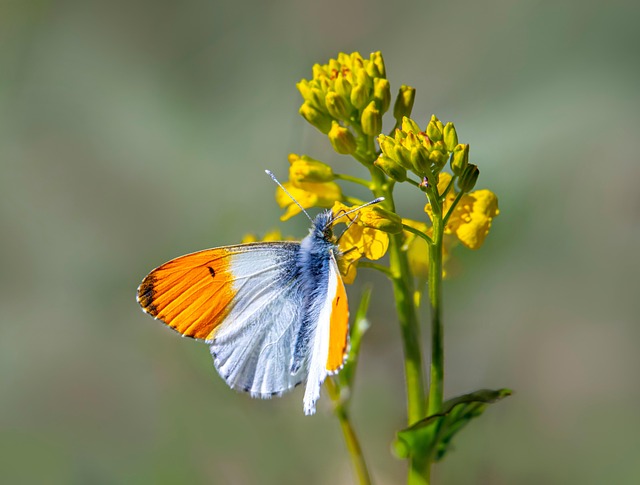
Something extraordinary is happening in the hedgerows, woodlands and gardens of Britain. Bluebells are flowering, swallows are returning, and orange-tip butterflies are taking to the wing in what could become the earliest recorded spring in the nation's history.

And the evidence is not coming from satellites or supercomputers. It is coming from ordinary people — thousands of citizen scientists armed with nothing more than sharp eyes and a love of the natural world.

Nature's Calendar, the Woodland Trust's long-running phenology project, has been collecting volunteer observations of seasonal change since 2000, drawing on a biological record stretching back to 1736. Its data for 2026 is smashing records across the board: frogspawn, blackbird nesting, brimstone butterfly emergence and hazel flowering are all running at the earliest this century.

Read full story →


Scientists Crack the Code of Chronic Pain — and It Could Change Everything
Health Medical

Scientists Crack the Code of Chronic Pain — and It Could Change Everything

Stanford researchers discover that chronic pain runs on its own dedicated brain circuit, opening the door to treatments that could switch it off without dulling the body's vital warning system

For the 38 per cent of Scottish adults living with chronic pain — and millions more across the UK — the experience is maddeningly familiar. The injury heals. The inflammation fades. But the pain stays, grinding on for months, years, sometimes a lifetime. Now, researchers at Stanford University have discovered why — and the answer upends decades of medical thinking.

In a landmark study published this month in Nature, a team led by neuroscientist Xiaoke Chen identified a dedicated neural circuit that drives chronic pain. Crucially, it is entirely distinct from the circuitry that produces the sharp, immediate pain you feel when you stub your toe or touch something hot.

Think of it this way: acute pain is your smoke detector. It screams when there's a real fire and goes quiet once the danger passes. Chronic pain, it turns out, is a completely separate alarm — one that gets stuck on long after the fire is out, blaring at the gentlest breeze. Stanford's team has found that faulty alarm and shown, in mice, that they can switch it off.

Read full story →
The Women Who Refused to Leave: Stand & Deliver Brings the Lee Jeans Sit-In to Glasgow's Tron Theatre
What's On Glasgow

The Women Who Refused to Leave: Stand & Deliver Brings the Lee Jeans Sit-In to Glasgow's Tron Theatre

National Theatre of Scotland's new play tells the extraordinary true story of the Greenock factory workers who barricaded the doors, held out for seven months, and won

In February 1981, 240 workers — most of them women — at the Lee Jeans factory in Greenock were told their jobs were finished. The American owners, VF Corporation, wanted to shut up shop and chase fresh government subsidies elsewhere. The women voted, on the spot, to occupy the factory.

They barricaded the doors with sewing machines. They stayed for seven months. And they won.

Forty-five years on, that extraordinary act of collective defiance is finally getting its first theatrical telling. Stand & Deliver: The Lee Jeans Sit-In, a co-production between National Theatre of Scotland and Tron Theatre Company, opens at Glasgow's Tron Theatre on 24 April and runs until 9 May before touring Scotland.

Read full story →
Against the Odds: Endangered Cockatoo Chick Hatches in Artificial Nest After Years of Patient Science
Dogs & Animals Wildlife

Against the Odds: Endangered Cockatoo Chick Hatches in Artificial Nest After Years of Patient Science

A palm cockatoo chick — the first ever to hatch in a human-made hollow — offers hope for cavity-nesting birds worldwide, including Scotland's own kestrels and barn owls

On the northernmost tip of Queensland, Australia, something remarkable has happened. After years of careful science and quiet persistence, a palm cockatoo chick has hatched inside an artificial nest hollow — the first time the endangered species has ever accepted a human-made home.

"This is huge news," said Christina Zdenek, associate researcher with conservation group People for Wildlife. "We have a highly endangered species in severe decline, and we've been working for years to crack the code of how to help them. And we finally have."

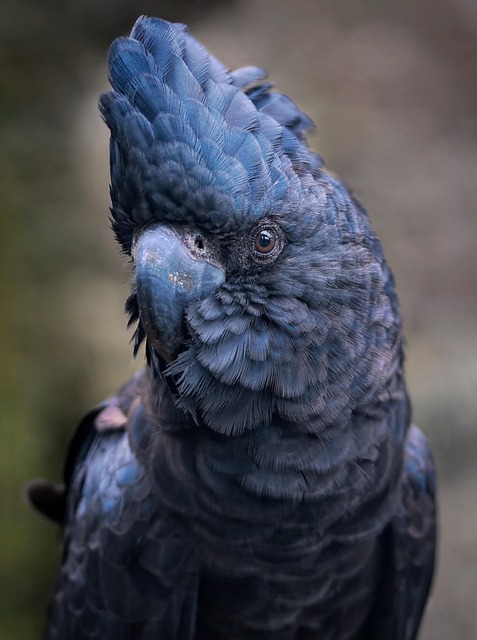
The palm cockatoo is one of Australia's most striking and ancient birds — over 60 centimetres long, jet-black, with a dramatic crest and vivid red cheek patches. It is also famously musical: males drum sticks against hollow trees during courtship, earning them the nickname "the Ringo bird" after Beatles drummer Ringo Starr.

Read full story →
Knightswood Pupils Transform GP Waiting Room — Making Doctor Visits Less Scary, One Mural at a Time
News Glasgow

Knightswood Pupils Transform GP Waiting Room — Making Doctor Visits Less Scary, One Mural at a Time

Children from Bankhead Primary School in Knightswood have brightened up their local GP surgery with colourful murals designed to help young patients feel calmer and less intimidated

Walking into the doctor's surgery can be daunting at any age — but for children, the sterile walls and unfamiliar smells of a GP waiting room can feel genuinely frightening. Pupils at Bankhead Primary School in Knightswood decided to do something about it.

Working alongside their local GP practice, the children designed and created colourful murals to transform the surgery's waiting room into a warmer, more welcoming space — one that helps young patients and their parents feel calmer before appointments.

The project saw pupils work collaboratively on artwork inspired by themes designed to reassure and distract anxious visitors. The murals — bright, playful, and unmistakably the work of young imaginations — now line the walls of what was once a typically clinical waiting area.

Read full story →
Hybrid Solar Cells Hit 34% Efficiency — and Scotland's Rooftops Stand to Benefit Most
Science

Hybrid Solar Cells Hit 34% Efficiency — and Scotland's Rooftops Stand to Benefit Most

Perovskite-silicon tandem panels capture nearly 50% more sunlight than conventional cells, with commercial production ramping up through 2027

A new generation of solar panels that stack two light-harvesting materials on top of each other has smashed through efficiency records — and the first commercial modules are already shipping to customers.

Perovskite-silicon tandem cells, which layer a crystal material called perovskite on top of conventional silicon, have achieved 34.85% efficiency in laboratory tests — certified by the US National Renewable Energy Laboratory in April 2025. That's nearly 50% better than the 22–24% efficiency of today's best conventional panels.

The technology is no longer confined to the lab. Oxford PV, a UK-headquartered company with a factory in Brandenburg, Germany, shipped its first commercial tandem modules to US utility customers in September 2024, achieving 24.5% module efficiency. South Korean manufacturer Hanwha Qcells has hit 28.6% on production-sized cells and plans mass production by early 2027.

Read full story →