
Edition No. 69 · Thursday, April 23, 2026

← Past Editions · Edition No. 69 · Thursday, April 23, 2026

Today’s outlook: Good boy, Fillmore — barking up the right tree on a bright Thursday

Good boy, Fillmore: the German shorthaired pointer who barked his family awake and out of a burning house
Dogs & Animals Rescue

Good boy, Fillmore: the German shorthaired pointer who barked his family awake and out of a burning house

When flames took hold of the Dalis family's garage at 4.20am, it was their three-year-old gundog who refused to let them sleep through it

Fillmore is three years old, weighs rather less than the average Labrador, and, by his owner's own admission, almost always sleeps through the night.

Not last Wednesday.

At around 4.20am on 15 April, the German shorthaired pointer began barking from his unlocked crate in the master bedroom of a house on Skyway Drive in North Tustin, California — and he would not stop. His owner Eleni Dalis, 62, initially thought a coyote must be prowling the garden.

Read full story →


Glasgow's Heart Heroes: City Joins £30m Drive to Train 141 New Cardiovascular Scientists
News Glasgow

Glasgow's Heart Heroes: City Joins £30m Drive to Train 141 New Cardiovascular Scientists

British Heart Foundation backs Glasgow-Edinburgh consortium in its biggest-ever PhD investment — with local pride, local expertise and a shot at the next big breakthrough.

Glasgow is punching well above its weight in the race to defeat heart disease — and the British Heart Foundation has just written the city a £30 million thank-you note.

The University of Glasgow has secured a share of the charity's biggest-ever PhD investment, a £30m fund that will train 141 new cardiovascular scientists across seven university-led consortia between 2026 and 2029.

Glasgow will team up with the University of Edinburgh to form a Scottish powerhouse consortium, co-directed by three of the city's leading researchers: Professor Christian Delles, Professor Lorraine Work and Professor Godfrey Smith.

Read full story →
Meet the Legends: Glasgow 2026 unveils volunteer kit ahead of summer Games
News Scotland

Meet the Legends: Glasgow 2026 unveils volunteer kit ahead of summer Games

Thousands of "Legends" will wear pink across the city when the Commonwealth Games return to Glasgow this July — and they got their first look at the uniforms this week.

More than 2,000 volunteers filed into the SEC Armadillo last week and got their first proper look at what they'll be wearing this summer — and by the sound of it, the cheer nearly lifted the roof.

They are the Glasgow 2026 Legends: the thousands of volunteers who will steward, welcome and cheerlead their way across the city when the Commonwealth Games return to Glasgow from 23 July to 2 August.

The uniform, designed and produced by Scottish outdoor clothing brand Trespass, was unveiled on 17 April. Volunteers will wear pink, technical officials purple, and staff teal — a palette organisers say was inspired by Scotland's landscapes, with elements of a bespoke Glasgow 2026 tartan woven through some of the pieces.

Read full story →
Look up, Scotland: three nights of sky magic still to come this week
News Scotland

Look up, Scotland: three nights of sky magic still to come this week

From Galloway's Dark Sky Park to Cairngorms aurora, your practical guide to catching the Lyrids, the Northern Lights and the Milky Way before the week is out

If you've been outside after dark this week you may already have noticed something: Scotland's skies are putting on a show. A rare convergence of a major meteor shower, heightened auroral activity and some of the darkest skies in Europe means the next few nights are, frankly, a gift.

Here's how to make the most of them — practically, and without needing a telescope.

The Lyrid meteor shower — the oldest recorded meteor shower still visible today, first noted by Chinese astronomers in 687 BCE — reached its peak on the night of 22-23 April. But astronomers at the Royal Observatory Greenwich confirm the shower remains active until 25 April, so Thursday, Friday and Saturday nights all offer a decent chance of catching a bright, fast meteor streaking across the sky.

Read full story →
From trowel to therapy: how Glasgow's community gardens are quietly growing mental health
Community

From trowel to therapy: how Glasgow's community gardens are quietly growing mental health

New research from Michigan State University confirms what north Glasgow's gardeners already know — that digging, planting and sharing a cuppa over the compost heap can be powerful medicine

A chilly April morning at the Molly Weir Garden in north Glasgow, and the first of the raised beds are waking up. Volunteers kneel in the damp soil, pressing seedlings into place and trading stories over flasks of tea. It doesn't look like a mental health clinic. According to a major new study, that's exactly the point.

Research published by Michigan State University (MSU) and partners has found that community gardening delivers measurable boosts to mental and social wellbeing — and the findings have striking resonance for Glasgow, where grassroots garden projects are quietly rewriting what "health support" can look like.

The study, led by nutritional epidemiologist Professor Katherine Alaimo of MSU's Department of Food Science and Human Nutrition, followed 34 first-time community gardeners over a single growing season in partnership with Denver Urban Gardens. Researchers identified what they call "the gardening triad" — caring for plants, feeling a sense of accomplishment, and connecting with nature — as a near-universal driver of improved wellbeing. The findings were published in the journal People and Nature.

Read full story →
Gene therapy that 'turns down' chronic pain without opioids shows early promise in mice
Health

Gene therapy that 'turns down' chronic pain without opioids shows early promise in mice

Pre-clinical Penn-led study, published in Nature, targets the brain's pain circuits directly — but human trials are still some way off

For the roughly one in five adults living with chronic pain, the comparison researchers use is painfully familiar: it is like a radio stuck at full volume, and nothing you try will turn it down.

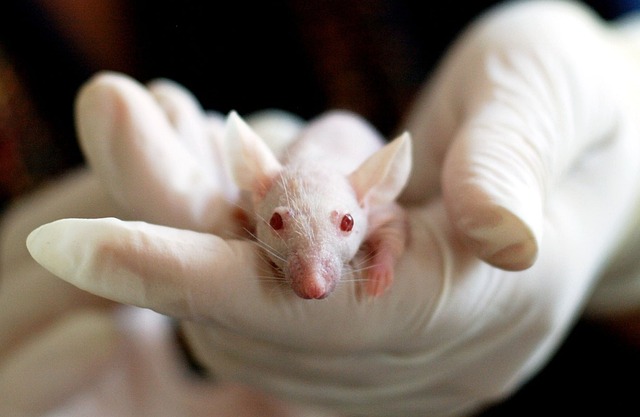
Now a team at the University of Pennsylvania says it has found something that might — a gene therapy that targets the brain's pain circuits directly, mimicking the relief of morphine without the addiction risk that has driven the opioid crisis.

The work, published in the journal Nature and reported by the University of Pennsylvania Perelman School of Medicine, is at an early, pre-clinical stage. The therapy has been tested in mice, not people. But its authors describe it as a "first step" and a "blueprint" for a new kind of pain medicine.

Read full story →