

Edition No. 92 · Thursday, October 1, 2026

← Past Editions · Edition No. 92 · Thursday, October 1, 2026

Today’s outlook: Sunny with a chance of puppies

Step inside Dennistoun's old cigarette factory as Hanson Street studios turn 25
What's On Glasgow

Step inside Dennistoun's old cigarette factory as Hanson Street studios turn 25

A free open studios weekend on 3 and 4 October lets visitors into the private workspaces of around 150 Glasgow artists and makers

Ever wondered what goes on behind the doors of Dennistoun's former cigarette factory? This weekend, you can find out for free.

Hanson Street Studios, run by Wasps, opens up on Saturday 3 and Sunday 4 October, 11am to 4pm, with a group exhibition and open studios weekend to mark its 25th anniversary.

The weekend is a rare chance to explore the private workspaces of the artists based in the building, from jewellers and painters to paper makers and ceramicists. There is also a group exhibition bringing together established and emerging talent.

Read full story →

What a 'brain-age' scan can, and cannot, tell us about dementia, addiction and mental health
Health

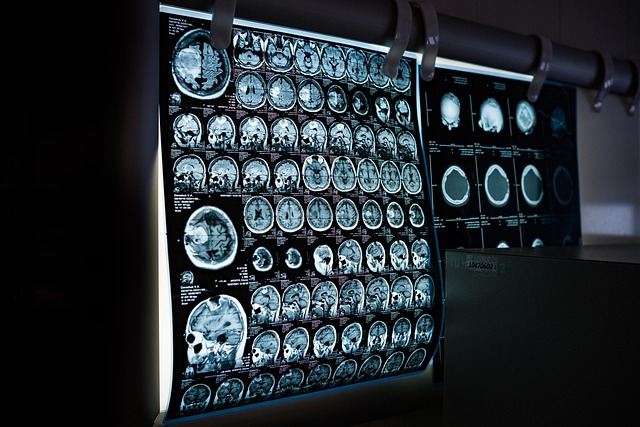
What a 'brain-age' scan can, and cannot, tell us about dementia, addiction and mental health

A study of nearly 49,000 MRI scans links several conditions to brains that look older than expected. It found no overall difference for ADHD or autism, and it does not show cause.

If you have ever been told you look young for your years, you already understand the idea behind one of the more intriguing tools in modern brain research.

Scientists can estimate a "brain age" from an MRI scan and compare it with a person's actual age. A large study in the journal PLOS Medicine has used that approach to compare nine different conditions side by side.

Its findings are interesting, and in places hopeful. They also need reading with care.

Read full story →
Teaching AI to Judge Its Own Confidence Trims Its 'Thinking' by Up to 25 Per Cent, Early Study Suggests
AI News

Teaching AI to Judge Its Own Confidence Trims Its 'Thinking' by Up to 25 Per Cent, Early Study Suggests

A preprint from the University of Maryland and Capital One finds that AI models taught to gauge how sure they are go on to reach answers with less wasted effort. The work has not yet been peer reviewed.

Anyone who has sat an exam knows the feeling. You have the answer, but you go back over it once more, and then again, just in case.

AI "reasoning" models do something similar, and all that double-checking uses computing power. A new study suggests a surprisingly gentle way to cut it down.

Researchers from the University of Maryland and Capital One's AI Foundations team report that models taught to gauge how sure they are of an answer, part-way through a problem, went on to reach their conclusions using up to 25 per cent less generated text, with accuracy held level.

Read full story →
Free folktales and printmaking night brings New Scots and locals together in Anderston
What's On Glasgow

Free folktales and printmaking night brings New Scots and locals together in Anderston

Beetroots Collective's workshop at The Pyramid at Anderston this Saturday is free, open to everyone aged 16 and over, and needs no experience

Fancy an evening of Scottish folktales and a go at printmaking, with all materials provided and not a penny to pay? This Saturday, a free workshop in Anderston offers exactly that.

Beetroots Collective is bringing its Folktales for New Scots series to The Pyramid at Anderston, 759 Argyle Street, Glasgow G3 8DS, on Saturday 3 October from 6pm to 8.15pm, according to the What's On Glasgow listing.

The evening pairs a guided printmaking workshop, led by Beetroots Collective artists Marta Adamowicz and Robert Motyka, with Scottish folktales from a local storyteller. The listing promises a relaxed, welcoming space to create and connect.

Read full story →
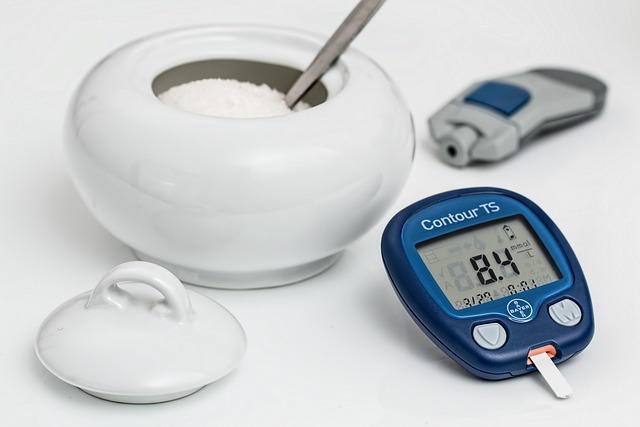
Study links some blood sugar ups and downs to better next-day wellbeing for people with diabetes
Health

Study links some blood sugar ups and downs to better next-day wellbeing for people with diabetes

Research prepared for a major European diabetes meeting suggests that some fluctuation within safe limits may go hand in hand with brighter days, though it is no reason to change your routine without speaking to your care team

Anyone who lives with diabetes, or cares for someone who does, knows how much effort goes into keeping blood sugar on an even keel. New research offers a gentle and rather reassuring thought: a day with a few more ups and downs, provided glucose stays within safe limits, may be followed by a better one.

The findings come from the PRO-MENTAL study and were prepared for the Annual Meeting of the European Association for the Study of Diabetes (EASD), which runs in Milan from 28 September to 2 October.

The research was conducted by Professor Dominic Ehrmann of FIDAM, the Research Institute Diabetes Academy Mergentheim in Bad Mergentheim, Germany, and colleagues. The study was funded by the German Center for Diabetes Research (DZD), according to the EASD's summary of the work.

Read full story →