
Edition No. 97 · Tuesday, October 6, 2026

← Past Editions · Edition No. 97 · Tuesday, October 6, 2026

Today’s outlook: Sunny with a chance of puppies

Through the Wall: Students and incarcerated women in Bangkok design a way back to work
Community

Through the Wall: Students and incarcerated women in Bangkok design a way back to work

A UN-backed project pairs Thai design students with women in a Bangkok prison to create goods that can be sold outside, and to change how people see those who have served time

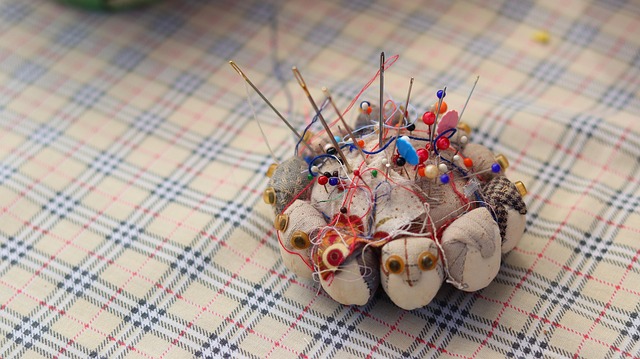
Weo prefers to sew by hand. She has tried the sewing machine, but found her mind was calmer when she worked the thread with her own fingers.

“Your mind follows the thread, one by one, row by row. You know? It’s like meditation. I don’t like machines,” she told a group of design students visiting the Central Women’s Correctional Institution in Bangkok, UN News reports.

Sewing by hand also means Weo can produce a unique pattern that is hard to find in conventional shops. The students, sketchbooks in hand, had come to see that kind of craft up close.

Read full story →

Moon dust from Chang'e-6 hides a tiny magnetic time capsule
Science

Moon dust from Chang'e-6 hides a tiny magnetic time capsule

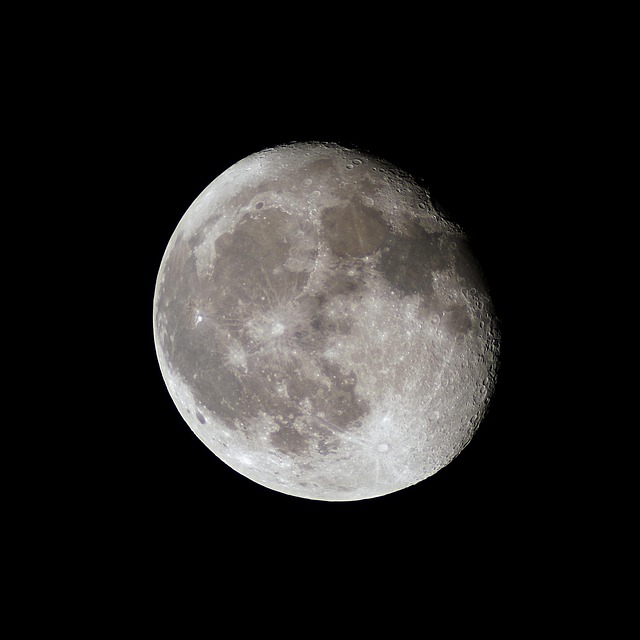
Specks of a rare form of iron in far-side lunar glass could act as a microscopic fossil of the Moon's long-lost magnetic field

Somewhere inside a speck of glass from the far side of the Moon, a particle of iron too small to see without a powerful electron microscope may be holding a message from the distant past.

Scientists studying soil brought back by China's Chang'e-6 mission say that this tiny particle could act as a microscopic fossil of the Moon's long-lost magnetic field. It is a find that has not been made in natural lunar samples before.

Earth has a global magnetic field. The Moon no longer generates one. But traces of its ancient magnetism remain locked inside lunar rocks and soil, according to an account of the work from the Chinese Academy of Sciences, published by ScienceDaily.

Read full story →
Broxi's Beats brings a rave for little ones to Edmiston House
What's On Glasgow

Broxi's Beats brings a rave for little ones to Edmiston House

Lights, bubbles and big tunes for babies, toddlers and their grown-ups on Saturday 17 October. Here is everything parents need to know.

Dancing shoes at the ready, Glasgow. The city's smallest ravers are about to get a dancefloor of their own.

Broxi's Beats: For Little Ravers arrives at Edmiston House on Saturday 17 October, promising an afternoon of big tunes, bouncing beats and colourful lights created for little ones, with the grown-ups firmly invited to join in.

The organisers bill it as "the ultimate party for little ravers and their grown-ups", and the plan is simple: get ready to "rave, wiggle and dance the day away".

Read full story →
The video call that would not end: how a film about Mexico City's canal farmers started a community movement
Community

The video call that would not end: how a film about Mexico City's canal farmers started a community movement

Three old schoolmates from Xochimilco reconnected over a UN University documentary, then founded a seminar to keep their neighbours talking.

Mariana Páez thought she knew who would watch. When she shared on social media a documentary she had appeared in, she expected family, friends and neighbours to take a look.

Instead, UN News reports, she heard from people she had not spoken to in years. Among them were Karen Ramírez and Abel Bastida, former schoolmates who had taken different career paths but shared a fascination with the place where they grew up.

The three arranged a video call, planned for 20 or 30 minutes. It ran to nearly two hours, ranging across farming, food, traditions, water and the problems they saw around them.

Read full story →
The Oklahoma Crater That Turned Out to Be 100 Million Years Younger Than Anyone Thought
Science Discoveries

The Oklahoma Crater That Turned Out to Be 100 Million Years Younger Than Anyone Thought

Tiny zircon crystals from deep beneath the town of Ames have moved a buried meteor impact from one chapter of Earth's history to another.

Beneath the small town of Ames, Oklahoma, lies a meteor crater nobody can see. It stretches for miles underground, buried under layers of sediment, and for years geologists believed they knew roughly when it formed.

They were out by nearly 100 million years.

Researchers at The University of Texas at Austin have now dated the impact to about 370 million years ago, in the Late Devonian, rather than about 467 million years ago in the Ordovician. The work was published in July in the journal Meteoritics & Planetary Science, according to the university.

Read full story →
Gayle Rankin Brings Miss Jean Brodie to the Citizens Theatre – and Glasgow Has Snapped Up Every Seat
What's On Glasgow

Gayle Rankin Brings Miss Jean Brodie to the Citizens Theatre – and Glasgow Has Snapped Up Every Seat

All six performances of the National Theatre of Scotland's new Muriel Spark adaptation are listed as sold out in the Gorbals. Here is what to know, and where you can still see it.

Gayle Rankin is coming home to play one of Scottish literature's most magnetic characters – and Glasgow has not left a seat to spare.

The National Theatre of Scotland's new production of The Prime of Miss Jean Brodie plays the Citizens Theatre in the Gorbals from Wednesday 21 to Saturday 24 October. Both the Citizens and the National Theatre of Scotland websites currently list all six Glasgow performances as sold out.

Muriel Spark's 1961 novel is set at Edinburgh's Marcia Blaine School for Girls. There, teacher Miss Jean Brodie hand-picks her "set" – the "crème de la crème" – and demands utter loyalty in return.

Read full story →
World Space Week: the 'Rocket Revolution' has a Glasgow accent
Science Space

World Space Week: the 'Rocket Revolution' has a Glasgow accent

As more than 50,000 events mark the world's biggest space celebration, the city hailed as Europe's leading builder of small satellites has every reason to join in.

More than 50,000 events in more than 100 countries are planned this week for World Space Week, which the United Nations calls the world's largest space event. It runs until Saturday 10 October.

This year's theme is "Rocket Revolution". According to UN News, it is about how quickly the way we reach space is changing, thanks to commercial launch providers, reusable rockets, university teams and other innovators.

That may sound a long way from the Clyde. It is not.

Read full story →
🔬Image coming soon
Science

Could Faint Magnetic Fields From the Big Bang Ease the Universe's Expansion Puzzle?

Two trusted ways of measuring how fast space is stretching disagree. A new study suggests that tiny, ancient magnetism may help close the gap, though the evidence is still only a hint.

Imagine two careful surveyors measuring the same stretch of road. One uses an old, trusted map. The other walks it with a tape measure. Both are meticulous, and yet their answers don't match.

That, in essence, is one of the biggest puzzles in modern cosmology. Two of our best ways of measuring how fast the universe is expanding give stubbornly different results. Now a team of physicists thinks a surprising ingredient, extremely faint magnetic fields left over from the Big Bang, might help bring the two numbers closer together.

The universe's expansion rate is called the Hubble constant, after Edwin Hubble, who showed in the 1920s that distant galaxies are moving away from us. It is quoted in kilometres per second per megaparsec. A megaparsec is about 3.26 million light years, so the number tells you how much faster a galaxy recedes for each extra stretch of that size.

Read full story →